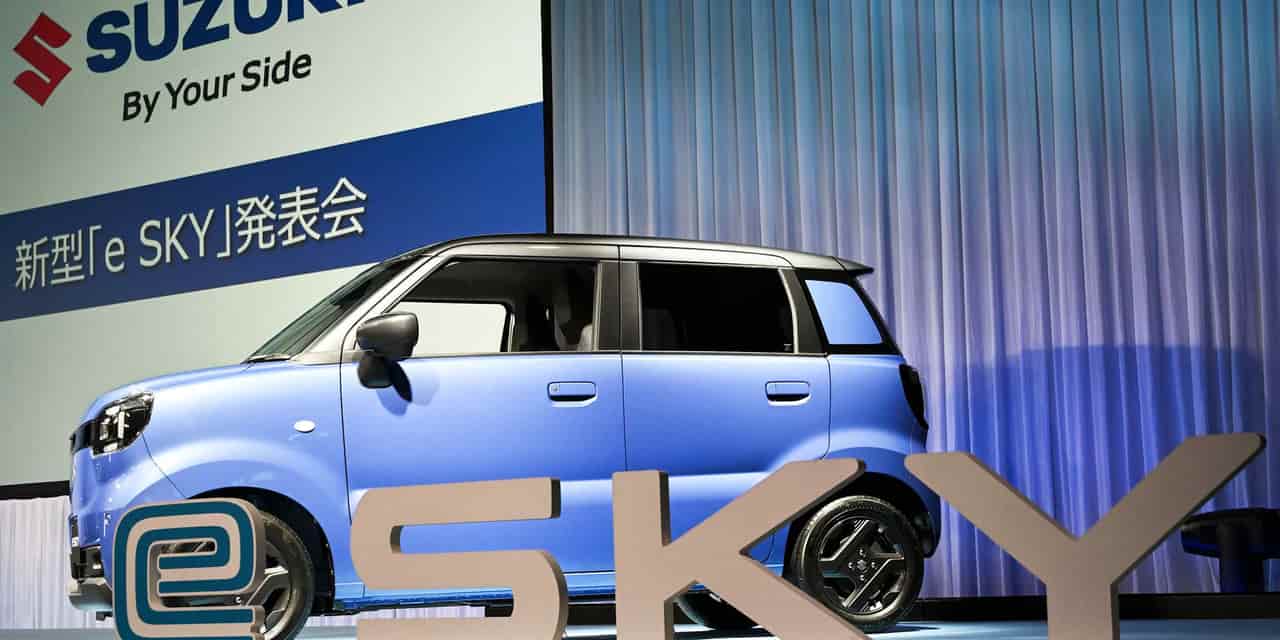
Suzuki Motor has launched its new kei minicar, the e SKY, aiming to compete with Chinese electric vehicle rivals. However, the move underscores a broader vulnerability within Japan's automotive sector due to its dependence on Chinese battery suppliers.

Suzuki's entry into the electric kei car market highlights the broader challenge for Japan's auto industry in navigating the global shift to EVs, particularly its dependence on Chinese suppliers for critical battery components, which could impact future competitiveness and supply chain security.
Suzuki Motor is launching its new electric minicar, the e SKY, in Tokyo, aiming to defend its home market against Chinese electric vehicle rivals by offering the cheapest Japanese EV to date. This strategic move into the kei (minicar) segment, a pivotal area for Japan's automotive industry's electrification efforts, also exposes a significant vulnerability: the sector's reliance on Chinese batteries.
The Japanese government's decarbonization goals, including a target for 100% electrification of light-duty vehicle sales by 2035, are driving the transition. The EV market in Japan is projected to grow substantially, fueled by government incentives such as subsidies and tax breaks. Kei EVs, in particular, are seen as a practical entry point for consumers due to their affordability compared to larger imported EVs, a niche Suzuki has historically dominated.
However, Suzuki faces increasing competition. Other Japanese automakers like Toyota, Daihatsu, and Honda are also introducing electric kei models. Chinese automaker BYD has also signaled its intent to enter the Japanese kei EV market. Despite these challenges, Suzuki's established presence in the minicar segment and its joint BEV platform development with Toyota and Daihatsu are seen as potential advantages.
The success of Suzuki's kei EV strategy hinges on balancing affordability with infrastructure readiness. While domestic kei EVs are already more affordable than imported models, gaps in charging infrastructure, especially in rural areas, could pose a risk. The e SKY prototype has demonstrated a range of over 270 kilometers, with plans for production in fiscal year 2026, aiming for a price point that encourages adoption from gasoline car users.
Pick the topics you care about. Get only what matters, on your cadence.