Key facts
- Sumitomo Bakelite will expand production of advanced chip packaging materials in China and Singapore.
Sumitomo Bakelite plans to expand production of advanced chip packaging materials at its facilities in Suzhou, China, and Singapore to meet surging demand for semiconductors driven by generative AI. The company will add new production lines for mould underfill (MUF) and compression-moulding granules, with commercial operations expected to begin around December 2028 in China and by the end of fiscal year 2028 in Singapore.
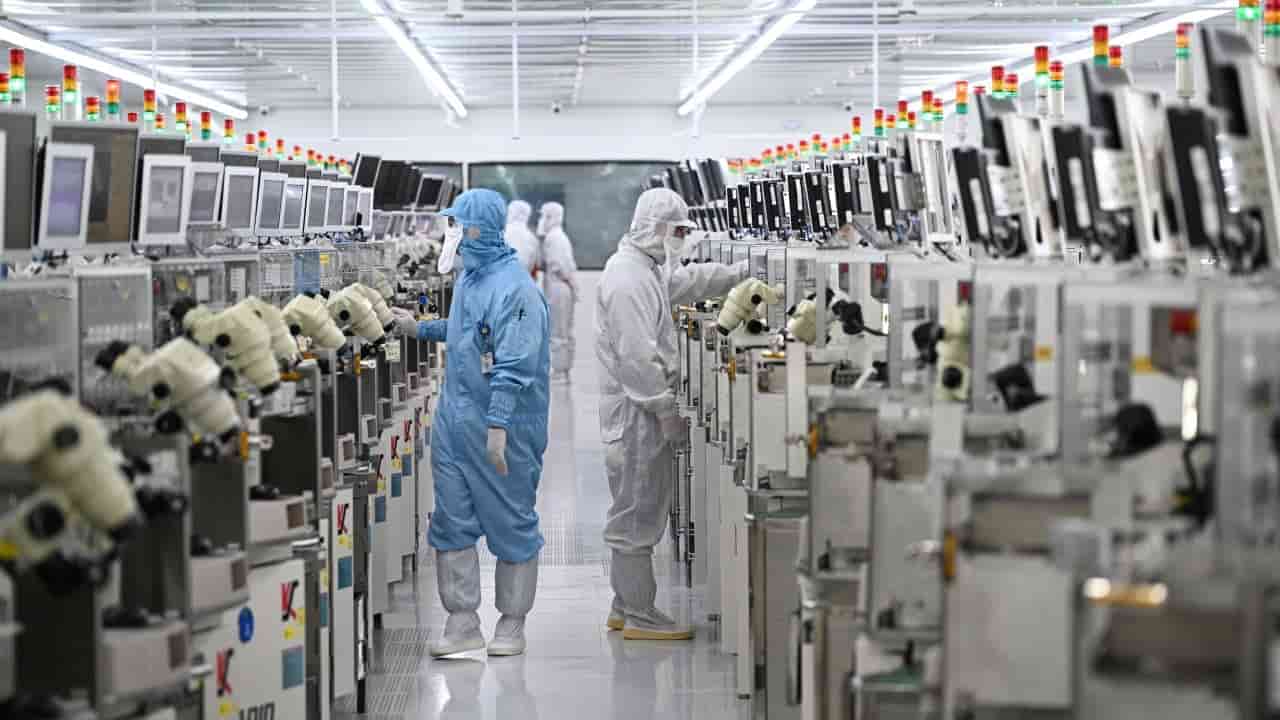
The expansion by Sumitomo Bakelite underscores the significant demand for advanced semiconductor materials driven by the AI boom, impacting the global semiconductor supply chain and highlighting growth opportunities in China and Singapore for specialized manufacturing.
Japanese semiconductor materials company Sumitomo Bakelite is set to expand its production capacity for advanced chip packaging materials in Suzhou, China, and Singapore. This move, announced on Friday, October 9, 2026, is driven by the escalating demand for sophisticated semiconductors fueled by the artificial intelligence boom, particularly for AI data centers.
The company will add new production lines for mould underfill (MUF) materials and compression-moulding granules at its Suzhou facility. Commercial operation of this expanded capacity in China is anticipated around December 2028. Simultaneously, Sumitomo Bakelite will install similar new production lines within its existing factory building in Singapore, with production slated to commence by the end of fiscal year 2028.
These expansions are expected to significantly increase the company's output, with MUF encapsulant capacity projected to roughly double and granular encapsulant capacity to approximately triple on a group-wide basis. Sumitomo Bakelite has been producing semiconductor encapsulation materials in China since 1997 and has previously expanded its Suzhou plant, including adding lines in March 2022 and completing a new plant in 2025. The company operates production sites globally, including in Japan, China, Singapore, Taiwan, and Belgium, to ensure a stable supply chain for high-performance materials in next-generation semiconductor fields.
Pick the topics you care about. Get only what matters, on your cadence.