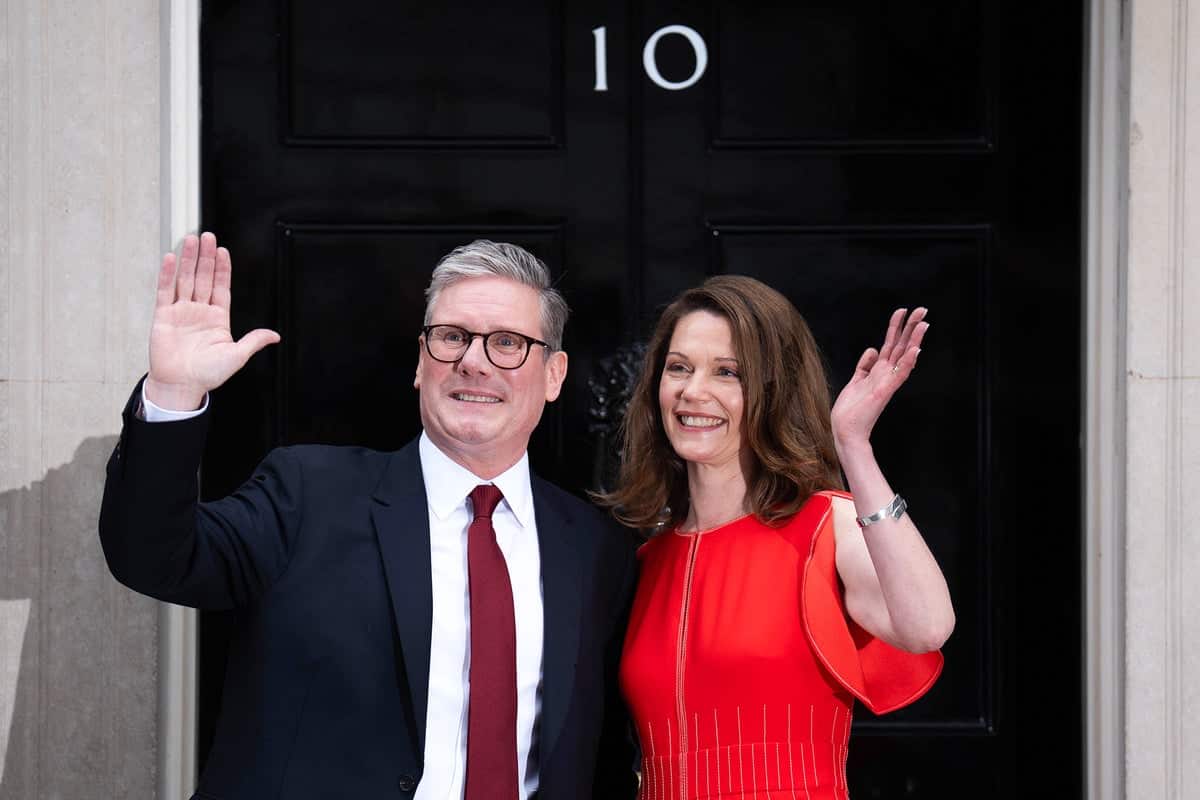
Key facts
- Keir Starmer has resigned as Prime Minister and leader of the Labour Party.
- Labour experienced significant losses in recent local, Senedd, and Holyrood elections.
- Starmer's net popularity rating declined sharply during his tenure.
- Andy Burnham won a by-election in Makerfield with a substantial majority.
- Burnham is considered a potential successor to Starmer, possibly without a formal leadership contest.
Keir Starmer has resigned as Prime Minister and leader of the Labour Party, a move attributed to poor election results and a significant decline in his personal popularity. His net popularity rating reportedly fell from -7 to -56 during his premiership.
The resignation follows local, Senedd, and Holyrood election results that indicated potential wipeout for many Labour MPs. The return of Andy Burnham to parliament in the Makerfield by-election, where he secured nearly 55 percent of the vote, has positioned him as a leading contender to replace Starmer.
Burnham's supporters believe his victory demonstrates an ability to reconnect with lost Labour voters. However, the article suggests that this by-election result may be over-interpreted, as Labour's support has fragmented across different demographics, including younger, multicultural constituencies and traditional industrial heartlands. The party has also alienated some left-leaning and Muslim voters over its stance on the conflict in Gaza.
There is speculation that Burnham could be installed as Labour leader without a formal leadership election, a scenario favored by many in the Parliamentary Labour Party to avoid public internal disputes. Wes Streeting has already endorsed Burnham, and other potential candidates like Darren Jones and Al Carns are considered long shots.
The article posits that a leadership contest would force the party to address its underlying issues and articulate a clear political direction, whereas a 'coronation' might allow it to avoid confronting these challenges. While Burnham is seen as a stronger communicator than Starmer and has expressed critical views on financial markets, his economic advisors are described as orthodox, and his potential leadership may be constrained by deals with the Labour right.