Key facts
- SpaceX flew Starship to a nominal orbit for the second time, after the upper stage separated above the Gulf of Mexico.
- All 26 Starlink V3 satellites deployed about 40 minutes into the flight and reached orbit, SpaceX's primary mission aim.
- The first-stage booster was diverted into the Gulf of Mexico because of an unspecified issue instead of returning to the tower.
- SpaceX has landed and reflown Starship boosters before but has not yet done so with version 3 of the vehicle.
SpaceX launched Starship from Starbase in South Texas on November 13, 2026, its 15th test flight in more than three years. The rocket lifted off on schedule in the early evening, and the first stage released the upper stage above the Gulf of Mexico. The Starship upper stage then ignited its Raptor engines and reached a nominal orbit, the second time SpaceX has flown Starship into low-Earth orbit.
The primary aim of the flight was deploying 26 Starlink V3 satellites from a narrow door at the base of the spacecraft. The deployment occurred about 40 minutes into the flight, and all 26 satellites reached orbit, where they will use onboard propulsion to raise their altitude. The satellites' solar panels stretch 60 meters end to end when fully deployed.
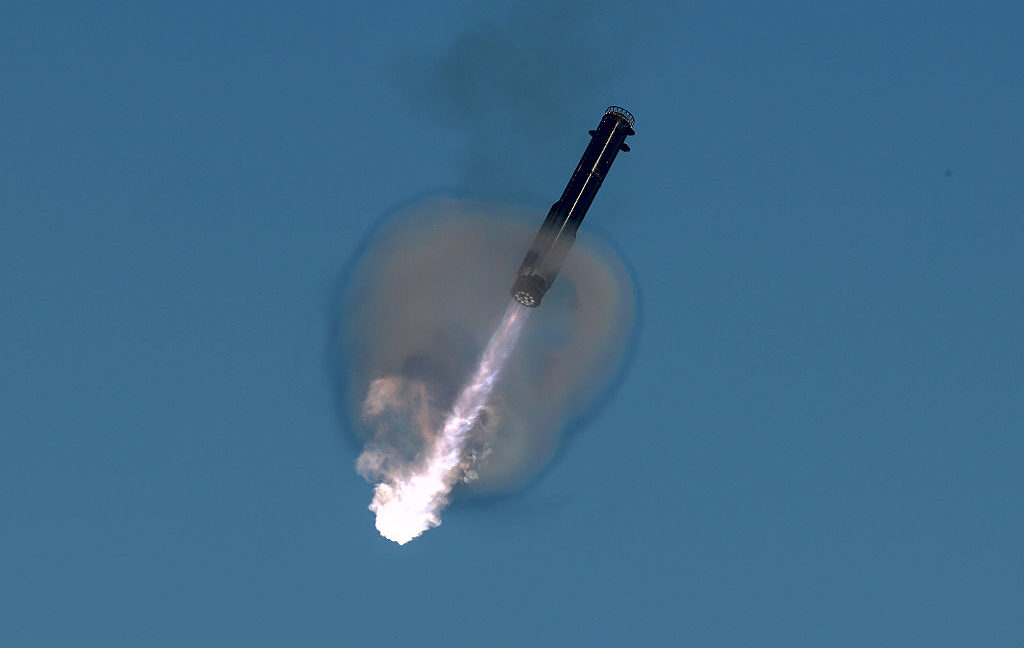
When the first stage returned toward the ground, an unspecified issue led to the vehicle being commanded to divert into the Gulf of Mexico rather than return to Starbase to be caught by the launch tower. The booster hit the water and exploded, an event visible to observers more than 10 miles away.
SpaceX had hoped to recover the booster, refurbish it and fly it again. The company has previously landed and reflown Starship boosters but has not yet done so with version 3 of the vehicle.