Key facts
- SpaceX caught Starship at its Starbase launch tower on November 14, 2026, one day after launching it.
- NASA's Steve Creech said the Starship orbital refueling demonstration has slipped two years since late 2024.
- SpaceX plans to open a second Starship launch site at Kennedy Space Center early next year.
- NASA rerouted Artemis III to low-Earth orbit, making Artemis IV the first crewed lunar landing, targeted before the end of 2028.
- NASA added a milestone requiring SpaceX to build a prototype crew compartment, Cabin One, at Starbase for ground testing.
- Blue Origin plans its first Blue Moon Mark 1 test mission early next year after a May pad explosion caused a monthslong delay.
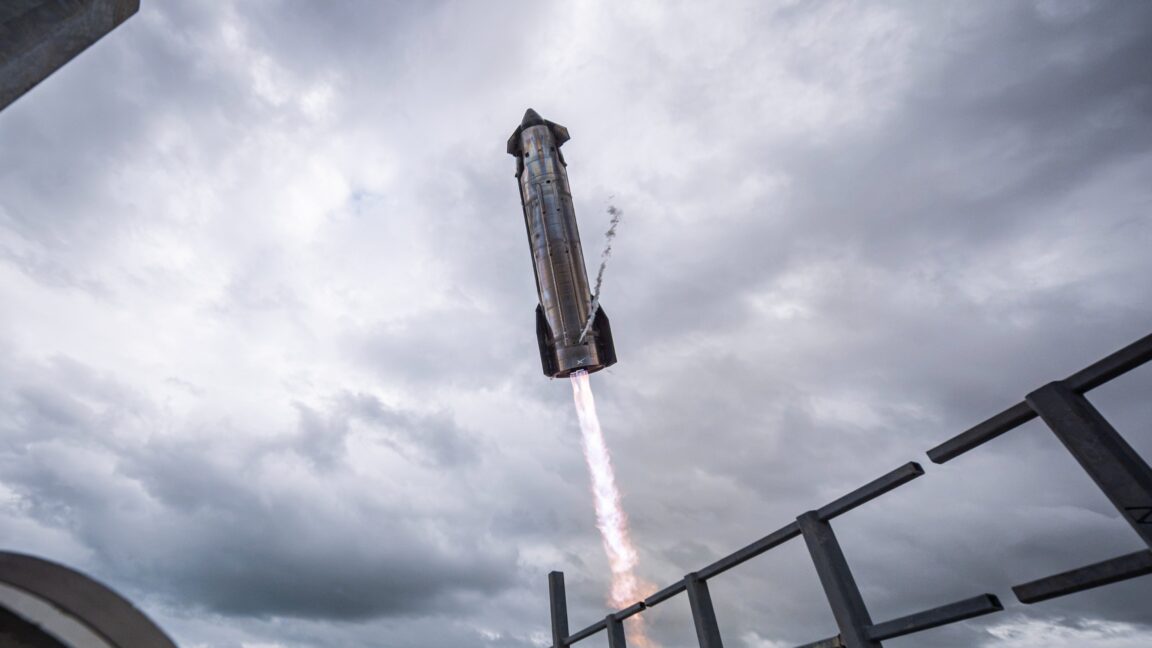
SpaceX recovered its Starship rocket at its Starbase, Texas, launch tower on November 14, 2026, one day after the vehicle launched from the same site atop a Super Heavy booster. NASA's Steve Creech, program manager for the agency's Human Landing System, said the catch cleared a hurdle toward higher launch rates and a long-delayed orbital refueling demonstration planned for next year.
Creech said the refueling demonstration has slipped two years since late 2024, effectively a day-for-day delay, as SpaceX worked through technical problems with the vehicle. Early next year, SpaceX plans to bring online a second Starship launch site at Kennedy Space Center in Florida, where a second Starship factory is also under construction alongside the existing production line at Starbase.
NASA changed the Artemis III plan earlier this year, rerouting the mission from a lunar flight to low-Earth orbit. Under the revised plan, a four-person crew launches on a Space Launch System rocket and Orion spacecraft, docks with Blue Origin's Blue Moon lander for two days of tests, then docks with Starship for two hours without entering it. The Artemis program's first crewed lunar landing moves to Artemis IV, targeted to launch before the end of 2028.
Creech said a reason for testing more with Blue Origin on Artemis III is to keep SpaceX focused on orbital refueling. Blue Origin no longer requires in-space refueling for Artemis landing missions, and SpaceX has more experience with life support systems through its Dragon crew spacecraft. "The bigger challenges for [SpaceX] were the prop transfer and getting to the uncrewed landing demo," Creech said.
NASA added a milestone to SpaceX's lander contract requiring ground testing of parts of its crew cabin, including a prototype crew compartment called Cabin One at Starbase. NASA also added requirements for Blue Origin, including a hotfire test of a three-engine Blue Moon propulsion unit inside a vacuum chamber at NASA's In-Space Propulsion Facility in Ohio. Blue Origin plans its first Blue Moon Mark 1 test mission early next year after a monthslong delay caused by a rocket explosion on its launch pad in May.