Key facts
- South Korea and five Central Asian nations agreed to deepen cooperation in critical minerals, energy, and advanced industries.
- The agreement was reached at the inaugural Korea-Central Asia Summit in Seoul on Sept. 16, 2026.
- The summit included leaders from Kazakhstan, Uzbekistan, Turkmenistan, Kyrgyzstan, and Tajikistan.
- South Korea and Central Asian nations signed an MOU on cooperation in industries and supply chains.
- Leaders adopted the Seoul Declaration and launched a consultative body for industrial ministers.
- An initiative for cooperation in AI and science was also adopted.
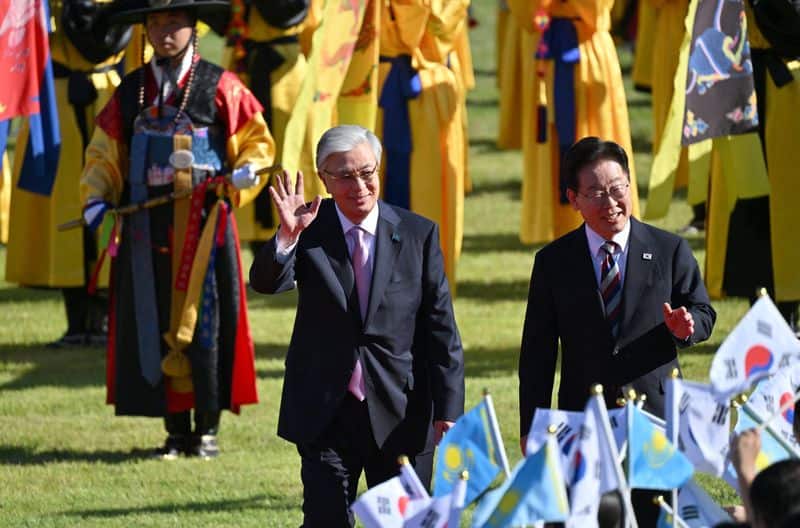
South Korean President Lee Jae Myung and leaders from five Central Asian countries agreed to deepen mutually beneficial cooperation in critical minerals, energy, and advanced industries at the inaugural Korea-Central Asia Summit in Seoul on September 16, 2026. The summit aimed to strengthen the partnership between the regions.
President Lee proposed building "mutually beneficial value chains" by combining Central Asia's strengths in critical minerals, energy, and agriculture with South Korea's technology. This initiative seeks to create jobs and expand supply chains. Based on this proposal, South Korea and the Central Asian nations signed a memorandum of understanding on cooperation in industries and supply chains, covering areas from industrial policies and manufacturing to critical minerals, energy, and the digital transition.
The leaders also launched a consultative body among their industrial ministers to implement the agreements. President Lee emphasized that Central Asian countries are optimal partners for South Korea to diversify export markets and supply chains amid changing global security and economic environments, citing the region's rich natural resources and growing markets.
The leaders of Kazakhstan, Uzbekistan, Turkmenistan, Kyrgyzstan, and Tajikistan hailed the summit as a foundation for future cooperation and adopted the Seoul Declaration, outlining their agreements and visions. An initiative for cooperation in artificial intelligence (AI) and science was also adopted, with President Lee calling for joint efforts to leverage AI and technological innovations. President Lee also requested support for South Korea's efforts to resolve North Korea's nuclear issues and establish a peace regime on the Korean Peninsula.