Key facts
- Fico said Slovakia is ready to host technical-level Ukraine-Russia talks but lacks the weight to deliver results.
- Fico's remarks appeared to downplay Foreign Minister Juraj Blanar's proposal of Bratislava as a venue for preparatory talks.
- Slovakia pledged 500,000 euros for shelters and medical equipment and 500,000 euros in energy support.
- The energy support covers 54 generators for front-line regions, Koretskyi said.
- Slovakia agreed to join the international coalition for the return of Ukrainian children abducted by Russia.
- Slovakia will donate three electric locomotives to Ukrainian Railways.
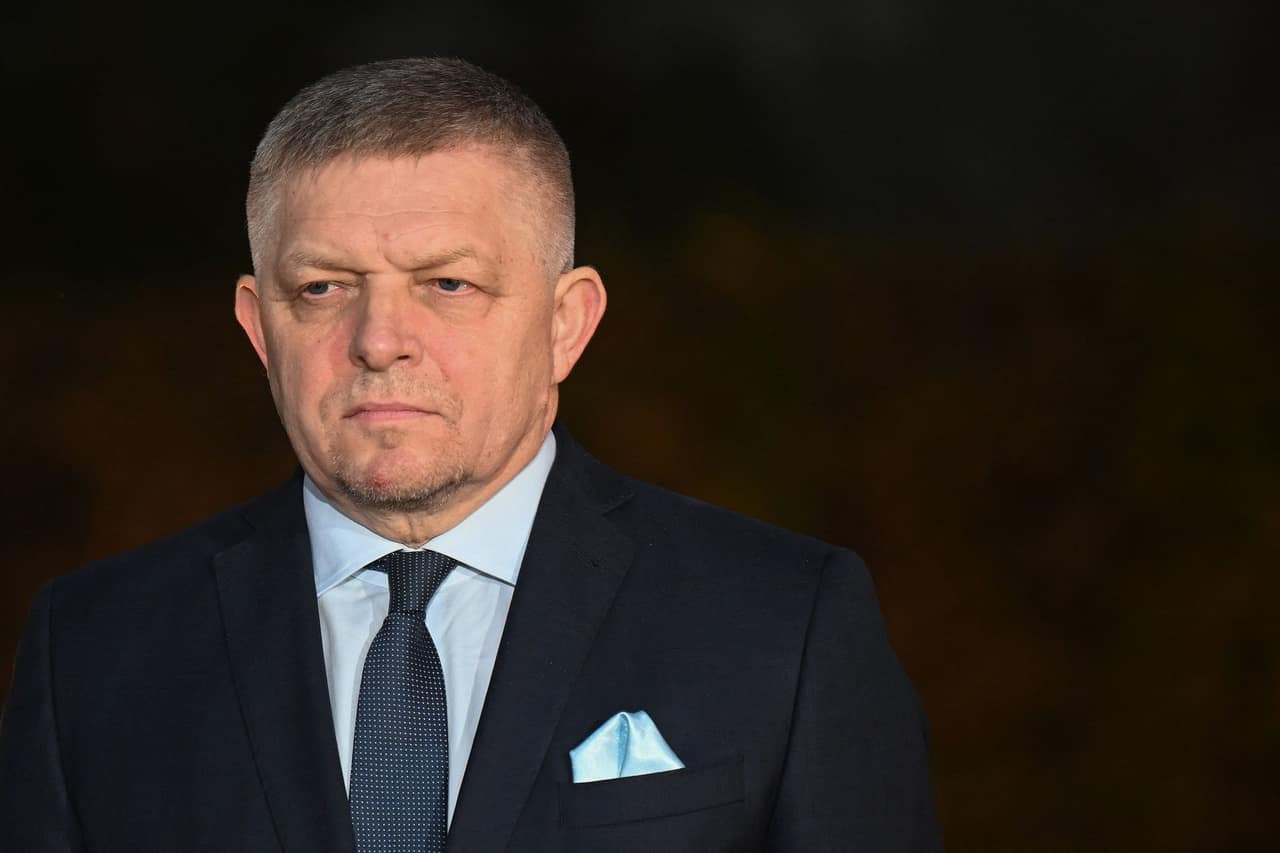
Slovak Prime Minister Robert Fico said on November 5 that Slovakia is always ready to help host technical-level peace talks between Ukraine and Russia, but that the "right conditions and the right atmosphere" are needed. Speaking beside Prime Minister Serhii Koretskyi during an official visit to Lviv, Fico said Slovakia is "too small a player on the international scene to organize a meeting that would achieve relevant results."
Fico led a Slovak delegation to the western Ukrainian city for the fourth intergovernmental meeting, where the two sides agreed to strengthen educational, energy and economic cooperation. Koretskyi briefed him on the situation in the Russia-Ukraine war, according to the Slovak leader.
Fico's comments appeared to downplay a suggestion by his foreign minister, Juraj Blanar, who proposed Bratislava as a venue for preparatory peace talks after a visit to Moscow the previous week. Fico described Slovakia's foreign policy as fully geared toward peace and criticized the EU for what he said was a failure to present a relevant peace plan for Ukraine. He has long criticized Western military aid to Ukraine and argued European capitals should focus on dialogue with Russia.
The comments came less than a week before trilateral peace talks between the U.S., Russia and Ukraine in Abu Dhabi, part of Washington's push for a diplomatic resolution of the war. Russia has repeatedly rejected ceasefire proposals backed by Kyiv and its partners, while demanding that Ukraine cede the Donbas region.
Koretskyi expressed Kyiv's gratitude to Europe for its support, saying "thanks to this support, we stand, resist, see our future, and see we are not alone." The meeting also produced agreements to open two bilingual schools in Ukraine and Slovakia, a memorandum on cooperation in education, research and nuclear technology, and a memorandum on modernizing border infrastructure.
Koretskyi thanked Bratislava for a new donation of 500,000 euros ($560,000) in energy support, namely 54 generators for front-line regions most affected by Russian strikes as winter nears. Slovakia also pledged 500,000 euros for shelters and medical equipment, agreed to join the international coalition for the return of Ukrainian children abducted by Russia, and said it would donate three electric locomotives to Ukrainian Railways.
Fico raised prospects for closer energy and transport cooperation, including a direct highway connection, after the war ends. Koretskyi said the two discussed cooperation under the EU's SAFE program, a financial tool for strengthening the bloc's defense industry.
Since winning elections in 2023, Fico has halted arms donations to Ukraine from Slovak army stocks while allowing continued arms sales and non-lethal support. Slovakia has recently rejected participation in new EU funding Kyiv seeks to plug its budget hole, as it previously opted out of a 90-billion-euro ($100 billion) loan for Ukraine. Slovakia also moved to resume talks with Russia on November 25 under a joint economic commission suspended after Moscow's full-scale invasion in 2022.