Key facts
- Commercial ships are using improvised defenses such as nets, water tanks, and tyres to protect against drone attacks in the Black Sea.
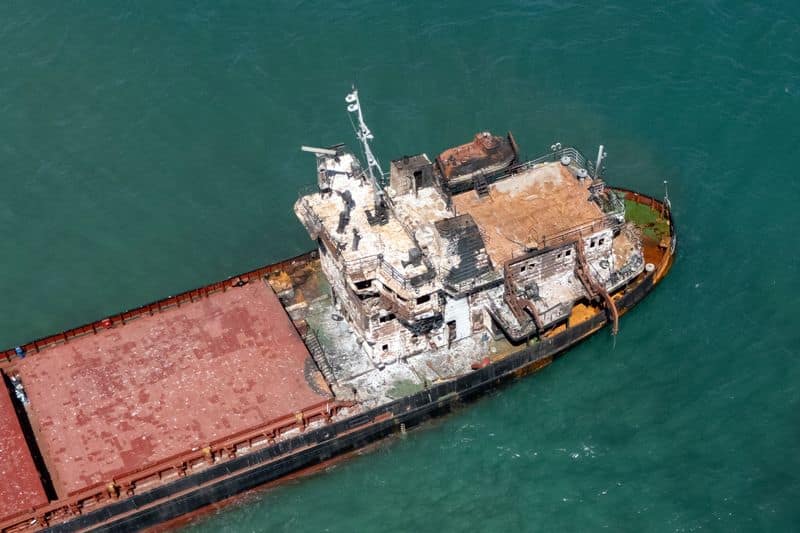
- The abandoned Russian cargo ship Omskiy-107 drifted to a Turkish beach after sustaining damage.
- Ukraine has intensified attacks on Russian infrastructure facilitating oil and grain exports.
- Russia has also increased missile and drone strikes on Ukrainian grain export hubs.
- Maritime security experts acknowledge the use of countermeasures but express doubts about their effectiveness against larger drones.
Commercial ships are increasingly adopting makeshift defenses, including nets, water tanks, and tyres, to ward off escalating drone attacks in the Black Sea amid intensified conflict between Russia and Ukraine. The abandoned Russian-flagged cargo ship Omskiy-107, with its command deck burned out, recently drifted to a northern Istanbul beach, highlighting the dangers faced by maritime traffic.
Since July, Ukraine has ramped up attacks on vessels and infrastructure involved in Russian oil and grain exports. This follows Russia's intensified missile and drone strikes on key Ukrainian grain export hubs like Odesa. Vessels such as the crude oil tanker Caruzo have been observed with water tanks around their stern, while the Khrizopraz tanker had tyres hanging over its hull during recent transits.
Maritime security experts note a sharp increase in attacks on commercial ships and port infrastructure, with potential for further escalation. Corey Ranslem, CEO of Dryad Global, mentioned common countermeasures like water-filled containers and netting, often referred to as 'cope cages,' used to protect superstructures from explosive drones. However, experts question the efficacy of these measures against larger military drones or fast-moving naval drones equipped with substantial explosive payloads.
Several ships, including the Liberian-flagged bulk carrier Great Ocean, have arrived at the Bosphorus heavily damaged, escorted by coast guard vessels. Turkey, which has also seen its commercial ships targeted, summoned Ukraine's ambassador following attacks near the Russian port of Tuapse. Turkish President Tayyip Erdogan commented that the Black Sea attacks have exacerbated global grain shortages, particularly in Africa, and called for an urgent resolution.
Ankara has prepared a plan to restore safe grain passage through the Black Sea and is discussing it with both Russia and Ukraine. However, Russia has stated it sees no grounds for the resumption of the Black Sea grain deal, which it withdrew from in 2023. The original deal, brokered by Turkey in July 2022, had facilitated the export of millions of tons of Ukrainian grain. Experts suggest that resolving the current volatility requires broader moves toward peace.