Key facts
- Serbian President Aleksandar Vucic announced he will resign within weeks.
- Special presidential and parliamentary elections will be held in Serbia in three to four months.
- Vucic is serving his second presidential term and is constitutionally barred from running again.
- The move is interpreted as a political maneuver to allow Vucic to run for prime minister.
- Mass anti-government protests have been ongoing since November 2025.
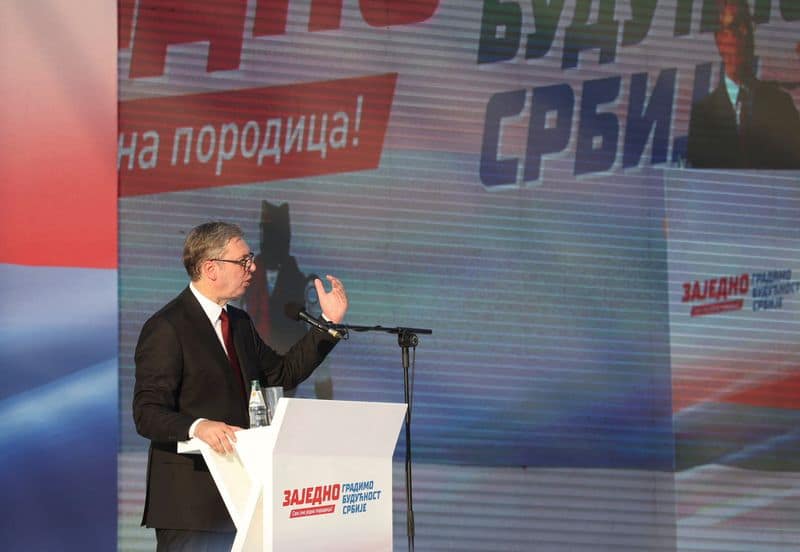
Serbian President Aleksandar Vucic announced on June 27 that he will resign from his position within weeks, with special presidential and parliamentary elections to follow in three to four months. Vucic stated that his resignation is a transparent decision, though it is widely interpreted as a strategic political maneuver. He is currently serving his second presidential term and is constitutionally barred from seeking a third, leading to speculation he may aim for the prime minister role, the country's most powerful office. Vucic has not confirmed if he will pursue the prime minister position. Presidential elections must be held within 90 days of his formal resignation. The announcement comes after more than a year of sustained anti-government protests, initially triggered by a deadly train station awning collapse in November 2025 that killed 15 people and has since broadened to encompass concerns about corruption and authoritarianism. Vucic has accused foreign states of inciting the protests without providing evidence. Serbia has been navigating a complex diplomatic path between Russia and the West since the 2022 invasion of Ukraine, relying on Russian gas while facilitating indirect arms sales to Kyiv.