Key facts
- A Russian convoy carrying military vehicles to Libya turned around in the Mediterranean, three people from military and security services told Reuters.
- A second convoy escorted by the Russian navy frigate Golovko turned back near the Strait of Sicily on November 22, a European military official said.
- A Ukrainian military intelligence official and a Middle East security official said the second flotilla was paused off the coast of Algeria.
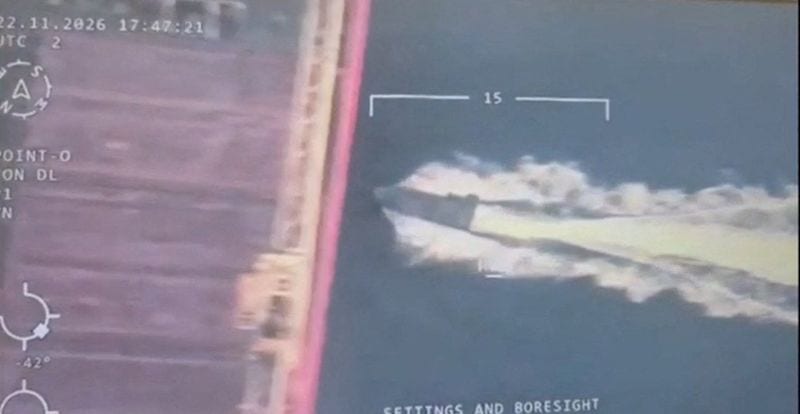
- Ukrainian sea drones sank the Russian corvette Merkury in the civilian part of Benghazi's port on November 22.
- Russia's defence ministry did not immediately respond to a request for comment sent outside office hours.
- The LNA vowed to retaliate after two of its officers died of wounds on November 24.
A convoy of Russian ships carrying military vehicles bound for Libya turned around in the Mediterranean after Ukrainian maritime drones sank a Russian naval corvette in Benghazi port on November 22, three people from military and security services told Reuters on November 27. The diversion had not been previously reported.
A second convoy, escorted by the Russian navy frigate Golovko, turned around near the Strait of Sicily on the same day as the Benghazi attack, a European military official tracking the convoy said. The strait is the key point before the North African coast. A Ukrainian military intelligence official and a separate Middle East security official familiar with the convoy confirmed that a second flotilla had turned from heading to Libya and was paused off the coast of Algeria.
Russia's defence ministry did not immediately respond to a request for comment sent outside office hours.
Ukrainian sea drones hit the corvette Merkury in the civilian part of Benghazi's port on November 22, where it had docked to refuel and resupply under a cooperation agreement between Russia and Khalifa Haftar's eastern government. Two officers of Haftar's Libyan National Army died of their wounds on November 24, and the LNA vowed to retaliate at the appropriate time and place.
Haftar flew to Turkey on November 24 on his first known visit, and Turkish President Recep Tayyip Erdogan received him in Ankara. On November 25, Haftar's parliament published the Turkey-Libya maritime deal in Libya's official gazette, completing a ratification that opens waters off the eastern coast to Turkish exploration. On the day of Haftar's visit, EU Mediterranean Commissioner Dubravka Šuica told the European Parliament that the deal is null and void.