Key facts
- U.S. Secretary of State Marco Rubio stated that Iran's demands for tolls in the Strait of Hormuz would set a dangerous global precedent.
- Rubio said that South Korea and other allies would benefit from joining efforts to secure the Strait of Hormuz.
- He noted that approximately 20 percent of global oil is purchased through the strait.
- Rubio mentioned that some countries possess unique capabilities, such as mine clearing, that could aid in securing the strait.
- He observed that countries are increasing imports of oil and LNG from the U.S. due to ongoing disruptions in the Strait of Hormuz.
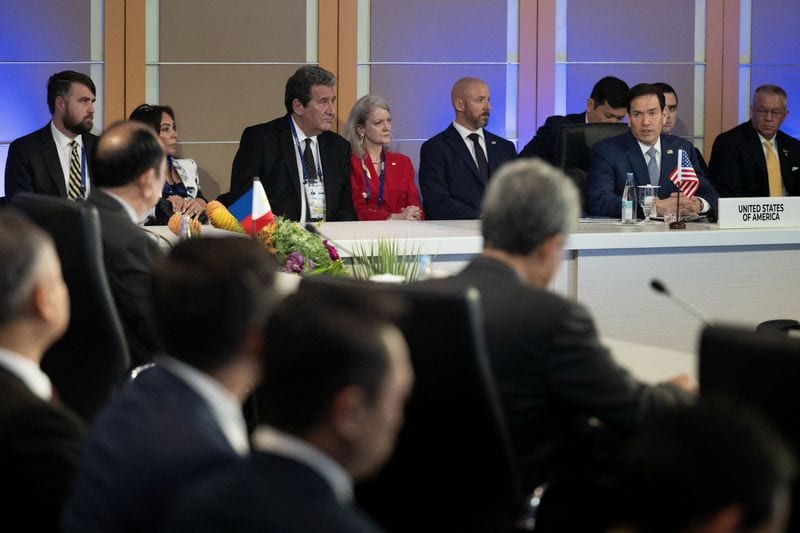
U.S. Secretary of State Marco Rubio stated that South Korea and other allies would benefit from joining efforts to secure the Strait of Hormuz, emphasizing that it is in their interest due to their heavy dependence on regional energy supplies. Rubio made these remarks on the sidelines of annual forums involving the Association of Southeast Asian Nations (ASEAN) in Manila. He noted that approximately 20 percent of global oil is purchased through the strait and that some countries possess unique capabilities, such as mine clearing, that could aid in securing it. Rubio also observed that countries are increasing imports of oil and liquefied natural gas (LNG) from the U.S. due to ongoing disruptions in the Strait of Hormuz. The remarks followed a report that the U.S. President Donald Trump administration had recently requested South Korea to deploy a warship to help secure the strait, a request South Korea's presidential office stated had not been made, while reiterating Seoul's consideration of practical contributions to restore freedom of navigation.