Key facts
- U.S. Secretary of State Marco Rubio is hosting a conference on 'far-left political terrorism'.
- Over 60 countries are represented at the conference.
- Rubio stated that acts of violence and terrorism serving a left-wing cause have been dismissed.
- Data shows a historical trend of higher levels of far-right violence compared to left-wing incidents in the U.S.
- President Trump and allies have focused on combating the far left ahead of midterm elections.
- The State Department has designated four anti-fascist groups in Europe as foreign terrorist organizations.
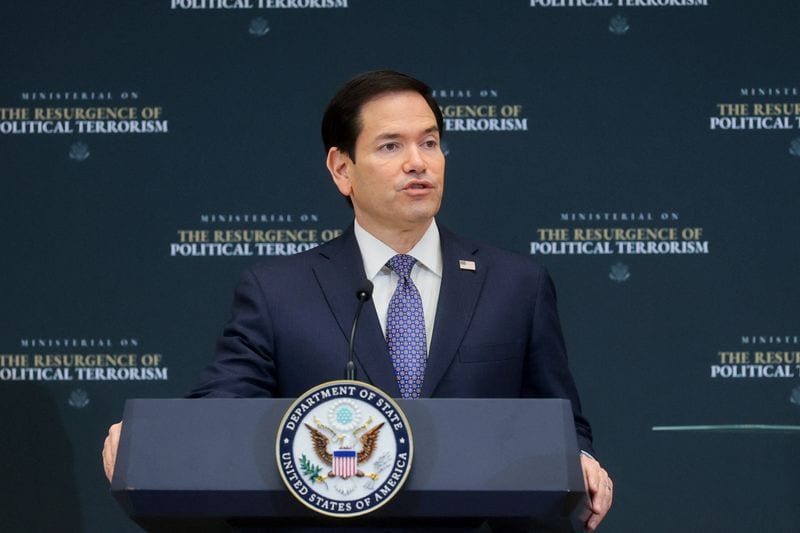
U.S. Secretary of State Marco Rubio convened leaders from over 60 countries on Thursday for a conference focused on combating what the Trump administration labels as 'left-wing political terrorism.' This initiative is a prominent issue for Republicans as they approach the midterm elections.
Rubio, addressing officials primarily from European and Latin American nations, urged them to unite against what he described as a 'blind spot' in counterterrorism doctrine. He argued that acts of violence and terrorism serving left-wing causes have been dismissed as legitimate forms of political expression. He contrasted the condemnation of a neo-Nazi bomb with the perception of a bomb planted by a Marxist revolutionary as merely an 'excess of idealism.'
Data from a report indicates that while left-wing terrorism attacks surpassed far-right attacks for the first time in over 30 years as of July 4, 2025, this increase reflects a very low starting level and a concurrent drop in right-wing incidents. Between 1994 and 2000, there was an average of 0.6 left-wing incidents annually compared to 20.6 on the right. From 2016 to 2024, the averages were four on the left and 22.7 on the right, with only one right-wing incident reported by early July 2025, while five occurred on the left.
President Donald Trump and his allies have emphasized rhetoric against the far left, with Trump characterizing them as communists aiming to dismantle the American way of life. Vice President JD Vance and House Speaker Mike Johnson have also voiced concerns about communist and Marxist ideologies.
Rubio's perspective is influenced by his background as the son of Cuban immigrants, believing that the Cuban government's intelligence network helped foster the far left in the hemisphere. Stephen Miller, a key architect of the administration's immigration policy, stressed the urgency of defending American institutions with passion.
The administration's focus has often conflated democratic socialism with communism. In November, the State Department designated four anti-fascist groups in Europe as foreign terrorist organizations. Treasury Secretary Scott Bessent stated that financial counterterrorism tools are being used to confront this perceived threat domestically.