Key facts
- NATO chief Mark Rutte is working to satisfy U.S. President Donald Trump's demands ahead of an upcoming summit.
- Trump's focus has shifted from financial contributions to demands for "loyalty."
- Rutte previously presented a graphic showing $1.2 trillion in European and Canadian defense spending since 2017.
- Trump expressed disappointment over allies not joining the U.S. in actions against Iran.
- Rutte has employed flattery as a strategy to maintain U.S. commitment to NATO.
- The Pentagon's announcement of troop and asset reductions in Europe has created uncertainty within the alliance.
NATO Secretary General Mark Rutte is facing significant challenges in managing U.S. President Donald Trump's expectations ahead of an upcoming summit. Trump's demands have shifted from financial contributions to a focus on "loyalty," presenting a new hurdle for Rutte's efforts to ensure continued U.S. commitment to the alliance.
Initially, Trump's concerns revolved around NATO allies allocating insufficient portions of their national budgets to defense. However, these issues were largely addressed at the previous year's summit, where allies pledged to match U.S. defense spending as a percentage of GDP. The current primary concern for NATO is translating these financial commitments into tangible military capabilities, especially amid European nations' worries about a potential Russian attack.
Rutte has employed a strategy of flattery to appease Trump. In a recent White House meeting, he presented a graphic labeled "Trump's Trillion" illustrating $1.2 trillion in spending by European allies and Canada since 2017. Rutte also highlighted European orders for $300 billion in military equipment, attributing these developments to Trump's leadership. He also countered Trump's complaints about NATO's lack of support against Iran by noting U.S. aircraft departures from European bases.
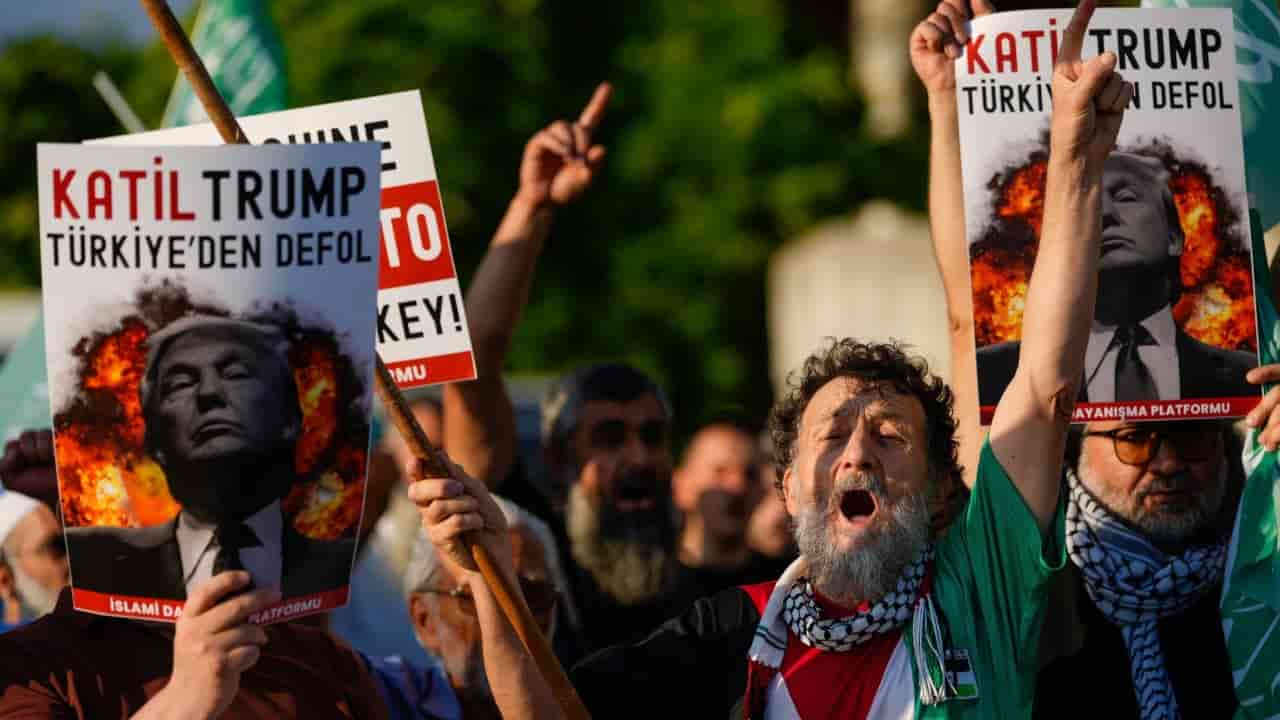
Despite these efforts, Trump has indicated disappointment with allies' responses regarding Iran and emphasized his desire for "loyalty" over financial aid. His comments suggest that even leaders like Turkish President Erdogan and Rutte, whom Trump has shown unusual favor towards, will have a difficult task in guiding the upcoming summit. Historically, the NATO Secretary General's role has been to foster consensus among member states, but Rutte and his predecessor have dedicated considerable energy to retaining U.S. engagement, especially given Trump's past threats to withdraw from the alliance and his questioning of mutual defense commitments.
Adding to the alliance's challenges, the Pentagon recently announced a reduction in troops, warships, aircraft, and drones that would be committed in the event of an attack, creating uncertainty and potentially undermining unity as Russia continues to test European defenses.