Key facts
- A microgrid is a self-contained power system that generates, stores, and manages its own electricity for a defined area.
- Microgrids can operate connected to the main utility grid or disconnect entirely, a process known as islanding.
- Essential components of a microgrid include distributed energy resources (DERs) for generation, energy storage, and a microgrid controller.
- Key drivers for the increasing adoption of microgrids are extreme weather events, rising electricity costs, and aging grid infrastructure.
- The burgeoning demand for electricity from AI data centers is a significant factor accelerating the development and deployment of microgrids.
- Hyperscale cloud providers are increasingly opting for on-site generation, often utilizing fuel cells, to power their data centers due to long grid interconnection queues.
Microgrids, self-contained power systems that can operate independently of the main utility grid, are experiencing a surge in adoption driven by a confluence of factors including extreme weather events, rising electricity costs, and the escalating power demands of artificial intelligence (AI) data centers.
A microgrid is defined as a localized energy system that generates, stores, and manages its own electricity for a specific area, such as a building, campus, or neighborhood. These systems can function while connected to the larger utility grid, allowing for the exchange of power, or they can disconnect and operate autonomously, a state known as islanding.
The U.S. Department of Energy categorizes microgrids into four types: campus/institutional, community, remote/off-grid, and resilience-focused critical infrastructure. Regardless of type, the common characteristic is local generation, local control, and the ability to maintain power during wider grid failures.
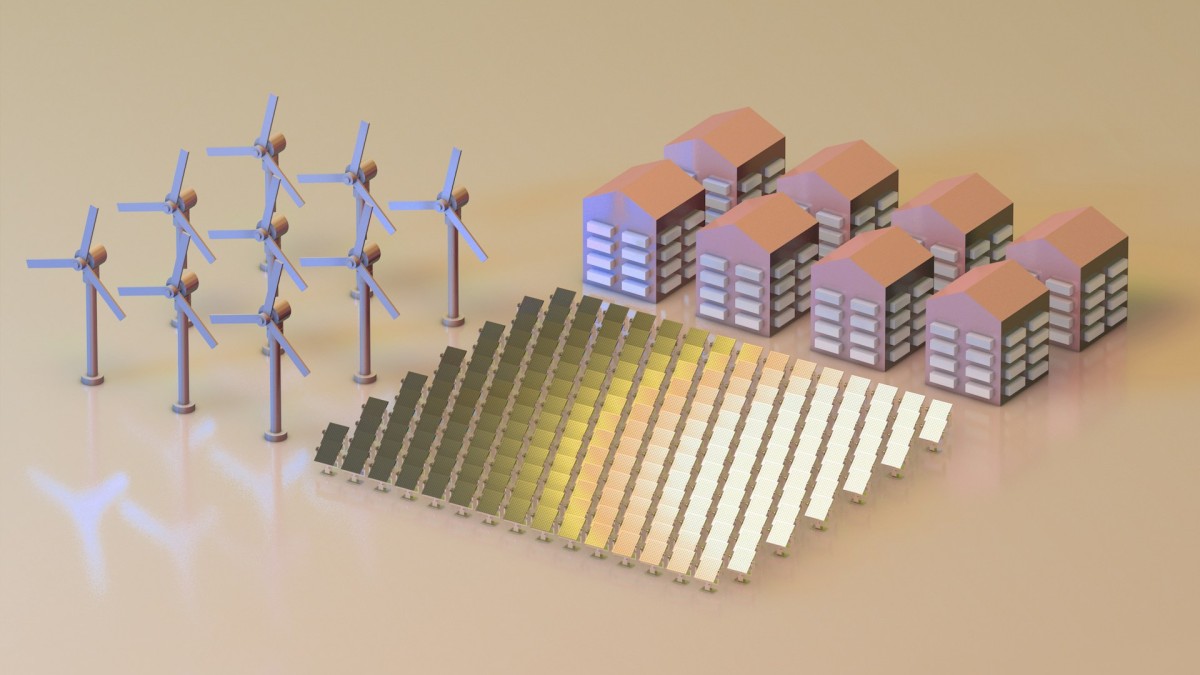
Operationally, a microgrid requires three core components: a power generation source (such as solar PV, natural gas turbines, or fuel cells), an energy storage system (typically batteries) to bridge the gap between generation and demand, and a microgrid controller that manages supply, demand, and the connection to the utility grid via the point of common coupling (PCC).
Several forces are propelling microgrids into the mainstream. The increasing frequency and intensity of extreme weather events highlight the vulnerability of traditional centralized grids. Simultaneously, rising electricity costs and the aging nature of existing grid infrastructure necessitate more resilient and efficient power solutions. Military bases, universities, and hospitals are leading the charge, implementing microgrids to ensure uninterrupted operations for critical functions.
The explosive growth of AI and its substantial electricity requirements have become a major catalyst for microgrid deployment. Global data center electricity consumption is projected to double by 2030, with AI racks demanding significantly more power than traditional servers. The lengthy wait times for grid interconnection are prompting hyperscale companies to develop their own on-site power generation, often through substantial investments in fuel cell technology, battery storage, and solar power.
While often confused with smart grids, microgrids are distinct. A smart grid is an upgraded, broader utility network with enhanced communication and automation, whereas a microgrid is a smaller, self-contained segment that can operate independently. The two systems are increasingly designed to work in tandem, with smart grid technology enabling utilities to coordinate with multiple microgrids for grid support and emergency response.
Examples of microgrid implementation include the system at Marine Corps Air Station Miramar, which can island critical buildings for weeks, and UC San Diego's campus microgrid, which supplies a significant portion of its electricity needs. In Puerto Rico, the Casa Pueblo microgrid in Adjuntas continues to provide power to local businesses and residents during outages, serving as a model for community resilience.