Key facts
- Mexico's central bank board signaled further interest rate holds.
Mexico's central bank board indicated interest rates will likely remain unchanged for an extended period, citing persistent services inflation and economic weakness despite easing headline inflation. Policymakers expect inflation to reach the 3% target in Q4 2027.
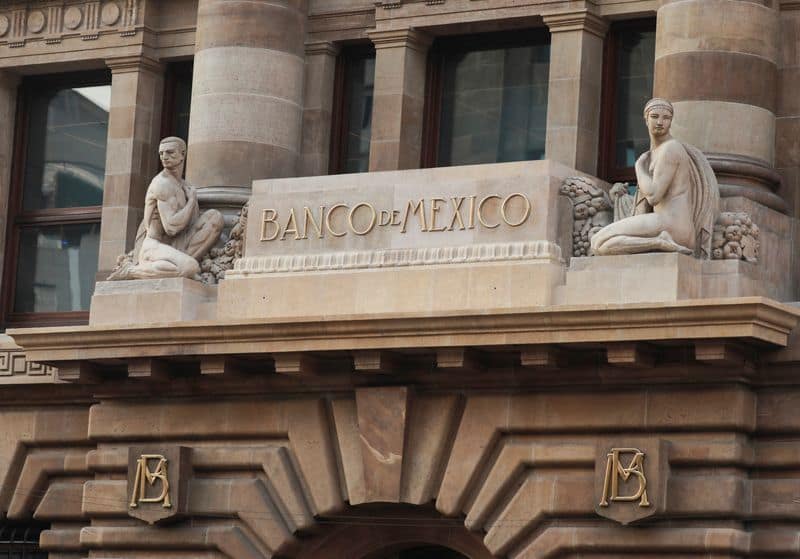
The central bank's decision to maintain high interest rates signals a prolonged period of tight monetary policy, impacting borrowing costs for businesses and consumers in Mexico and potentially influencing currency markets.
The board of Mexico's central bank signaled that interest rates are likely to remain on hold, according to minutes from their August meeting. Members pointed to falling inflation, a strong peso, and a weak economy as key factors influencing the decision.
While the board unanimously voted to keep the benchmark rate at 6.5%, they noted that inflation is expected to continue slowing, albeit more gradually than previously anticipated. This revision is partly due to persistent increases in services prices, even as headline inflation dropped to 3.10% and core inflation eased to 3.95% in the first half of July. Banxico's target for inflation is 3%, with expectations for it to be reached in the fourth quarter of 2027.
Most board members believe that economic slack, a relatively strong peso, and the effects of tight monetary policy will continue to exert downward pressure on prices. However, the board expressed caution regarding the economy. While gross domestic product (GDP) is estimated to have grown in the second quarter after contracting in the first, most members stressed that the economy is still operating below its full potential.
One member suggested that this year's growth could surpass Banxico's 1.1% forecast, but the overall economic outlook remains weak. The majority of the board views the balance of risks for inflation as tilted to the upside, citing ongoing services inflation, trade policy uncertainties, and the potential for rising oil and transport costs due to the conflict in the Middle East. Additionally, one member warned that a stronger El Niño weather pattern could further pressure prices.
Pick the topics you care about. Get only what matters, on your cadence.