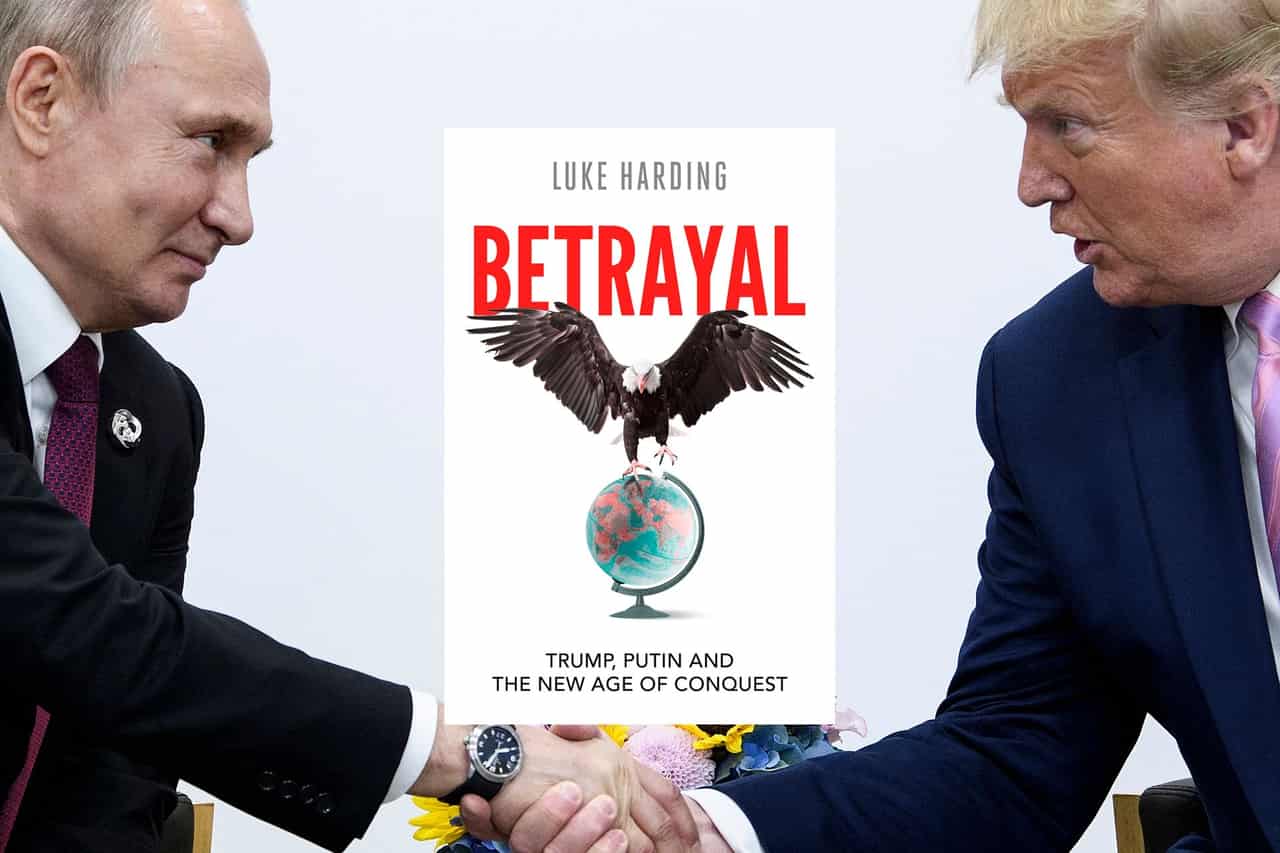
Luke Harding's book, "Betrayal: Trump, Putin and the New Age of Conquest," posits that the post-1945 international order, which discouraged states from invading each other or changing borders by force, is collapsing. Harding highlights the implausibility of North Korean soldiers fighting in Europe at the war's outset as a sign of a world reverting to Great Power politics.
Harding reserves particular criticism for U.S. President Donald Trump, whom he labels "the prostrator-in-chief when it comes to Russia." The book argues that Trump's actions in a potential second term have emboldened authoritarian leaders like Russia's Vladimir Putin and China's Xi Jinping. A key example cited is the August 2025 Alaska summit, where Trump hosted Putin. Despite prior warnings from Trump about consequences for Russia's failure to agree to a ceasefire in Ukraine, the summit opened with ceremony, including a flyover of military jets, and concluded without progress on ending the war. Harding notes Putin's demeanor during the summit, appearing unconcerned about civilian deaths and no longer an "international outlaw."
The book also touches on speculation about Trump's motives for his past praise of Putin, including historical records from the Czechoslovak StB and Trump's unusual 1987 newspaper ads criticizing U.S. foreign policy. Harding suggests Trump's inaction regarding Russia's actions was a "moral choice" that the Kremlin interpreted as approval.
Harding connects these high-level political dynamics to his on-the-ground reporting from Ukraine, illustrating the human cost of Great Power politics. The book also references Trump's past consideration of acquiring Greenland by force, and Putin's reaction to it, suggesting it served to normalize Russia's actions in Ukraine.
Despite the vast scope of events covered, from Ukraine's front lines to alleged Russian influence on UK politicians, Harding's work is presented as a crucial contribution to an ongoing debate about the future world order and its leadership.