Key facts
- Premier Li Qiang defended China's technological advancements, attributing them to firm investment rather than state subsidies.
- Li highlighted China's achievements in areas like multi-use rockets, quantum technology, and semiconductors.
- He noted Huawei's struggles with foreign restrictions without naming specific countries.
- Li stated that China's government is not wealthy and that firm investment drives competitiveness.
- Analysts suggest Brussels may echo Washington's concerns over alleged state support for Chinese firms.
- Li indicated China's participation in global AI governance discussions.
Chinese Premier Li Qiang defended his country's rapid emergence in frontier technologies such as artificial intelligence and electric vehicles, asserting that their competitiveness stems from substantial firm investments rather than government subsidies. Speaking at a World Economic Forum summit in Dalian, Li stated, "the Chinese government is not that wealthy," countering claims that state support is the primary driver of China's technological prowess.
Li pointed to achievements in areas including multi-use rockets, quantum technology, and semiconductors, noting the significant consumption of AI tokens by Chinese researchers. He also referenced Huawei's "long suffering from foreign restrictions," though he did not explicitly name the United States or the European Union, which have imposed curbs on the company. Analysts suggest that Brussels may increasingly align with Washington's concerns regarding alleged state support for Chinese firms and the potential for them to dominate critical technologies.
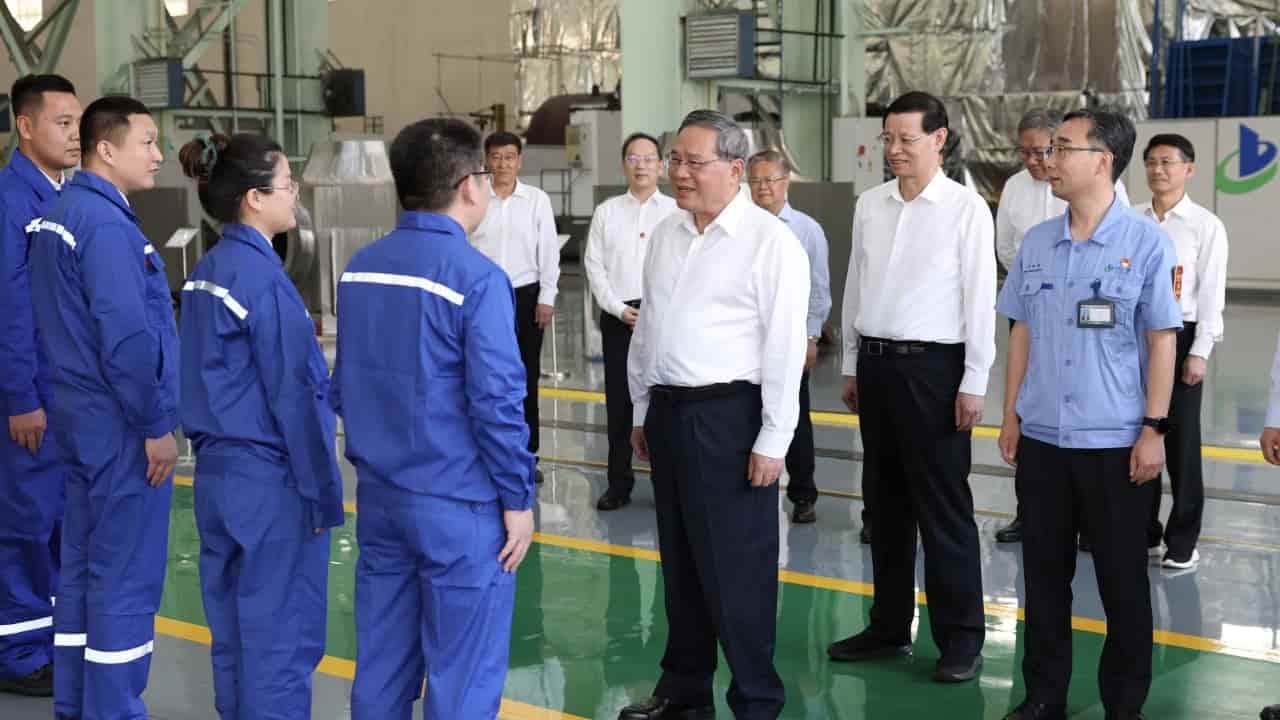
In previous remarks, Li had urged China's state-owned enterprises to focus on high-end equipment manufacturing and enhance industrial competitiveness. He emphasized the need for enterprises to lead innovation and accelerate research and development, particularly in sectors like shipbuilding, which is shifting towards high-value segments such as LNG carriers. The premier also highlighted the importance of tracking international technological frontiers and fostering industrial cooperation to build advanced manufacturing clusters.