Key facts
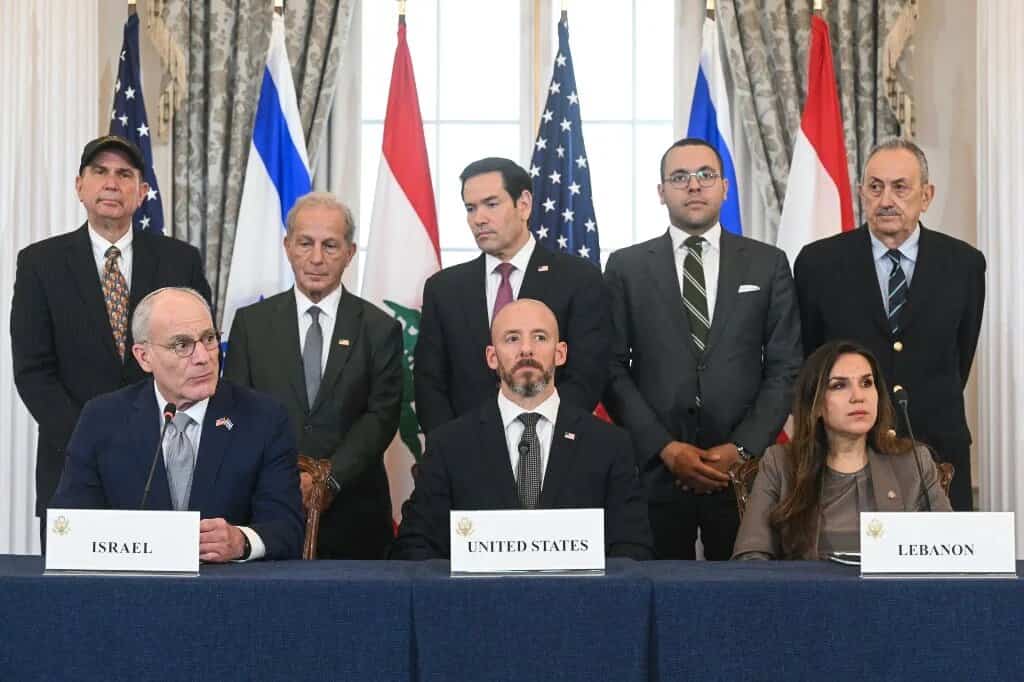
- A US-brokered framework agreement between Lebanon and Israel was signed on June 26.
- The agreement involves the Lebanese army assuming control of designated 'pilot zones' and dismantling non-state armed groups' infrastructure.
- The US will directly monitor Lebanese and Israeli forces under the new framework.
- The deal has faced widespread political opposition in Lebanon, with Hezbollah calling it 'a humiliation'.
- Lebanese officials defend the agreement as a step towards restoring sovereignty and securing Israeli withdrawal.
- Despite opposition, major parties have agreed to avoid internal confrontation over the deal.
A US-brokered framework agreement between Lebanon and Israel, signed on June 26 in Washington, has ignited significant political opposition within Lebanon. Critics argue the deal raises concerns over sovereignty, accountability, and the balance of obligations, particularly as Israeli Prime Minister Benjamin Netanyahu presented it as an Israeli achievement, intensifying backlash among Lebanese who believe Beirut made substantial concessions without securing an immediate ceasefire or a binding timetable for Israeli withdrawal.
Under the agreement, the Lebanese army is slated to assume control of designated 'pilot zones,' dismantle the infrastructure of non-state armed groups, and verify their disarmament before Israeli forces gradually redeploy. Lebanese President Joseph Aoun and Prime Minister Nawaf Salam have defended the accord as the beginning of a process to restore state sovereignty and ensure a complete Israeli withdrawal.
However, the political response has revealed a stark divergence from the official narrative. Hezbollah Secretary-General Naim Qassem denounced the agreement as 'a humiliation, a disgrace and a surrender of sovereignty,' declaring it void. The Higher Islamic Shia Council labeled it an 'agreement of submission' imposed by American pressure, drawing parallels to the failed 1983 agreement and warning of deepened internal divisions. Parliament Speaker Nabih Berri and the head of the Amal movement described the framework as unbalanced and serving Israel's interests at Lebanon's expense, warning of serious political and sovereignty risks.
Walid Jumblatt, former leader of the Progressive Socialist Party, criticized the negotiating team for overlooking Lebanon's 1949 armistice agreement. The Free Patriotic Movement, a major Christian party, supported peace but opposed achieving it through surrendering Lebanese rights. The Popular Nasserist Organisation also rejected the deal, citing threats to sovereignty and the right of resistance.
The broad opposition, extending beyond Hezbollah and Amal to other groups not uniformly aligned with Hezbollah, challenges the presidency and government's narrative that criticism is solely an Iranian-backed campaign. The agreement's domestic ratification, requiring parliamentary or government approval, presents a further hurdle. Despite the strong rejectionist stances, the dispute has largely remained within political statements, with Lebanese presidential sources indicating communication with opponents to prevent internal confrontation. An influential Arab actor reportedly intervened to lower tensions, receiving positive responses from major parties.
Lebanese officials portrayed the Washington negotiations as an assertion of Lebanese independence from Iran, aiming to demonstrate that Lebanon is not merely a bargaining chip in Tehran's dealings with Washington. The framework, however, presents a contradiction, with Lebanon's disarmament and security obligations being explicit, while Israel's withdrawal remains gradual and conditional. The US will directly monitor implementation in pilot zones without direct army-to-army coordination, according to a Lebanese presidential source. A controversial provision requires both nations to halt hostile activity against each other in international political and legal forums, which critics argue could restrict Lebanon's ability to seek accountability for alleged Israeli violations.