Key facts
- Iran's acting Defense Minister stated the nation's armed forces are stronger after recent conflicts.
- He claimed Iran improved its ability to penetrate enemy bases and inflict heavier losses.
- An army spokesman said the US and Israel failed to achieve their objectives in the recent wars.
- Coordination within Iran's Armed Forces has improved, leading to enhanced military effectiveness.
- Iran has advanced its defense capabilities with new missiles and drones.
- Supreme Leader Mojtaba Khamenei ordered the merging of key military headquarters to streamline operations.
Iran's acting Defense Minister, Seyed Majid Ebn al-Reza, stated that the country's armed forces emerged stronger from recent conflicts, including a "Ramadan War" and a "US-Israeli war of aggression." He asserted that Iran would resist any attack on its territory, independence, or security, framing the recent wars as tests that strengthened national confidence and military capabilities.
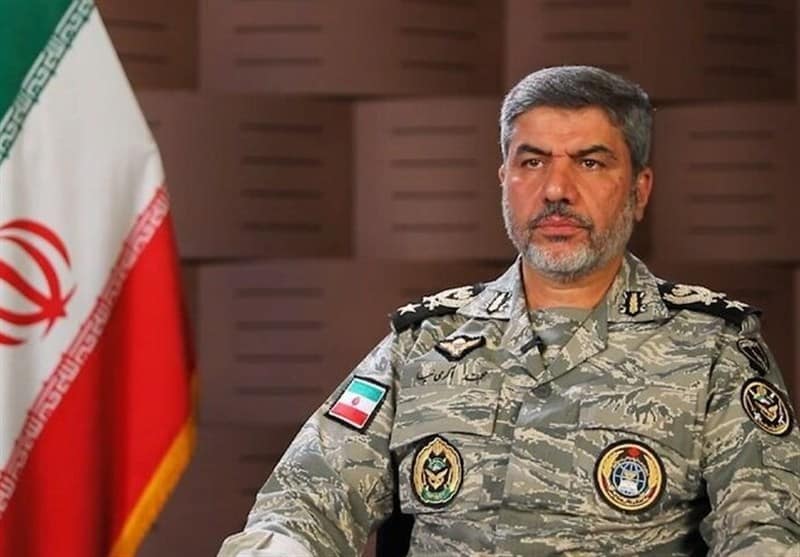
Brigadier General Mohammad Akraminia, an army spokesman, echoed these sentiments, stating that the US and Israel failed to achieve their objectives despite extensive planning. He highlighted improved operational coordination and synergy within the Armed Forces, leading to enhanced military effectiveness and readiness. Advances in defense capabilities were also noted, with domestic production resulting in the deployment of more advanced missiles and new generations of drones. Akraminia emphasized that military preparedness is maintained alongside diplomatic efforts.
Meanwhile, the Institute for the Study of War (ISW) and The Critical Threats Project (CTP) reported that Iran's armed forces are undergoing an extensive reorganization based on lessons learned from recent wars. Supreme Leader Mojtaba Khamenei instructed the merging of the Armed Forces General Staff (AFGS) and the Khatam ol Anbia Central Headquarters (KOACH). This consolidation is expected to streamline coordination between the Artesh and the Islamic Revolutionary Guards Corps (IRGC), reduce redundancies, and enable faster wartime decision-making, particularly after US-Israeli strikes targeted senior Iranian leaders in previous conflicts. Mojtaba Khamenei also appointed several officials to senior military positions, formalizing the armed forces structure and consolidating his authority.