Key facts
- LATAM Brasil holds a firm order for 24 Embraer E195-E2 aircraft, CEO Jerome Cadier told Reuters.
- The six new destinations are Alta Floresta and Sorriso in Mato Grosso, Carajas and Altamira in Para, Araguaina in Tocantins and Ipatinga in Minas Gerais.
- Cadier said LATAM has not changed its aircraft delivery or growth plans for next year despite higher fuel costs and a weaker Brazilian real.
- Corporate travel demand has held up after fare increases taken to offset higher costs, which Cadier said are expected to persist through 2027.
- LATAM is using its Airbus A319 fleet as a buffer on expansion pace and could retire or return some aircraft as more E195-E2s arrive, Cadier said.
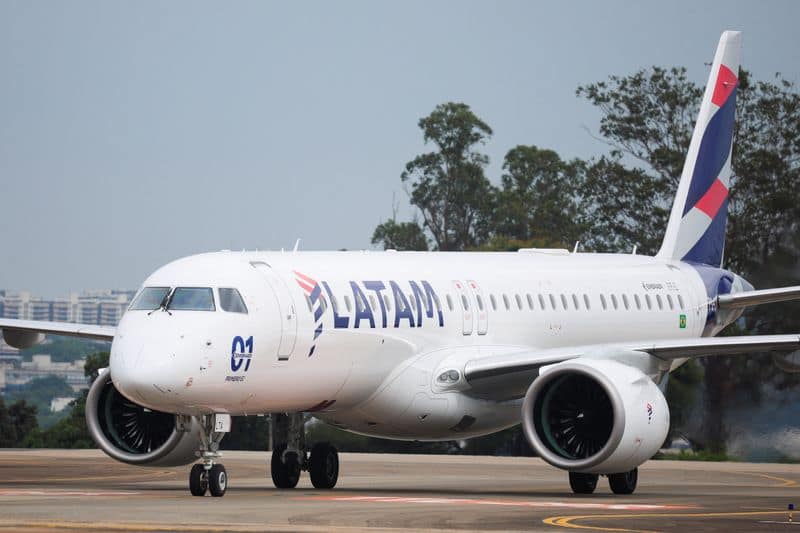
LATAM Brasil is seeing stronger-than-expected initial demand for routes to be flown with new Embraer E195-E2 jets, Chief Executive Jerome Cadier told Reuters on November 26, while cautioning that it would take about six months to fully assess the expansion strategy.
The carrier, which holds a firm order for 24 E195-E2 aircraft, announced a second wave of routes for the jets, adding six new Brazilian destinations and increasing frequencies on 10 existing domestic routes. The new destinations are Alta Floresta and Sorriso in Mato Grosso state, Carajas and Altamira in Para state, Araguaina in Tocantins and Ipatinga in Minas Gerais.
"Sales in this first phase are going really well, even above what we expected for a start," Cadier said during the aircraft's first official flight between Sao Paulo's Guarulhos airport and Brasilia.
In August, the carrier unveiled a first phase assigning 14 E195-E2 jets to 42 routes, including eight new connections and four new operating bases.
Cadier said LATAM has not changed its aircraft delivery or growth plans for next year despite cost pressures from expensive jet fuel and a weaker Brazilian real. Corporate travel demand has remained resilient even after fare increases implemented to offset higher costs, which he said are expected to persist through 2027.
The airline is using its Airbus A319 fleet as a buffer to manage the pace of expansion and could eventually retire or return some aircraft as more E195-E2 jets enter service, Cadier added.