Key facts
- Kuwait denied a Wall Street Journal report alleging it conducted airstrikes against Iran.
- The denial stated the report was 'entirely false' and 'utterly and completely baseless'.
- Kuwait affirmed it has not participated in any military operations against Iran or allowed its territory to be used for such actions.
- The Wall Street Journal report claimed Bahrain and Kuwait targeted Iranian drone and missile depots, with UAE providing support.
- The US has conducted strikes across Iran, while Iran has retaliated against US bases and allies in the region.
- Houthi attacks on Red Sea shipping have caused oil prices to surge and shipping insurance costs to double.
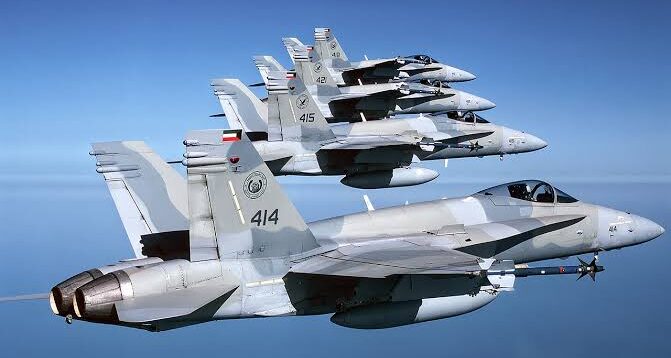
Kuwait has vehemently denied a report published by The Wall Street Journal alleging that the country, along with Bahrain, conducted airstrikes inside Iranian territory. Kuwait's Ambassador to the United States, Sheikha Al-Zain Al-Sabah, formally communicated with the newspaper's editorial board, labeling the claims as 'entirely false' and 'utterly and completely baseless.'
According to the official Kuwait News Agency, Al-Sabah affirmed that Kuwait has not engaged in any military operations against Iran and has not permitted the use of its territory, airspace, or territorial waters for launching offensive actions against any neighboring state. This official denial directly contradicts the Wall Street Journal's report, which cited anonymous sources familiar with the matter.
The disputed report suggested that the operations targeted Iranian drone and missile storage facilities and that the United Arab Emirates provided intelligence and defensive air cover. This alleged action would represent a significant shift from a proxy-war dynamic to direct engagement by Gulf monarchies. The report's claims remain unverified by independent sources such as satellite imagery or official confirmations from the involved governments.
The situation unfolds amid an intensifying American air campaign against Iran and Iran's ongoing missile and drone attacks on Gulf countries and US assets. The US has struck targets across Iran, reaching as far as the Caspian Sea, as Donald Trump threatened 'major military punishment' for Tehran and its Houthi allies in Yemen for extending the war to the Red Sea. Iran retaliated on Friday with missile and drone fire against US bases and allies across the region.
The New York Times reported that Tehran had rejected a US ceasefire proposal delivered by the Iraq prime minister, Ali al-Zaidi, a report Iraq later disputed. Trump warned China and Russia against selling weapons to Iran, stating he believed assurances from Xi Jinping and Vladimir Putin that they were not yet doing so. Iran said it was in consultations with both countries.
Iran’s military stated it had launched drone strikes on Friday morning against US military targets in Bahrain, Jordan and Kuwait. The Houthis, controlling northern and western Yemen, continued to claim a naval blockade on Saudi Arabian ports and ships using the Bab el-Mandeb strait. The Houthis struck two Saudi tankers on Thursday in the Bab el-Mandeb strait, pushing oil prices up 7% to more than $100 per barrel for the first time since May. These attacks forced several other tankers to turn around and head north through the Suez canal, a longer and more expensive route. Shipping insurance costs through the southern Red Sea doubled for some companies on Thursday.
Trump wrote on social media that he would hold Iran accountable for any further Red Sea attacks, saying 'major military punishment will be inflicted upon Iran and, of course, the Houthis themselves.' He told Axios he was considering relaunching major combat against Iran, stating, 'They haven’t received enough pain yet.' Washington and Tehran appear to remain fundamentally at odds over future control of the strait of Hormuz. Iran’s foreign minister, Abbas Araghchi, insisted the problem with advancing peace talks was 'the American approach.'
Araghchi stated, 'Preserving Iran’s interests in the strait of Hormuz is among our principles and we are committed to them. We are neither intimidated by threats nor will we yield to pressure.' Iranian officials had earlier suggested that the most recent US proposal involved a temporary arrangement that did not address control of the strait of Hormuz. Pakistan, acting as a mediator, has been pushing for fresh talks after an initiative by China. Exploratory discussions took place during a visit by Iran’s interior minister, Eskandar Momeni, to Islamabad this week.
Iranian state media reported that US missiles had struck Qeshm Island in the strait of Hormuz. Tehran claimed it had attacked US military equipment depots at Al-Adiri, officially named Camp Buehring, in northern Kuwait, and US troop positions at Camp Arifjan and Camp Doha near Kuwait City. It also stated it had significantly damaged a surveillance tower used by the US Fifth Fleet in Bahrain. In an example of how shipping disruption affects other countries, Coca-Cola has raised the prices of Diet Coke in India by more than 10% as the conflict chokes its supply chain.