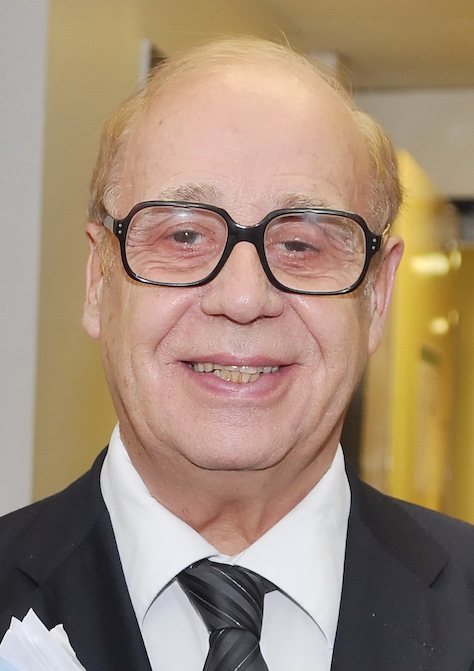
Key facts
- Jean Ziegler, a Swiss sociologist and politician, has died at 92.
- He was internationally renowned for his criticism of capitalism and his commitment to fighting hunger and inequality.
- Ziegler served as the UN Special Rapporteur on the Right to Food from 2000 to 2008.
- His books, including "A Switzerland above suspicion," sharply criticized Swiss elites and the financial center, leading to legal battles.
- He was a member of the Swiss National Council for the canton of Geneva for several decades.
Jean Ziegler, a prominent Swiss sociologist, politician, and former UN expert known for his outspoken criticism of capitalism and his dedication to combating hunger and inequality, has died at the age of 92. His work often challenged Swiss elites and the country's financial sector, earning him both international renown and significant legal opposition.
Born Hans Ziegler in Thun, Switzerland, on April 19, 1934, he pursued studies in law and sociology, eventually becoming a professor at institutions including the University of Geneva and the Sorbonne in Paris. His early intellectual development was influenced by figures like Jean-Paul Sartre and Simone de Beauvoir. Ziegler also had a significant political career, serving as a member of the Swiss National Council for the Social Democrats from 1967 to 1983 and again from 1987 to 1999.
Internationally, Ziegler gained prominence as the UN Special Rapporteur on the Right to Food from 2000 to 2008. In this role, he advocated for equitable distribution of wealth and resources. His critical writings, particularly in books like "A Switzerland above suspicion" (1976) and "Switzerland washes whiter" (1990), targeted Swiss banking secrecy, the influence of the financial industry, and the perceived exploitation by multinational corporations. These publications provoked strong reactions, including numerous lawsuits, which resulted in Ziegler being ordered to pay substantial damages.
Ziegler also held positions such as vice-president of the Advisory Committee to the United Nations Human Rights Council. He was known for his commitment to a "revolt of conscience" and, despite facing legal repercussions, continued to comment on social and political issues well into his later years. He condemned Russia's 2022 invasion of Ukraine, calling Vladimir Putin an unpredictable dictator.