Key facts
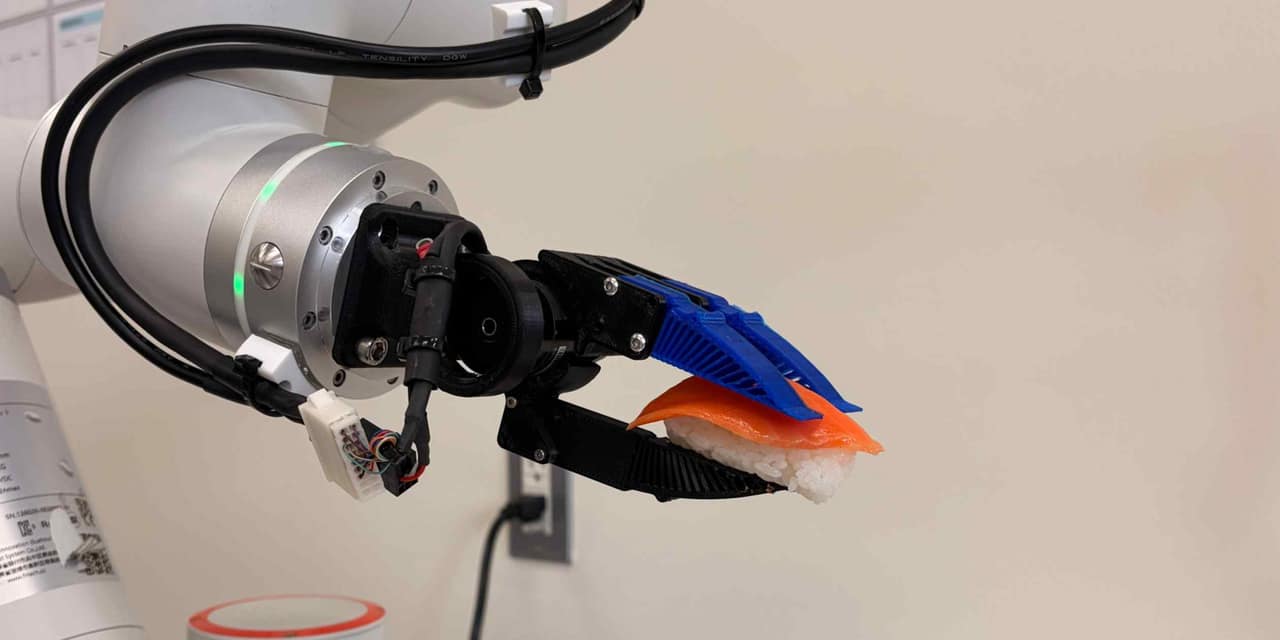
- Japanese university startups are developing AI-powered robots for delicate tasks, including handling fragile foods and performing artisan polishing.
- The Maholo LabDroid, a humanoid robot, is being utilized in a new, fully automated medical research laboratory at the Institute of Science Tokyo.
- Saitama University's 'Physical AI' robot can replicate artisan polishing techniques, generating unique patterns on metal surfaces.
- These advancements aim to address Japan's labor shortages and facilitate the transfer of specialized skills.
- Companies such as Toyota Motor are reportedly interested in the potential labor-saving applications of this technology.
Startups affiliated with Japanese universities are advancing the field of 'Physical AI' by developing robots capable of performing delicate tasks with human-like dexterity. These innovations, ranging from handling fragile foods to replicating artisan polishing techniques, are drawing attention from major corporations like Toyota Motor for their potential to alleviate labor shortages and preserve specialized skills.
At the Institute of Science Tokyo, a new robotics laboratory operates without human staff, utilizing 10 robots, including the humanoid Maholo LabDroid. This robot is designed for intricate laboratory procedures such as transferring precise reagent amounts and managing temperature-controlled equipment, as well as automated cell cultivation. The university aims to significantly expand this robotic workforce to approximately 2,000 by 2040, with the long-term goal of automating nearly the entire medical research process.
Similarly, researchers at Saitama University have successfully digitized and automated an artisan polishing technique. Their 'Physical AI' robot can reproduce delicate, aesthetically rich polished patterns on metal surfaces, creating unique motifs each time, mimicking the touch of a master craftsman. This development is significant for its ability to digitize tacit craft knowledge and address the challenges of an aging workforce and declining birth rates in Japan.
These advancements highlight a growing trend in combining robotics with generative AI to enhance efficiency and precision in manufacturing and research. The integration of humanoid robots is seen as a key step in bridging automation gaps in environments like laboratories, where existing equipment is often designed for human operation. The potential for these robots to interact directly with current tools without requiring extensive infrastructure redesign is a major advantage.