Key facts
- Three senior Iraqi security officials told Reuters government forces were expected to enter Jurf al-Sakhar on November 20, 2026.
- Lieutenant General Saad Maan, head of Iraq's Security Media Cell, told Reuters Kataib forces would move to other areas under the deal.
- Iraqi officials accused Kataib Hezbollah of diverting hundreds of millions of dollars' worth of state oil through a smuggling ring.
- A Kataib Hezbollah spokesperson said Abu Hussein al-Hamidawi met Quds Force commander Esmail Qaani and Hadi al-Amiri of the Badr Organization.
- Participants in the talks called the outcome positive in a statement issued on November 19, 2026.
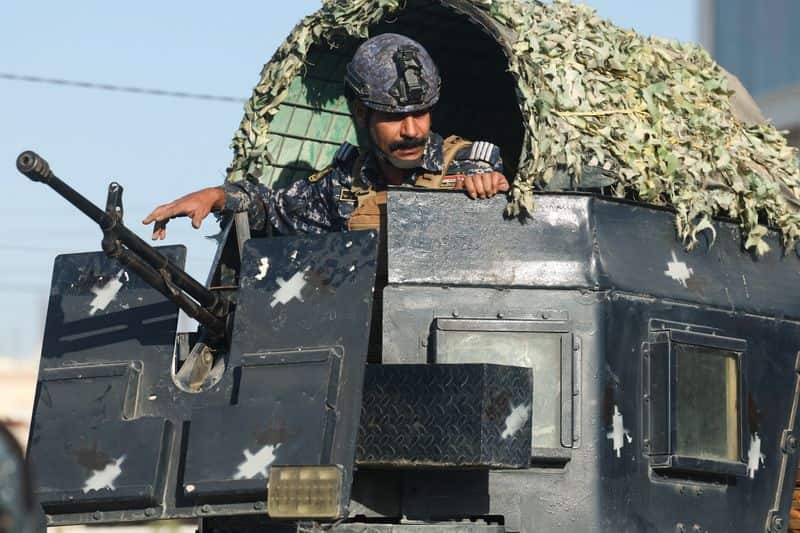
Iraqi security forces were expected to deploy in Jurf al-Sakhar, a stronghold of the Kataib Hezbollah armed group, on Friday, November 20, 2026, three senior security officials told Reuters, under a compromise designed to ease tensions with Iran's most powerful militia ally in Iraq.
The deal followed Prime Minister Ali al-Zaidi's order for security forces to prepare to move against Kataib Hezbollah, which Iraqi officials accused of running an oil smuggling network that siphoned off hundreds of millions of dollars' worth of state-owned oil. Under the compromise, Kataib members were expected to withdraw to other parts of the country, Lieutenant General Saad Maan, head of Iraq's Security Media Cell, told Reuters.
Iraqi Shi'ite political sources said Esmail Qaani, commander of Iran's Revolutionary Guards' Quds Force, arrived in Baghdad late on Monday, November 16, 2026, to help defuse tensions. A Kataib Hezbollah spokesperson said the group's secretary-general, Abu Hussein al-Hamidawi, met Qaani, Hadi al-Amiri, head of the Badr Organization, and other influential figures in a bid to prevent an escalation. Participants described the outcome of the talks as positive in a statement issued on Thursday, November 19, 2026.
Zaidi, a political novice, made his riskiest move since coming to power six months ago by directly confronting the heavily armed Shi'ite militias that function as proxies of Iran. Pro-Iranian militias, including Kataib Hezbollah, have resisted calls by Zaidi and US President Donald Trump to disarm. The groups hold a semi-official status in Iraq, which critics say encourages them to act with impunity; Kataib and other militias say they are dedicated to Iraq's security.