Key facts
- Iran's control over the Strait of Hormuz and Bab el-Mandeb Strait has prompted new investment in alternative energy export routes.
- A MERA Oil consortium plans a $5 billion refinery and export corridor outside the Strait of Hormuz, targeted for late 2029 completion.
- The India–Middle East–Europe Economic Corridor (IMEC) is being reconfigured to utilize Oman and bypass key maritime chokepoints.
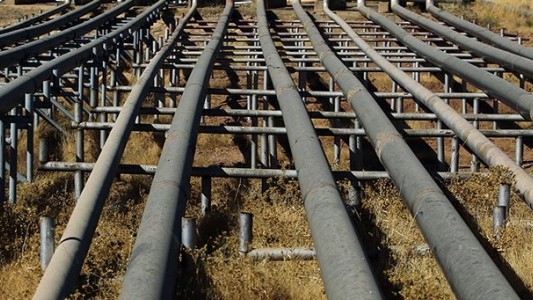
- A proposed overland pipeline would transport oil from Saudi Arabia across Israel to Mediterranean ports.
- These infrastructure projects aim to enhance energy security and circumvent Iranian influence over global oil transit.
Iran's de facto control over the Strait of Hormuz and the Bab el-Mandeb Strait has prompted significant investment in alternative energy transit routes, aiming to circumvent Iranian influence. The Iran-U.S. conflict has already increased global energy import bills by an estimated $330 billion.
A MERA Oil private consortium, a joint venture between U.S.'s MWG Enterprises, the Patel Family Office, and PWS, has announced plans for a $5 billion integrated refinery and energy export corridor located outside the Strait of Hormuz. This development is designed to provide a route-resilient export platform with direct access to international shipping lanes. The project is expected to reach mechanical completion of its first phase by the end of 2029.
This initiative aligns with broader efforts within the Gulf Cooperation Council (GCC) states to bolster energy security. Potential locations for the MERA Oil project are on the Gulf of Oman or the Arabian Sea, such as Fujairah in the UAE or Duqm/Salalah in Oman, offering direct access to the Indian Ocean.
Furthermore, the India–Middle East–Europe Economic Corridor (IMEC), initially launched at the 2023 G20 Summit, is being redesigned with its eastern maritime leg anchored in Oman rather than the UAE. This adjustment allows cargo to be unloaded entirely outside the Strait of Hormuz before transferring to the Arabian Peninsula rail grid, potentially diverting up to 60% of container traffic that currently risks transiting the Strait of Hormuz.
A more secretive, U.S.-originated scheme involves building an overland pipeline across the Saudi desert to the Israeli border. From there, the existing Trans-Israel Pipeline would carry oil north to Mediterranean ports. Israel's energy minister, Eli Cohen, and Prime Minister Benjamin Netanyahu have both expressed support for such a land route, emphasizing its ability to bypass Iran and the Houthis. This concept has also found favor within U.S. President Donald Trump's core team, with a senior source noting the security advantages of infrastructure spanning Saudi and Israeli land.