Key facts
- ITBP chief Shatrujeet Kapoor said the Shaurya commandos have demonstrated capabilities during face-offs with Chinese troops at multiple locations in Arunachal Pradesh.
- Each ITBP battalion has at least one Shaurya Commando team, per Onmanorama, which cited a Tribune report on Army training in Leh.
- The commandos are modeled on the Indian Army's Ghatak platoons and train in hand-to-hand combat for situations where firearms are restricted.
- Kapoor said China has invested heavily in drone warfare and that traditional methods would be a tough task against the PLA.
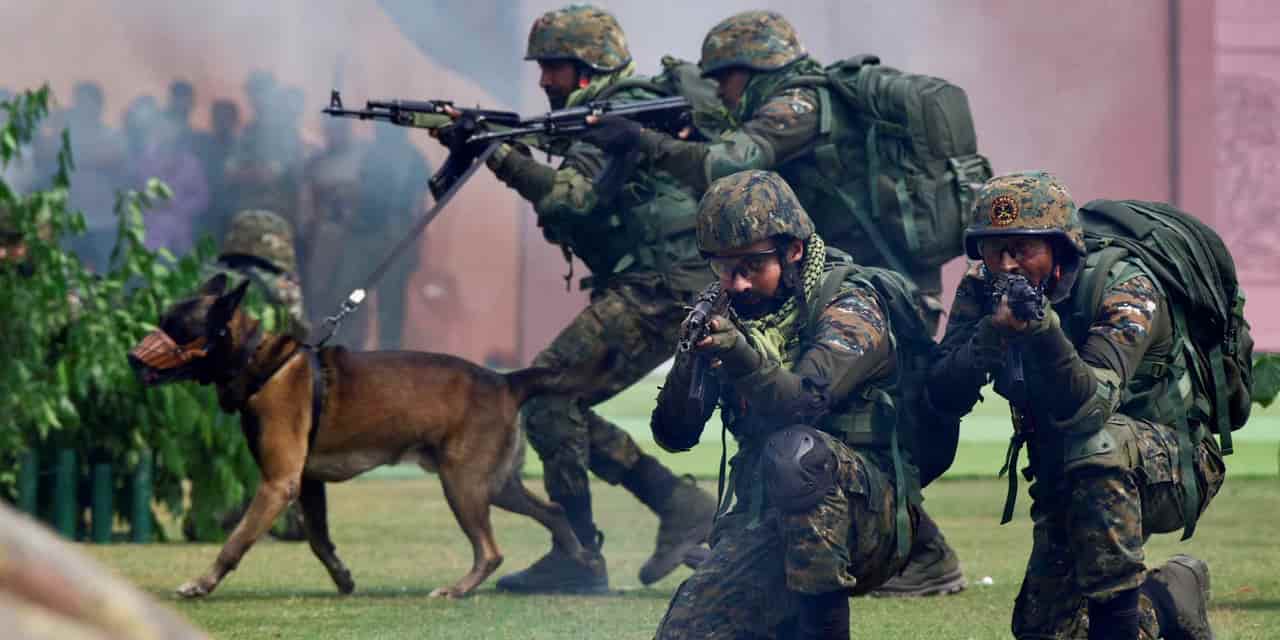
India's Indo-Tibetan Border Police is forming specialized commando units trained for close combat, high-altitude operations, drone surveillance and rapid responses to local face-offs with Chinese troops, according to a report by Onmanorama published November 4, 2026.
ITBP chief Shatrujeet Kapoor said tensions persist along the India-China border, particularly in Arunachal Pradesh, and that troops from the two countries have come face to face at several locations along the frontier. He did not identify where the encounters took place. Kapoor said the Shaurya commandos have demonstrated their capabilities during face-offs with Chinese troops at multiple locations in Arunachal Pradesh, and he emphasized a shift toward drone warfare, saying China had invested heavily in modernizing its drones and that combating the PLA with traditional methods would be a tough task.
The Shaurya Commandos are deployed along the Line of Actual Control with China. Onmanorama reported that each ITBP battalion has at least one team, that the unit is modeled on the Indian Army's Ghatak platoons, and that the commandos received training from the Army's Fire and Fury Corps in Leh, citing a report in The Tribune. Training covers hand-to-hand combat for situations where firearms are restricted, border surveillance, drone operations and advanced weaponry, with the units equipped to operate at high altitudes and in extreme weather.
The force's modernization efforts gathered momentum after the military standoff that began in May 2020, when Chinese troops attempted incursions at several locations in Ladakh, including Pangong Tso and the Galwan Valley, and obstructed Indian patrols. In June 2020, 20 Indian soldiers and four Chinese soldiers were killed in a clash in the Galwan Valley fought with stones and spiked clubs, without firearms.