Key facts
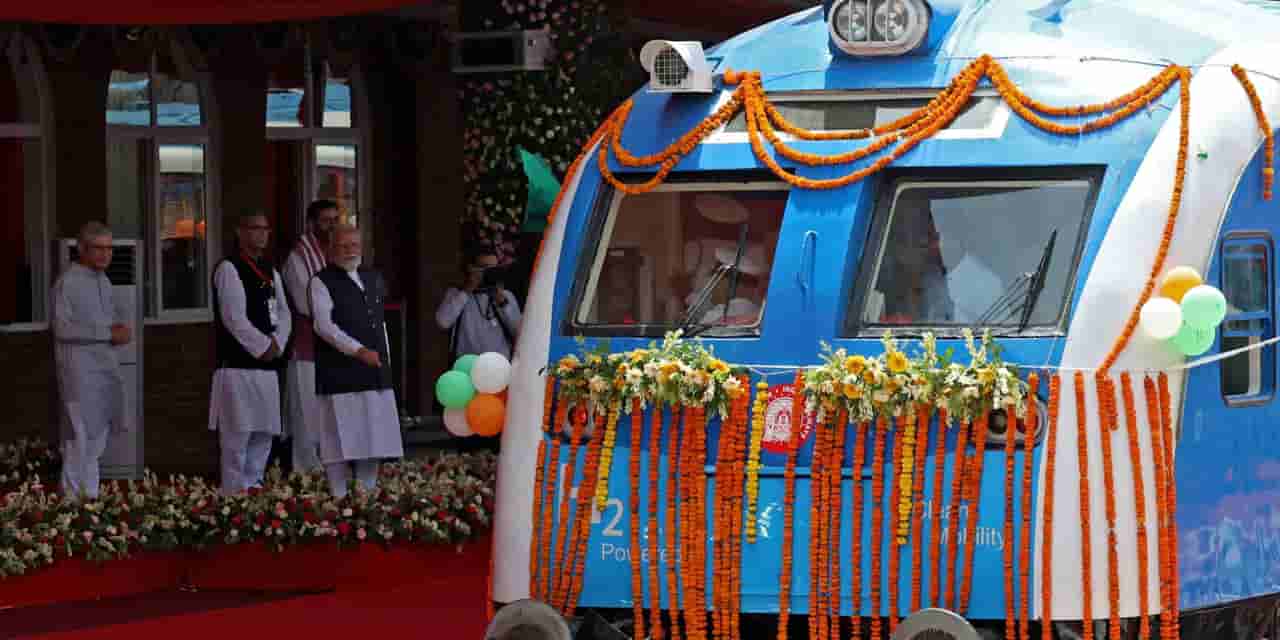
- India launched its first domestically built hydrogen-powered train on July 17, 2026.
- The train operates in Haryana on the Jind-Sonipat route.
- It is a 10-coach trainset with a passenger capacity of approximately 2,600.
- The hydrogen fuel cell system produces only water vapor and heat as by-products.
- The project aligns with India's 'Atmanirbhar Bharat' initiative and its 2070 Net Zero emissions goal.
India has launched its first domestically manufactured hydrogen-powered train, marking a significant step in its pursuit of cleaner transportation and energy security. Prime Minister Narendra Modi flagged off the 10-coach train, named Namo Green Rail, on July 17, 2026, from Jind in the state of Haryana. The train will operate on the Jind-Sonipat route.
This initiative is part of the 'Hydrogen for Heritage' project and aligns with India's commitment to achieving Net Zero emissions by 2070. Unlike diesel trains, the hydrogen train generates electricity onboard using hydrogen fuel cells, producing only water vapor and heat as by-products. The project was designed and developed entirely in India under the 'Atmanirbhar Bharat' (self-reliant India) initiative.
The train is approved to operate at a maximum speed of 75 kmph, with a design speed of 110 kmph, and has a passenger capacity of around 2,600. India joins a select group of countries, including Germany, Japan, China, and the United States, that are exploring hydrogen-powered rail transport. This hydrogen train, with its 10 coaches, is noted as one of the largest hydrogen-powered passenger trainsets developed for regular operations.
In addition to the hydrogen train, Prime Minister Modi inaugurated and laid foundation stones for various other rail infrastructure projects. These include the redevelopment of 75 stations under the Amrit Bharat Station Scheme, costing ₹1,570 crore, and the introduction of two new Vande Bharat Sleeper trains. The overall investment in these projects across the region is substantial, with projects in Jind valued at approximately ₹14,700 crore and broader regional projects estimated between ₹25,000–₹26,800 crore.