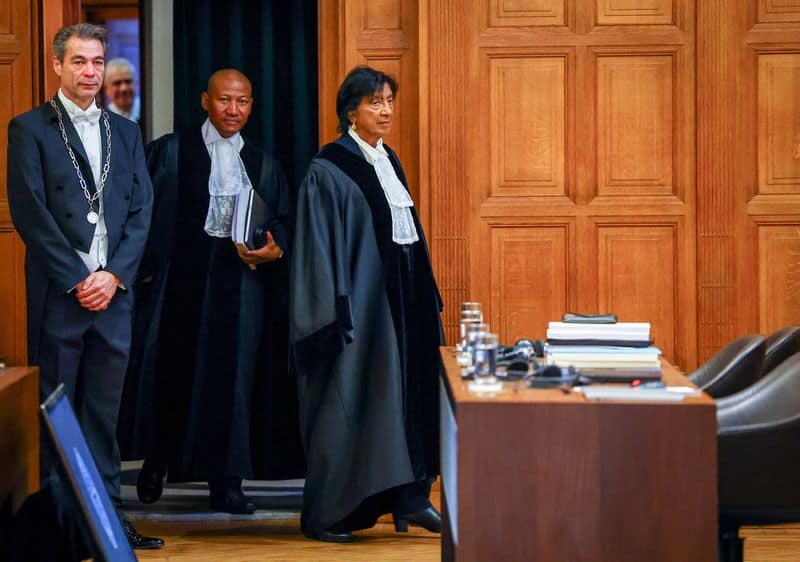
Key facts
- A majority of nine judges on the 15-member bench found around 10,000 killings, the razing of homes, sexual violence and the forced exodus of more than 700,000 people in 2017 amounted to state-sponsored genocide.
- The court said Myanmar must facilitate the return of Rohingya refugees and pay unspecified reparations.
- Israeli legal scholar Yuval Shany said the ruling gives South Africa more avenues to argue for genocide in Gaza.
- The Hague Initiative for International Cooperation said the judgment imposes a lower threshold for proving genocidal intent.
- South Africa alleges an estimated 70% of those killed in Gaza were non-combatants; Israel rejects the allegations.
The International Court of Justice ruled on November 19, 2026, that Myanmar committed genocide against the Rohingya, a finding legal experts said could strengthen South Africa's genocide case against Israel over the war in Gaza. The court found that Myanmar violated the 1948 Genocide Convention on multiple grounds stemming from the armed forces' treatment of the Muslim Rohingya minority.
A majority of nine judges on the 15-member bench found that around 10,000 killings, including of children, the razing of homes, widespread sexual violence and the forced exodus of more than 700,000 people in 2017 amounted to state-sponsored genocide. The judges said Myanmar failed in its obligation to prevent genocide, must facilitate the return of Rohingya refugees and must pay unspecified reparations. The court also adopted conclusions from UN fact-finding reports, including one stating that mass deaths and rapes showed genocidal intent.
South Africa, which has brought a genocide case against Israel over its conduct in Gaza, welcomed the judgment. Foreign Minister Ronald Lamola said it set an important precedent by establishing for the first time that a state had committed genocide, and said it was of "great significance" to the case against Israel, which is not expected to be argued until 2029. Lamola said South Africa would study the judgment carefully with a view to demonstrating that a state's actions, including ethnic cleansing, the killing of children, sexual violence and destruction of civilian infrastructure, can fall within the definition of genocide.