Key facts
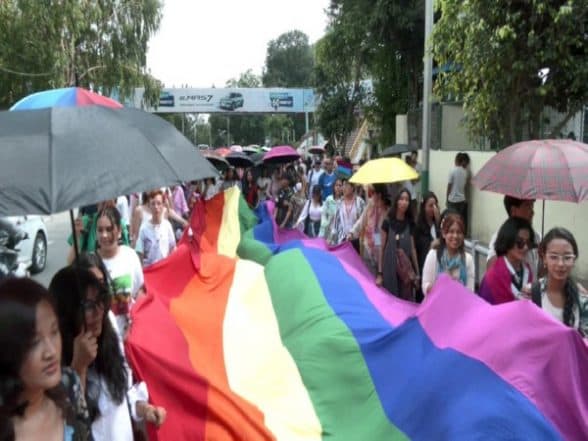
- Hundreds marched in Kathmandu on Saturday to celebrate Pride Month.
- Nepal has established a Ministry of Women, Children, Gender and Sexual Minorities and Social Security.
- Nepal was among the first Asian countries to permit same-sex marriage.
- The 2015 constitution explicitly prohibits discrimination based on sexual orientation.
- Individuals can select "third gender" on official documents like passports.
- The annual Pride Parade is organized by several LGBTQ+ advocacy groups.
Hundreds of members of Nepal’s LGBTQ+ community and their supporters marched through Kathmandu on Saturday to celebrate Pride Month. The parade, which began at Shanti Batika and concluded at Narayan Chaur, featured joyful cheers, colorful flags, music, and dancing, with participants chanting slogans and holding placards to advocate for equal rights and recognition.
Nepal has seen significant advancements in LGBTQ+ rights in recent years. The government, under Prime Minister Balendra Shah, established the Ministry of Women, Children, Gender and Sexual Minorities and Social Security, marking the first time a government department has been dedicated to issues concerning women and sexual minorities. The country was also one of the first in Asia to legalize same-sex marriage. The 2015 constitution explicitly prohibits discrimination based on sexual orientation, building on a 2007 court decision that mandated changes in favor of LGBTQ+ individuals. As a result, people who do not identify as female or male can now select "third gender" on official documents such as passports.
The annual celebration is organized by the Queer Youth Group in collaboration with the Queer Rights Collective and Campaign for Change. While the constitution provides special provisions for sexual minorities, the community continues to advocate for the full implementation of these rights, including the formal legalization of same-sex marriage and adoption rights. Challenges remain, particularly concerning citizenship applications for those identifying as "Other," which can require medical certificates and face ambiguity in current laws. Nepal's 2021 census was the first to include data collection for LGBTQI+ individuals.