Key facts
- Mast said the Chip Security Act would require advanced chips to contain location-verification mechanisms to crack down on smuggling.
- Two other measures would tighten restrictions on chip-making equipment and give Congress a chance to review licenses for advanced AI chip sales.
- Mast said he absolutely wants to investigate the Bureau of Industry and Security's role in the Nvidia controversy.
- A BIS spokesperson did not immediately respond to a request for comment, and Nvidia did not immediately respond to a request for comment.
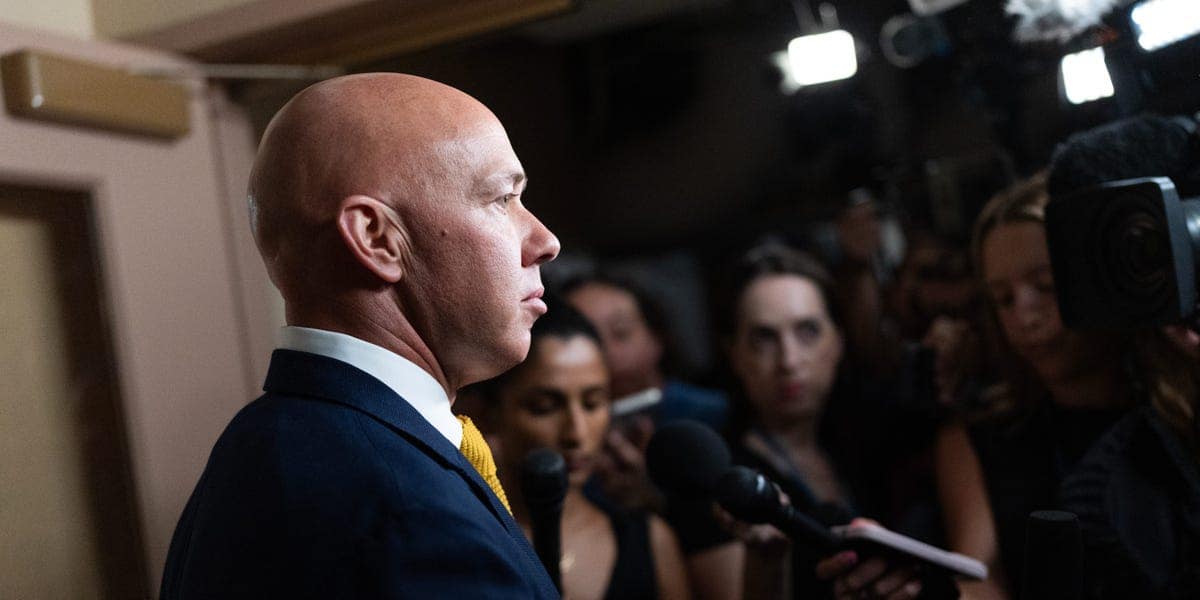
House Foreign Affairs Chair Brian Mast said on November 12 that it is very likely a group of bills imposing new guardrails on exports of advanced US chips to China will be included in the must-pass annual defense bill. The Florida Republican told reporters that the controversy involving Jensen Huang, who resigned as Nvidia's CEO earlier on November 12 after revelations he had an extramarital relationship with a potential Chinese spy, has added momentum to the effort. "If he doesn't know who he's in bed with, he doesn't know where all the chips are going either, and we know that for a fact," Mast said.
Lawmakers are discussing a trio of chip export control bills for the annual defense package. One is the Chip Security Act, which would crack down on smuggling by requiring advanced chips to contain location-verification mechanisms. Another would tighten restrictions on chip-making equipment and push foreign countries to match US restrictions. The third would give Congress a chance to review licenses for advanced sales of AI chips.
President Donald Trump has been cool to the idea of tighter chip export restrictions and previously signed off on deals that allowed Nvidia to sell more of its high-end chips to China, according to the report.
Mast also said he still has confidence in Commerce Secretary Howard Lutnick, who is facing growing scrutiny over his handling of the Trump administration's chips policy. But he declined to say the same for Jeffrey Kessler, who heads the Commerce Department bureau in charge of export controls. Asked if he has confidence in Kessler, chief of the Bureau of Industry and Security, Mast said: "I'm not going to answer that yes or no. It's something that — you know, he's been most granular on this level and a lot of things about where chips can and can't be sold to. That's been more of an argumentative dynamic." He also said he absolutely wants to investigate BIS' role in the Nvidia controversy. A BIS spokesperson did not immediately respond to a request for comment.
Mast is pressing for Huang to testify soon about the scandal. "We want to see him basically in a week," Mast said. "Sooner rather than later." He is in talks with the former CEO's team, but did not rule out a subpoena. Nvidia did not immediately respond to a request for comment. "If negotiations shut off and we don't think they're in good faith, OK, fine, do that," he said. "I'll just subpoena you for the next day. No big deal."