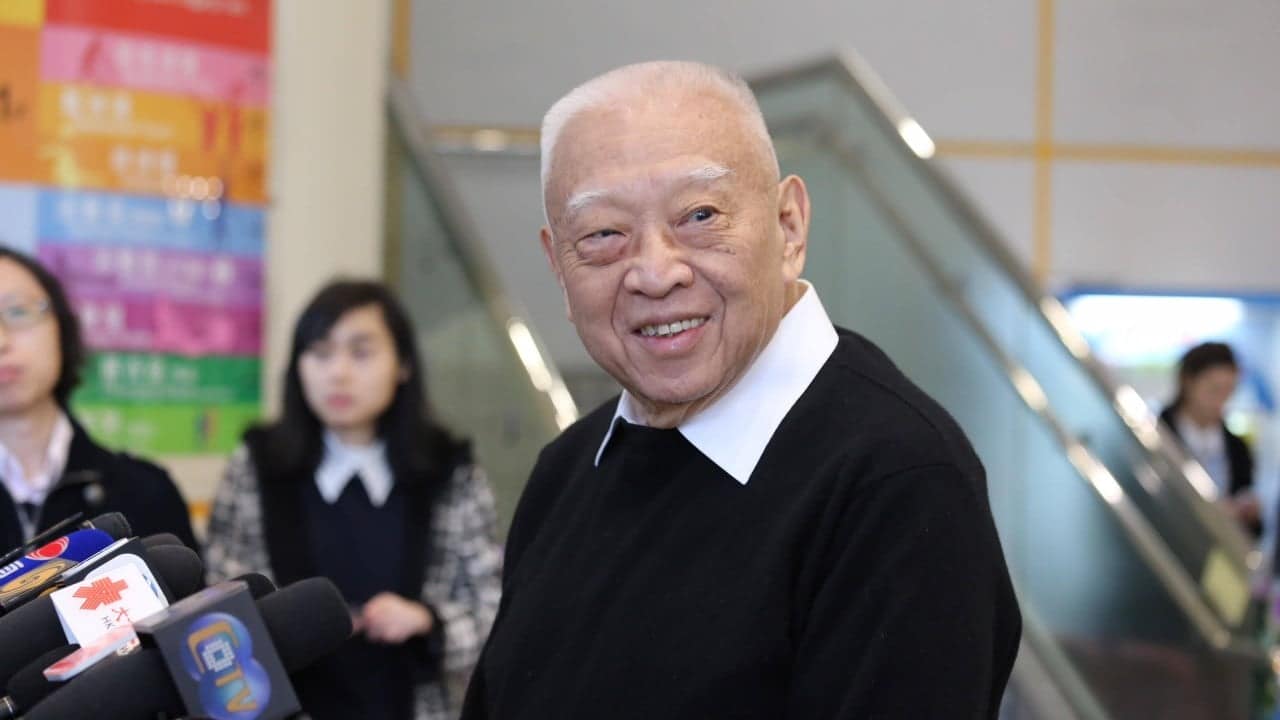
Tung Chee-hwa, Hong Kong's first chief executive, has died at the age of 89. His tenure was marked by significant crises including the Asian financial crisis, the SARS outbreak, and mass protests. Despite controversial policies, he is increasingly viewed as a visionary who pushed for reforms.

Tung Chee-hwa's leadership during a critical period after Hong Kong's handover to China shaped the city's political and economic trajectory. His tenure was defined by navigating unprecedented crises and implementing policies that continue to be debated, influencing the ongoing relationship between Hong Kong and mainland China.
Tung Chee-hwa, Hong Kong's first chief executive, died on September 8, 2024, at the age of 89. His passing marks the end of an era for a figure who led the city through a period of significant challenges following its return to Chinese rule in 1997.
Tung's nearly eight-year tenure was defined by a series of crises, including the Asian financial crisis, the bursting of the property bubble, the severe acute respiratory syndrome (SARS) outbreak, and mass protests. Despite these difficulties and some controversial policies, Tung is increasingly being viewed in recent years as a leader who was ahead of his time in advocating for reforms in Hong Kong.
His office announced his death, stating he passed away peacefully in hospital around 10 p.m. on Tuesday with his family present. Following the news, Beijing, the Hong Kong government, and the pro-establishment camp expressed their condolences. China's Xinhua news agency described Tung as an "outstanding contributor to ‘one country, two systems,’ a renowned patriot, an outstanding social activist and a close friend of the Communist Party of China."
Leung Chun-ying, vice-chairman of the Chinese People’s Political Consultative Conference (CPPCC) and a former Hong Kong chief executive, praised Tung's foresight in planning for Hong Kong's long-term development and addressing livelihood issues. Incumbent Chief Executive John Lee also noted Tung's role in establishing mechanisms to foster closer economic and trade ties between Hong Kong and mainland China.
Tung, who came from a business background and initially expressed little interest in politics, implemented several policies that proved controversial. These included the "85,000" housing plan, which aimed to build that many housing units annually to make property more affordable, but was impacted by the Asian financial crisis, leading to widespread public resentment. Other initiatives, such as Cyberport and a "Chinese Medicine Port," were intended to develop new industries but faced criticism for their execution and effectiveness.
Pick the topics you care about. Get only what matters, on your cadence.