Key facts
- Hong Kong's First Five-Year Plan (2026-2030) was unveiled last month.
- The plan emphasizes Hong Kong's DNA as an international city and market economy.
- It adheres to the 'one country, two systems' principle.
- The plan aims to strengthen Hong Kong as an international financial, maritime, trade, and aviation hub.
- It seeks to attract global capital and talent to its open financial markets.
- The plan includes developing a commodity trading ecosystem with gold as an entry point.
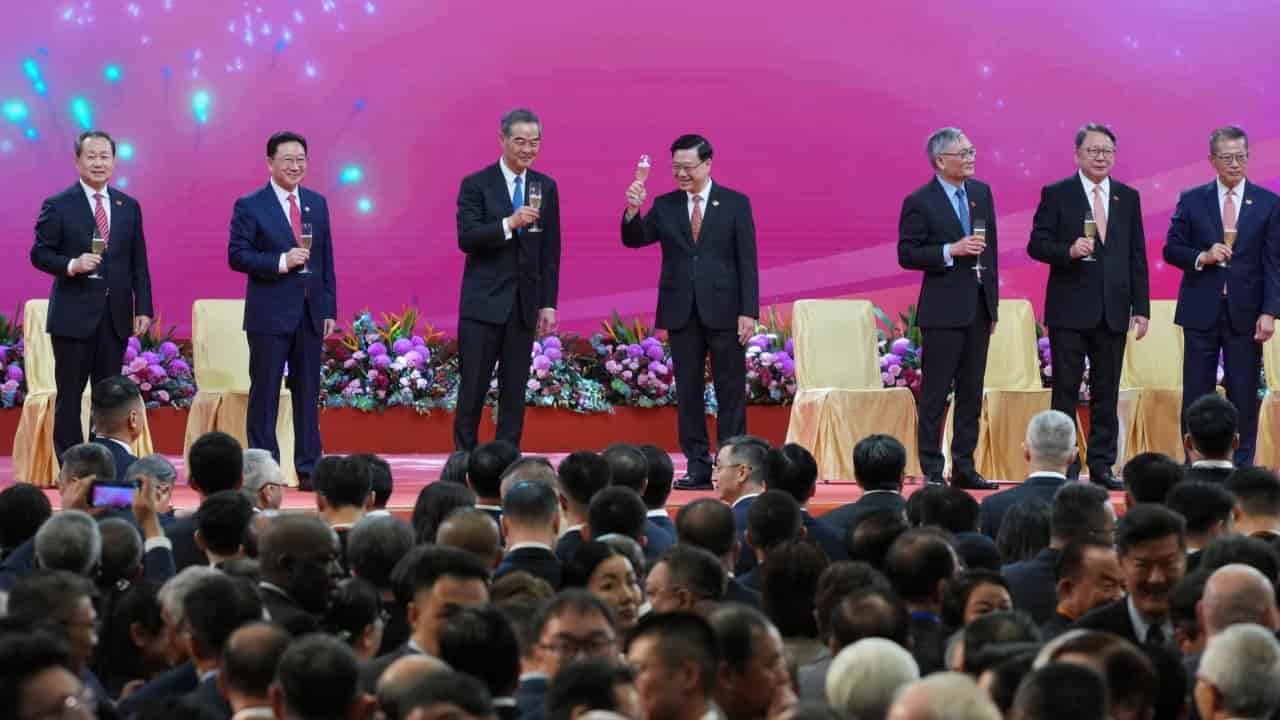
Hong Kong's inaugural Five-Year Plan, launched last month, aims to reinforce the city's identity as an international hub with a strong market economy, according to Chief Executive John Lee Ka-chiu. Speaking at a National Day reception, Lee highlighted the plan's strategic vision in response to a changing geopolitical landscape and the rise of AI.
The plan is designed to align Hong Kong's economic future with China's national strategy while remaining firmly within the 'one country, two systems' framework, safeguarding its capitalist system, common law, and the free flow of capital, goods, and data. This approach seeks to reassure global investors.
Key objectives include strengthening Hong Kong's status as an international financial, maritime, trade, and aviation center. To achieve this, the city will leverage its open financial markets to attract global capital and talent, bolster its role as an offshore renminbi (RMB) business hub, and enhance its function as a cross-boundary wealth management center. The plan also outlines the development of a commodity trading ecosystem, starting with gold, and aims to comprehensively upgrade the Closer Economic Partnership Arrangement (CEPA) with mainland China to expand market access.