Key facts
- Lee said Hong Kong processes about 75% of global offshore yuan payments, with deposits of about 1.3 trillion yuan at the end of July.
- Hong Kong topped last year's global IPO rankings, Lee said, and became the largest cross-boundary wealth management center in May.
- HKMA chief executive Eddie Yue said the global financial system has remained sound despite conflicts, trade policy changes and rising public debt.
- Lee said the five-year plan aims to strengthen Hong Kong as an offshore yuan hub, asset and wealth management center and risk management center.
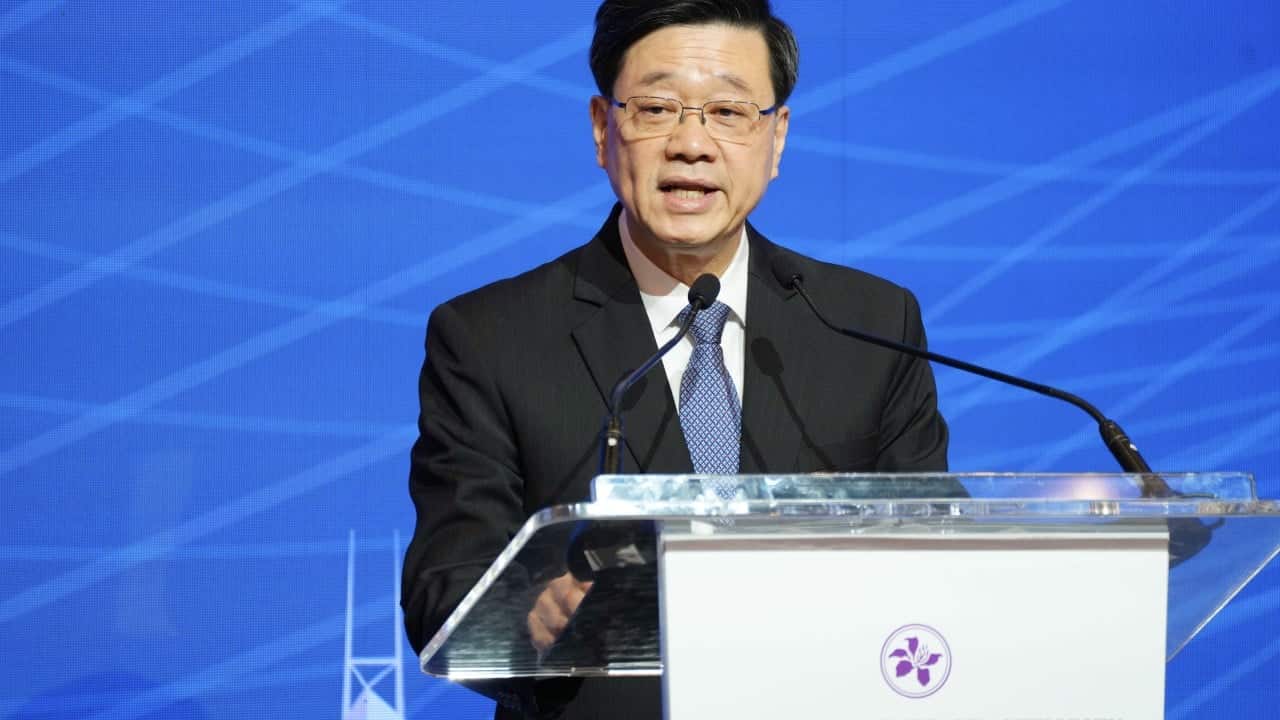
Hong Kong Chief Executive John Lee Ka-chiu used the fifth Global Financial Leaders' Investment Summit on November 3 to present a first five-year plan as a long-term roadmap for investors, saying the city is rewriting its economic playbook toward commodity trading, fintech and green finance.
Lee said the plan, launched in September, sets out directions to strengthen Hong Kong as an international financial hub, a global offshore yuan business hub, an international asset and wealth management center and an international risk management center. He said it delivers what markets value most, certainty, and invited investors to treat the roadmap as their own.
He cited Hong Kong's common law system, free flow of capital, no-tariff free market, low tax regime and connectivity to the Chinese mainland as the city's competitive edge under the one country, two systems principle.
Lee said Hong Kong topped last year's global IPO rankings and raised $50 billion in IPOs in the first nine months of 2026. He said the city processes about 75% of global offshore yuan payments, with deposits of about 1.3 trillion yuan at the end of July, and became the world's largest cross-boundary wealth management center for the first time in May.
Hong Kong Monetary Authority chief executive Eddie Yue said the world has faced more military conflicts, changes in trade policy, supply chain restructuring, rising public debt and a changing technology environment including AI, yet the global financial system has remained sound. He said it was time to re-examine whether past conventions remain effective and to pay closer attention to potential threats and accumulated risks.