Key facts
- La France insoumise will file a bill to ban irritant or tear gas devices in crowd control, lawmaker Mathilde Hignet said.
- Eva-Luna Tholance of the Lacrymos de sang collective said more than 10,000 women and transgender people reported menstrual problems after exposure.
- Interior Minister Laurent Nunez said he would give up no intermediate means, including tear gas, and knew of no harmful effect.
- The bill's backers cite the precautionary principle, saying scientific data on the devices' composition and health effects is lacking.
- Consumer group CLCV asked health agency Anses to assess tear gas effects on health and the environment.
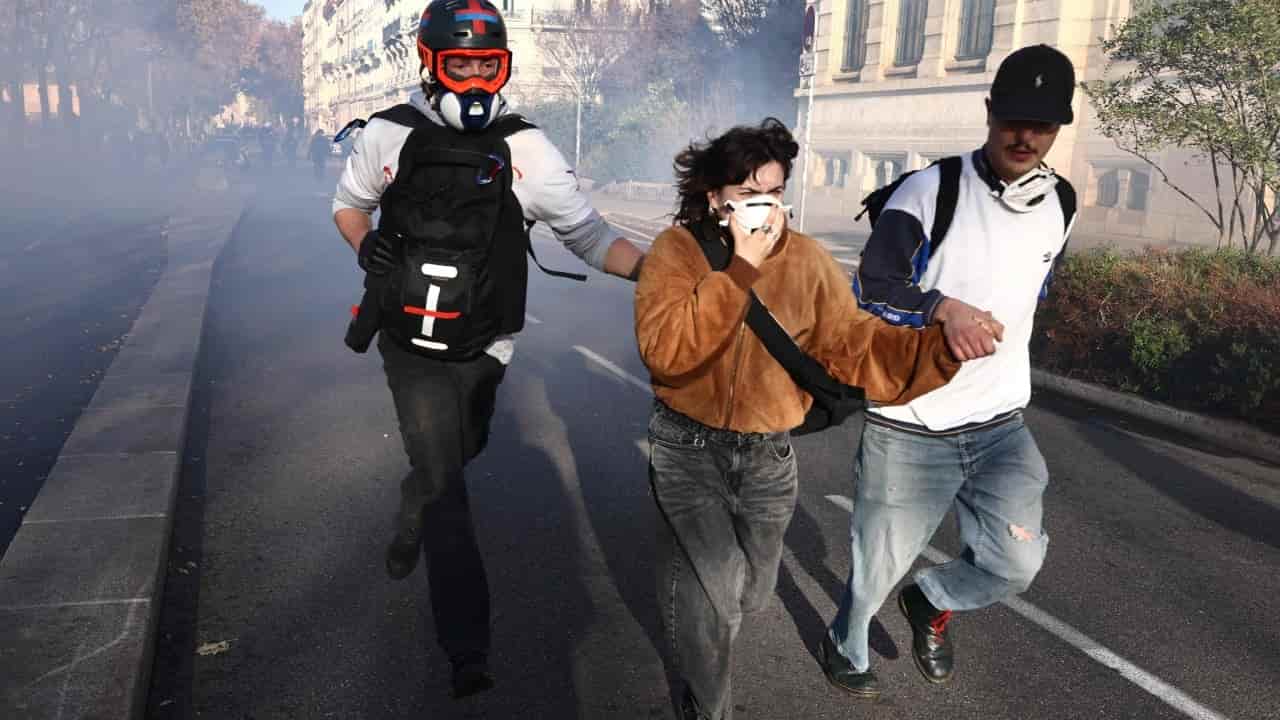
La France insoumise lawmakers plan to file a bill banning tear gas in crowd control operations, party lawmaker Mathilde Hignet said on November 17, 2026, according to Le Parisien. The move follows weeks of student protests and demonstrations over the cost of living, some marred by violence, during which police used tear gas.
At a press conference at the National Assembly, Eva-Luna Tholance, founder of the Lacrymos de sang collective, said more than 10,000 women and transgender people had reported menstrual cycle problems after tear gas exposure over three weeks. Reported symptoms included uterine cramps, abnormal or heavy bleeding and breast tenderness, Le Parisien reported.
The bill's explanatory notes say the health consequences of tear gas raise "vives inquietudes" and that it is "faux de presenter ces armes comme de simples instruments de dispersion aux effets temporaires et sans gravite." Hignet argued that in the absence of scientific data on the composition of the devices and their health effects, the precautionary principle requires restricting their use.
Interior Minister Laurent Nunez said in early November at the National Assembly that he would give up no intermediate means, including grenades and tear gas, because police need to defend themselves when attacked, and that he was not aware the gas was harmful.
Le Parisien reported that most data rests on self-reported accounts from a small number of people, sometimes anonymous, and that a causal link has not been demonstrated. The tear gas used in France is mainly composed of CS (2-chlorobenzylidene malononitrile), known for irritant effects on eyes, skin, nose, throat and lungs.
The consumer group CLCV asked health agency Anses to assess the potential effects of tear gas on health and the environment, Le Parisien reported.