Key facts
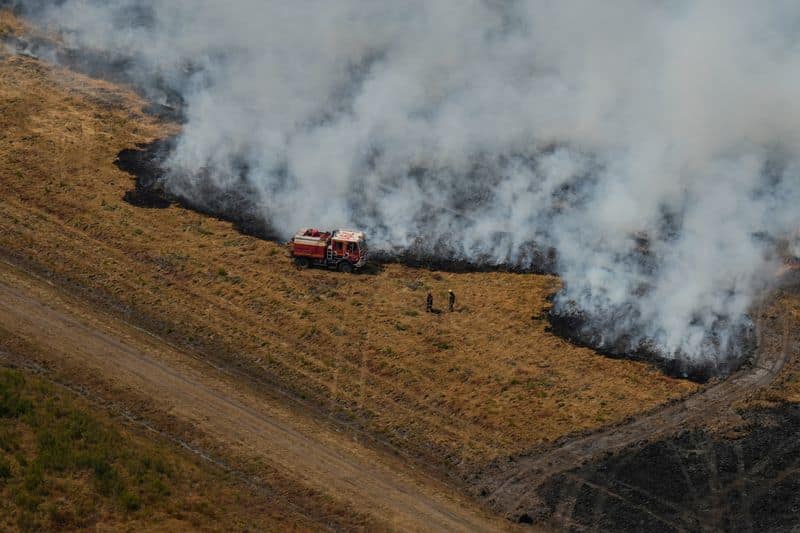
- Thousands of residents in Spain have returned home as wildfires stabilize in areas like Madrid and Toledo.
- Major fires in France's Gironde region are stabilized but not fully controlled, with officials warning of increased risks from heat and wind.
- Spain has recorded its largest wildfire in history at Burgohondo, burning over 43,000 hectares and forcing 40,000 evacuations.
- Both Spain and France are preparing for their fourth heatwave of the summer, with temperatures expected to exceed 40C.
- Climate change is increasing the frequency and intensity of heatwaves and wildfires, with Europe warming at twice the global average.
Thousands of residents in Spain have been allowed to return to their homes in the regions of Toledo, Madrid, Ávila, and Castellón as wildfires show signs of stabilization. In the Madrid region alone, 24,000 people can return, with lockdowns lifted for another 20,000. However, both Spain and France are bracing for their fourth heatwave of the summer, with temperatures expected to reach up to 41C (106F) inland in France and 40C in parts of Spain.
In southwestern France, the largest fires in the Gironde region are described as 'still stabilised' despite several flare-ups, but officials warn of dry winds and rising temperatures. The mayor of Le Barp expressed concern that the situation was 'getting harder.' Sixteen departments in France are under an orange heatwave alert, and special measures are in place to protect industrial sites.
Spain is facing its largest recorded wildfire in history at Burgohondo in Ávila province, which has ravaged over 43,000 hectares and forced 40,000 people to flee. While the fire's perimeter has been stabilized overnight, concerns remain about re-ignition due to high temperatures and dry winds. One fire also remains out of control near Valencia.
Tragically, a woman in Seville died from injuries sustained in an earlier fire in Almería, where 14 people, including foreign nationals, previously died. Wildfires are also active in neighboring Portugal and Greece.
Scientists attribute the increasing frequency and intensity of heatwaves and wildfires to human-induced climate change, noting that Europe is warming at approximately twice the global average.