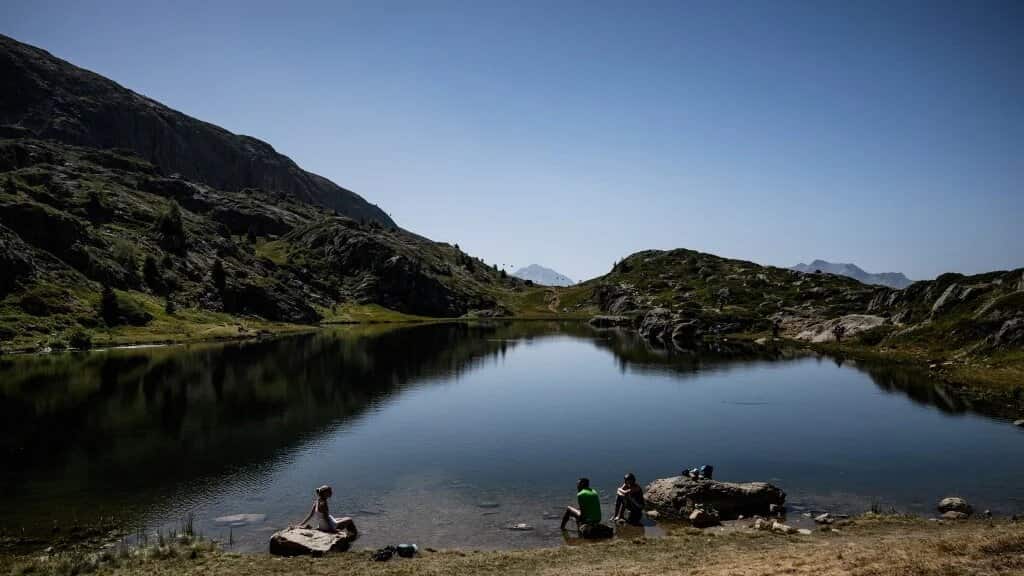
A viral TikTok video that claimed French mountains as exclusive spaces for white people has ignited a significant backlash, leading to a counter-movement asserting the right of diverse communities to access natural landscapes. The video, posted in August, featured an individual celebrating the absence of ethnically diverse hikers and using derogatory language.
This sparked a wave of racist and Islamophobic comments on social media, with some users advocating for the confinement of people from working-class, ethnically diverse suburbs to their neighborhoods. However, it also prompted an unexpected and viral counter-trend under the slogan 'Wallah, we're coming' ('On arrive' in French). Young people, including families and women wearing hijabs, have been posting images and videos of themselves in natural settings to demonstrate their presence and belonging.
Zeynab Alabbar, co-founder and creative director of the modest sportswear brand Kamak, joined the movement, stating, 'We love nature too.' She explained her participation by saying, 'when I saw that racist TikTok video, I decided to respond with humour, to show that nature belongs to everyone, including veiled women.' Alabbar highlighted the paradox of ethnic minorities being urged to integrate while simultaneously being excluded from public spaces.
Experts and individuals involved in the story point to deeper societal issues. Lea Sallenave, a geography lecturer specializing in Alpine spaces, noted that 'recreational mountain culture has been shaped by a dominant group that imposes its codes, creating the feeling that other users don’t belong there.' Her research indicates that images from ski resorts overwhelmingly showcase white individuals, and that race identity assignment can exclude individuals by reducing them to their ethnic origins.
Samir Souadji, founder of the NGO Apart, which offers outdoor activities to disadvantaged youth, echoed these sentiments, recalling instances of mockery and racist remarks directed at his groups in mountain areas. Sociologist Nacira Guénif-Souilamas attributed this hostility to a nationalist and exclusionary reading of territory, stating that 'they are never considered French enough, no matter where they go.' Jumia Alaoui, a hijabi hiker, shared her experiences of being stared at and questioned about her attire in natural settings, reflecting a broader pattern of increasing hostility and exclusion.