Key facts
- SpaceX is reportedly targeting a $1.75 trillion valuation for its IPO.
- Anthropic is aiming for a $2 trillion listing as soon as late September.
- Databricks CEO Ali Ghodsi stated it's a 'terrible year to go public'.
- Companies like Nsacle, Oura, and Strava have reported IPO plans that are in flux.
- OpenAI has delayed its IPO plans until likely next year.
- Figma is down nearly 80% since its IPO last July.
- Cerebras, an AI chipmaker, has fallen nearly 25% since its May debut.
- Klarna has lost nearly 65% of its value since its IPO last September.
- SpaceX stock is down around 13% from its opening price.
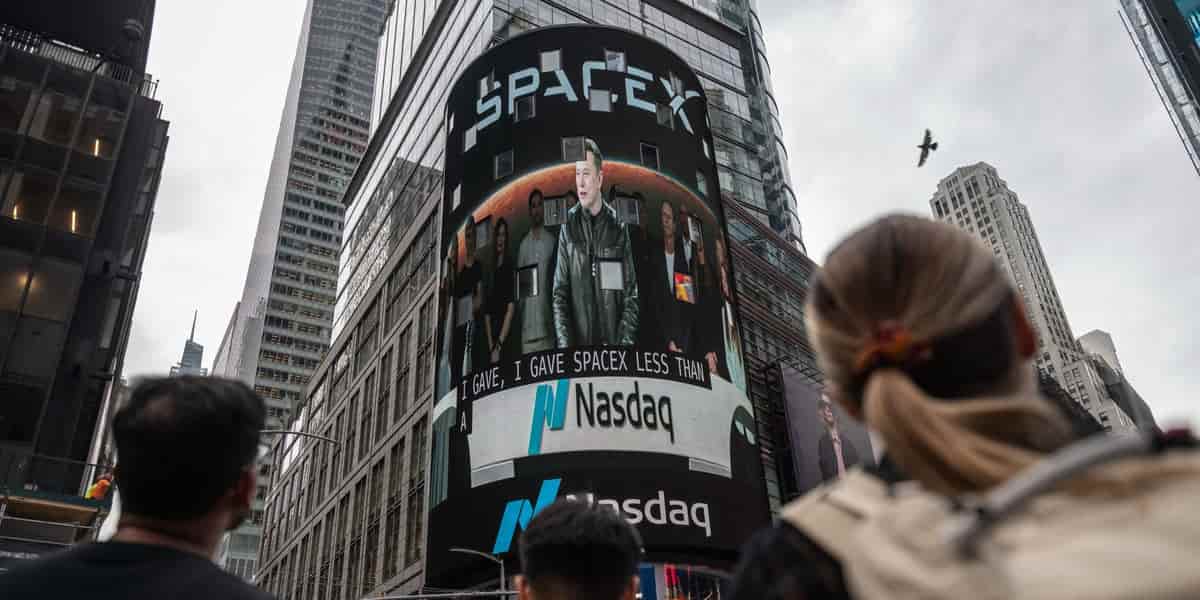
The technology IPO market is poised for a subdued year, with only a few companies expected to list despite the anticipation surrounding two mega-IPOs from SpaceX and Anthropic. SpaceX has already made history with its IPO, valued at $1.75 trillion, and Anthropic is reportedly aiming to surpass this with a potential $2 trillion listing as early as late September.
However, beyond these two giants, the landscape for tech debuts is bleak. Several venture-backed companies, including Nsacle, Oura, and Strava, have IPO plans that remain uncertain. OpenAI, which confidentially filed in June, has postponed its public offering until likely next year. Alex Niehenke, a partner at Scale Venture Partners, expressed disappointment, noting that the IPO market feels 'pretty broken right now.'
Multiple factors contribute to this slowdown. Startups are hesitant to be overshadowed by the massive valuations of SpaceX and Anthropic, making it difficult to attract investor attention and capital. Bankers also point to the Federal Reserve's continued interest rate hikes to combat inflation, a move contrary to investor hopes for cuts. The upcoming U.S. midterm elections in November also introduce uncertainty, potentially compressing the available listing window in the fall due to market volatility.
Furthermore, many tech CEOs see little incentive to navigate the complexities of a public listing when they can still raise substantial capital privately. Databricks, for example, recently secured $5 billion in funding at a $190 billion valuation, opting against an IPO despite its growth. Investor appetite is also a concern, particularly after several high-profile tech IPOs since last summer have experienced significant declines. Figma is down nearly 80% since its July IPO, Cerebras has fallen nearly 25% since its May debut, and Klarna has lost about 65% of its value since going public last September. Even SpaceX stock has seen a roughly 13% drop from its opening price.
JP Morgan's Tegh Kapur suggests that only companies with strong growth and margins, particularly in AI infrastructure, observability, and hardware, and with at least $250 million in revenue, will find success. Bankers emphasize that attracting investors requires a careful balance in IPO pricing, avoiding both overpricing that leads to immediate stock declines and underpricing that leaves money on the table. Despite broader market highs, the selective nature of investors post-2021 IPO and SPAC crash means companies must get their valuation formula 'just right' to succeed.