Key facts
- Changes in local community organization funding could determine the future of fair housing.
- Community-based organizations educate housing providers and ensure compliance with the Fair Housing Act.
- The Fair Housing Initiatives Program (FHIP) has historically received bipartisan support.
- Housing professionals are encouraged to strengthen fair housing efforts and expand access to homeownership.
- Participation in the Fair Housing Week of Action is encouraged for industry professionals.
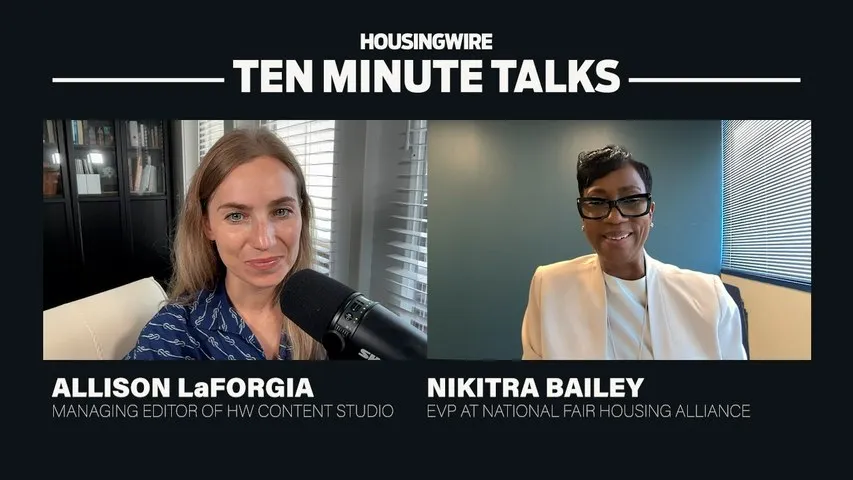
The future of fair housing may hinge on recent changes to funding for local community organizations, according to Nikitra Bailey, Executive Vice President of the National Fair Housing Alliance. In an episode of Ten Minute Talks, Bailey discussed with host Allison LaForgia how these funding shifts could affect community-based fair housing organizations and, consequently, lenders, real estate professionals, servicers, and communities across the country.
Bailey highlighted the essential role these local agencies play in educating housing providers and ensuring their adherence to the Fair Housing Act. She emphasized that supporting these organizations benefits the entire housing industry, not just consumers. The discussion also covered actionable steps housing professionals can take to bolster fair housing initiatives, enhance accessibility, and broaden access to homeownership. Furthermore, Bailey outlined opportunities for industry professionals to engage during the Fair Housing Week of Action.
The Fair Housing Act has a history of bipartisan support. During President Ronald Reagan's second administration, Congress established the Fair Housing Initiatives Program (FHIP) to create a national network of organizations focused on enforcing the act through education, investigation, and compliance assistance. The program was made permanent in 1992, recognizing the vital contribution of community-based fair housing organizations to the nation's enforcement system. For decades, FHIP has consistently received bipartisan backing, enabling millions of Americans to secure housing free from discrimination while providing essential education and guidance to housing providers, lenders, and real estate professionals.