All NewsEducationTV
Equities & FundsCrypto & Digital AssetsAI & TechnologyBusiness & CorporateUS Politics & PolicyGeopolitics & Global RiskMacro, Rates & FXCommodities & EnergyEuropean Politics & MarketsAsia-PacificReal Estate & Property
All NewsHome
← Back to US Politics & Policy

FAA relocates antenna after Marine One safety incident

Created at 25 Aug · 6:17 PM1 source↑ Market-relevant
IN SHORT

The head of the Federal Aviation Administration stated that an antenna was relocated and a procedure changed following an incident where a helicopter carrying President Donald Trump came too close to a departing passenger jet. The FAA is confident the communication issue is resolved, though the NTSB is investigating.

Key Numbers

$12.5 billionFAA funding for air traffic control infrastructure
$10 billionAdditional funding requested by FAA
$875 millionContract value for new SMART system
12 yearsContract duration for SMART system
300Daily flights cut at Chicago O'Hare
October 2027Extension of Chicago O'Hare flight cuts
September 14SMART system testing launch date

Who's Involved

Bryan Bedford
Head of the Federal Aviation Administration
Donald Trump
President of the United States
Federal Aviation Administration
Agency investigating the incident
National Transportation Safety Board
Investigating the incident
Air Space Intelligence
Contracted for new SMART system
FAA relocates antenna after Marine One safety incident

↳ Why This Matters

The incident highlights ongoing safety concerns within the U.S. air traffic control system, particularly concerning the integration of military and commercial traffic, and underscores the critical need for modernization and adequate funding for the FAA.

Key facts

  • An antenna was relocated and a procedure was changed after a military helicopter carrying President Donald Trump came too close to a passenger jet.
  • The incident occurred on August 4th near Reagan Washington National Airport.
  • FAA Administrator Bryan Bedford stated the communication issue has been resolved.
  • The National Transportation Safety Board is investigating the incident.

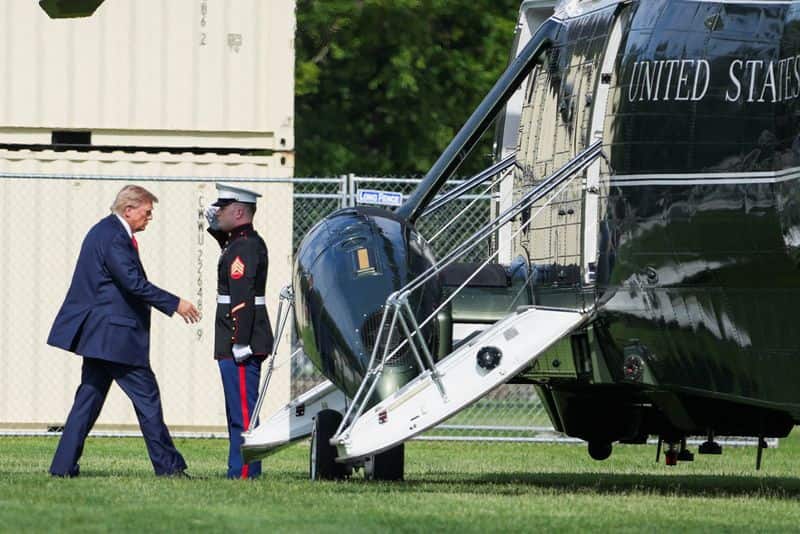
The head of the Federal Aviation Administration (FAA) stated on Tuesday that an antenna was relocated and a procedure was changed following an incident on August 4th where a military helicopter carrying President Donald Trump, known as Marine One, came too close to a passenger jet departing Reagan Washington National Airport. FAA Administrator Bryan Bedford expressed confidence that the communication issue has been resolved.

The National Transportation Safety Board (NTSB) is investigating the incident. This event follows a January 2025 crash that killed 67 people, after which the FAA barred mixed helicopter and jet traffic around the airport.

Congress previously awarded the FAA $12.5 billion to upgrade its air traffic control and radar systems after a series of failures, including significant outages affecting Newark and Washington traffic and a nationwide ground stop in 2023. Bedford has requested an additional $10 billion, warning that delays in modernization efforts are already occurring due to funding shortfalls.

The FAA plans to implement a new system called SMART, developed by Air Space Intelligence under an $875 million, 12-year contract. This system aims to reduce congestion and delays using predictive analytics for flight management before departure. Testing is scheduled to begin on September 14th, with several commercial airlines participating.

The FAA has faced long-standing challenges with air traffic congestion, exacerbated by rising demand, runway construction, weather issues, and air traffic controller shortages. The agency previously ordered airlines at Chicago O'Hare to cut 300 daily flights due to congestion, extending these cuts until October 2027.

Frequently asked questions

A military helicopter carrying President Donald Trump (Marine One) came too close to a passenger jet departing Reagan Washington National Airport on August 4th.

The FAA relocated an antenna and changed a procedure related to the incident.

The National Transportation Safety Board (NTSB) is investigating the incident.

SMART is a new system the FAA plans to deploy to reduce congestion and delays using predictive analytics for flight management.

What Happens Next

01The National Transportation Safety Board will continue its investigation into the incident.
02The FAA plans to launch testing for the new SMART system on September 14th.
03The FAA will continue to assess funding needs for modernization efforts.

How It Developed

An antenna was relocated and a procedure changed after a safety incident.
Marine One, carrying President Donald Trump, came too close to a departing passenger jet.
The FAA Administrator expressed confidence that the communication issue has been resolved.
The National Transportation Safety Board is investigating the incident.

Sources

T1
US FAA says antenna relocated after Marine One safety incidentReuters

Related Stories

Trump administration argues Kennedy Center renaming doesn't violate court order
25 Aug · 3:52 PM
US plans two new FDA deputy commissioners for tech and drugs
25 Aug · 6:09 PM
UK firm GKN agrees $100M compensation for California chemical incident
24 Aug · 9:00 PM
Trump reiterates call to cut S. Korea-U.S. military exercises
25 Aug · 7:21 PM
US plans to revoke up to 200,000 tourism and business visas
24 Aug · 8:48 PM