Key facts
- FAA Administrator Bryan Bedford met with CEOs of major U.S. airlines on Thursday.
- The meeting focused on the FAA's plan to implement a new system called SMART to improve flight management.
- SMART uses predictive analytics to reschedule flights, initially for weather-related cancellations.
- The FAA awarded an $875 million contract for the SMART system to Air Space Intelligence.
- The agency has struggled with air traffic congestion for years, implementing flight cuts at Chicago O'Hare and New York-area airports.
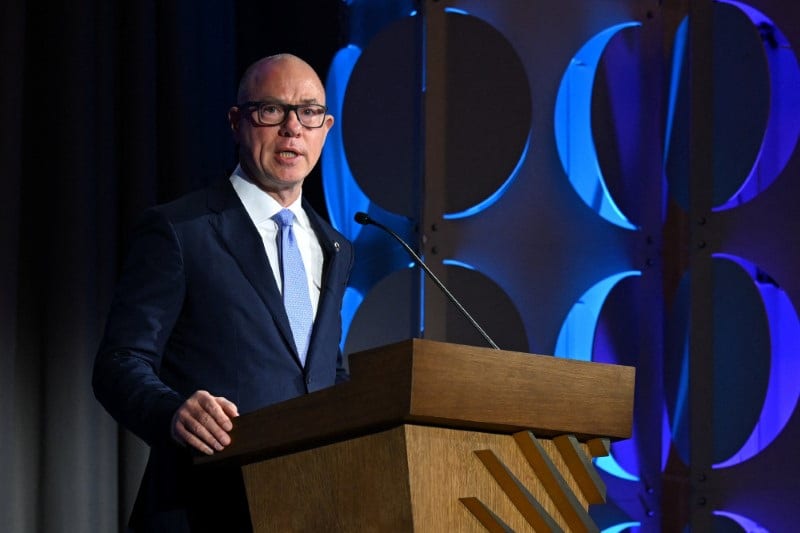
The head of the Federal Aviation Administration (FAA) met with chief executives of major U.S. passenger airlines on Thursday to discuss the agency's plan to implement a new software system aimed at improving flight management and reducing delays. FAA Administrator Bryan Bedford stated that the system, known as SMART (Strategic Management of Airspace, Routes, and Trajectories), will be "transformational" and provide better decision-making tools.
The SMART system, which uses predictive analytics, is set to begin rolling out this month. Initially, it will be used to reschedule flights canceled due to bad weather, with potential future expansion to coordinate schedules and aircraft trajectories before departure. The FAA awarded a $875 million, 12-year contract for the system to Air Space Intelligence in June.
Bedford is also scheduled to testify before a U.S. House appropriations subcommittee regarding the $12.5 billion overhaul of air traffic control and a request for an additional $10 billion for further improvements. The FAA has faced challenges addressing air traffic congestion for years, exacerbated by rising demand, runway construction, severe weather, and air traffic controller shortages. In response, the agency previously ordered flight cuts at Chicago O'Hare and extended them at Newark and other New York-area airports.
Airlines for America, the industry's trade group, praised the SMART initiative, anticipating a positive impact on travelers through reduced delays and cancellations. United Airlines CEO Scott Kirby also expressed optimism, noting the system's potential to mitigate weather-related disruptions.