Key facts
- Europe's natural gas storage reserves are 69% full, below the five-year average of 85% for this time of year.
- High energy prices, linked to the U.S.-Israeli war on Iran, have deterred private companies from restocking gas.
- Global oil prices have risen above $100 a barrel due to increased Middle East conflict.
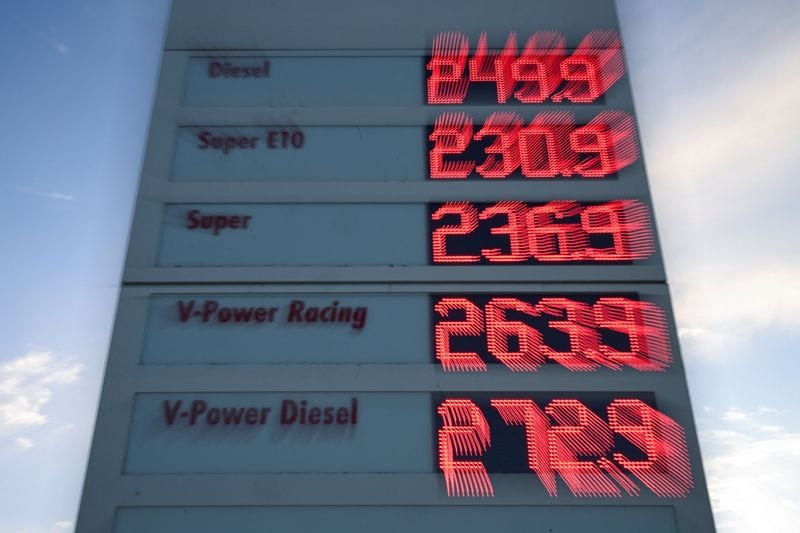
- Petrol prices in the EU are 24% higher than a year ago, diesel is up 38%, and jet fuel costs have more than doubled.
- The European gas benchmark is trading at €81 ($93) per megawatt hour, a 150% increase from a year ago.
- The European Central Bank raised interest rates last week and signaled potential further increases.
Europe's efforts to secure energy supplies for the winter are being hampered by low natural gas storage levels and high refined oil product prices, creating economic and political challenges for governments. The continent's gas reserves are currently at 69%, significantly below the five-year average of 85% for this period, according to Gas Infrastructure Europe.
Germany and the Netherlands, which together account for 35% of the bloc's storage capacity, are particularly behind in restocking. High energy prices, exacerbated by geopolitical tensions stemming from the U.S.-Israeli conflict in the Middle East, have deterred private companies from purchasing gas and governments from enforcing national storage targets. Analysts had bet on a swift resolution to the conflict and a subsequent drop in prices, allowing for affordable restocking, a strategy that now appears increasingly risky.
UniCredit strategist Jonathan Schroer noted that each month of delayed restocking increases price pressure as winter approaches. While the current economic situation is arguably less critical than during the initial phase of Russia's invasion of Ukraine in 2022, due to diversified energy sources and a softer labor market curbing inflation, governments are still concerned. The European Central Bank (ECB) recently raised interest rates and has warned of further increases if energy price pressures do not subside.
Global oil prices have surpassed $100 a barrel amid the Middle East conflict. This has led to a 24% year-on-year increase in EU petrol prices, a 38% rise in diesel prices, and more than a 100% jump in jet fuel costs. The European gas benchmark is trading at €81 ($93) per megawatt hour, up 150% from a year ago and exceeding the ECB's adverse forecast. Morgan Stanley analysts predict prices could reach €100/MWh depending on weather conditions, highlighting the risk of relying on weather for supply security.
Analysts warn that storage sites could be heavily depleted even in a normal cold winter, potentially tightening liquefied natural gas markets for months afterward as countries seek to replenish stocks in 2027. Research from the Bank of Italy indicates that gas shocks have more persistent inflationary effects than oil shocks, closely watched by the ECB. Consequently, financial investors anticipate the ECB may raise interest rates three to four more times, potentially restricting economic growth through higher borrowing costs.
ECB policymaker Peter Kazimir stated his focus is shifting from oil and fuel prices to gas and electricity prices. Economists identify airlines, chemicals, autos, and building materials as the most vulnerable sectors, while energy firms, utilities, and banks are expected to benefit, despite higher interest rates potentially impacting lending growth. Germany's energy-intensive industry makes it particularly exposed, while other nations with weak public finances may struggle to implement relief measures. Italy, for instance, plans to scrap road tax for millions of vehicles, costing over €2 billion, in addition to a prior cut to diesel excise duty. French Finance Minister Roland Lescure criticized such broad measures as a false economy, emphasizing the need for funding.