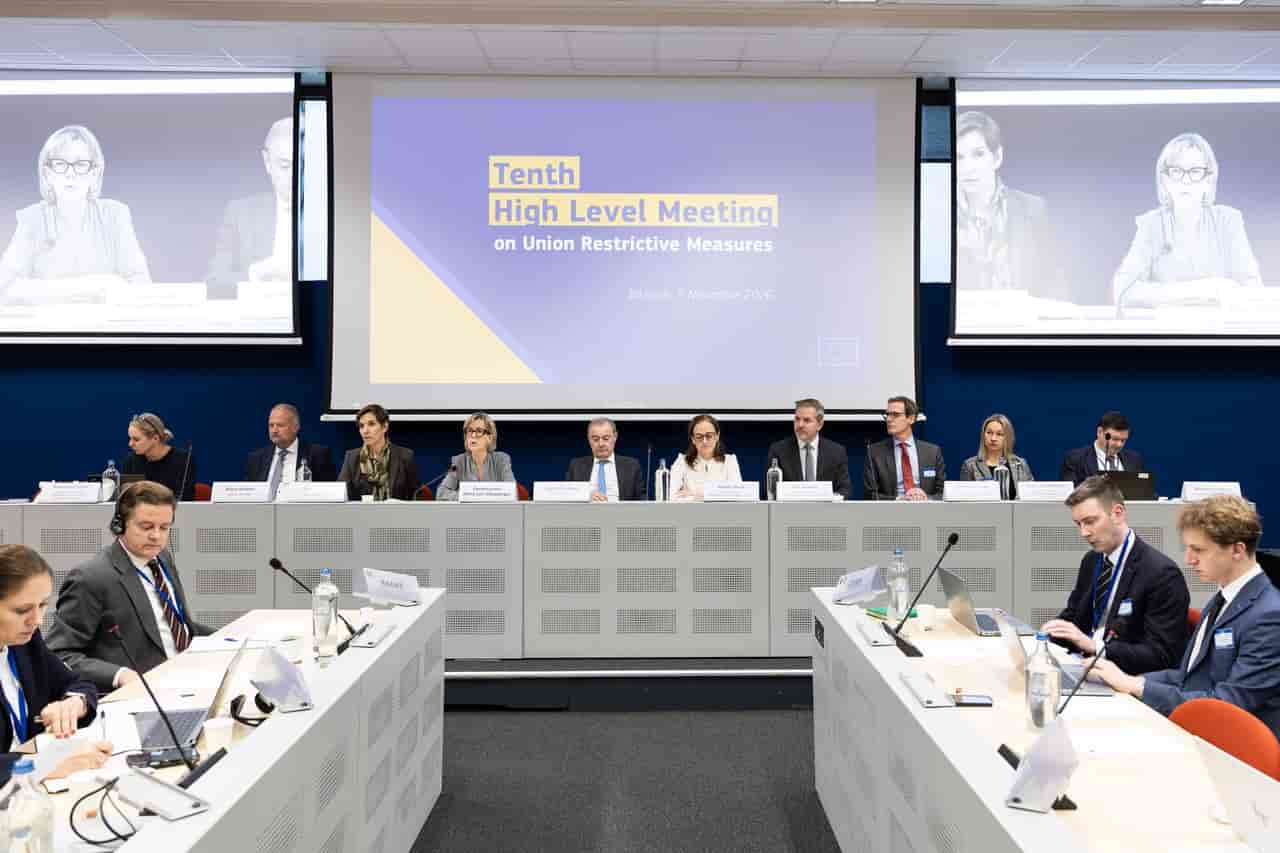
The EU will set up a dedicated office for its sanctions work and a task force on cryptocurrency sanctions, Commissioner for Financial Services Maria Luis Albuquerque said in a social media post on November 5, 2026.
Albuquerque said the office "will strengthen coordination, provide faster guidance to Member States and improve data sharing and analysis." She wrote that the step would let the EU "present a more united front on the global stage, engage better with our G7 and likeminded partners, and deliver stronger impact and more effective implementation within the EU and outside."
European Commission spokesperson Siobhan McGarry told the Kyiv Independent at a November 6 press conference that the aim is "that we can continue to maximize (sanctions') impact on Russia itself." On the crypto task force, McGarry said "Crypto is a tool that has been used to circumvent our sanctions," and that the body will bring together national and EU experts to design measures closing those loopholes.
An EU diplomat told the Kyiv Independent that the task force is initially envisaged to work for 12 months and will draw on expertise from third countries including Ukraine and the U.K., which the diplomat said has also drawn up extensive sanctions targeting the crypto industry.
The announcements followed two sanctions meetings on November 5: one hosted by Albuquerque for EU countries and institutions to address sanctions loopholes, and another hosted by EU sanctions envoy David O'Sullivan bringing together sanctions coordinators from allied countries. The EU's tenth high-level meeting on union restrictive measures met in Brussels on November 5.