Key facts
- The European Commission is proposing to open Cluster 3 in Serbia's EU accession negotiations.
- Several EU member states, including the Netherlands, are hesitant to approve the move due to concerns about Serbia's reform progress.
- Serbia's President Aleksandar Vucic expressed skepticism about rapid EU enlargement for aspiring member states.
- Concerns include Serbia's human rights record, judicial independence, and the fight against corruption.
- EU ambassadors will discuss the proposal, with a potential veto from the Netherlands.
- The debate highlights a division between using enlargement as a geopolitical tool and ensuring candidates meet democratic standards.
The European Commission's proposal to advance Serbia's EU membership bid by opening a new cluster of negotiations is facing significant opposition from member states, highlighting a division on how to manage the bloc's enlargement. EU ambassadors are set to discuss approving the opening of Cluster 3, which covers cross-border services and business regulations. However, several countries, notably the Netherlands, are skeptical, fearing that candidates might be rewarded before sufficient progress on democratic and judicial reforms is achieved. This approach contrasts with the Commission's view that enlargement can serve as a geopolitical tool to steer countries away from rival powers.
Serbia's minister for EU integration, Nemanja Starović, argued that opening Cluster 3 is long overdue and that recent reforms merit this step, warning that delays would benefit anti-European forces. Despite legislative changes aimed at aligning with EU rules and strengthening the management of EU funds, concerns persist regarding Serbia's human rights record and the fight against corruption, including stalled investigations into large-scale corruption cases. Conflicting internal assessments from the Commission have surfaced, with one briefing paper suggesting Serbia has remedied past backsliding, while a separate confidential report detailed intensified pressure on civil society and journalists, and a lack of progress in corruption cases. If the cluster is not opened, the Commission may seek alternative ways to acknowledge Serbia's legal changes, potentially after upcoming nationwide elections.
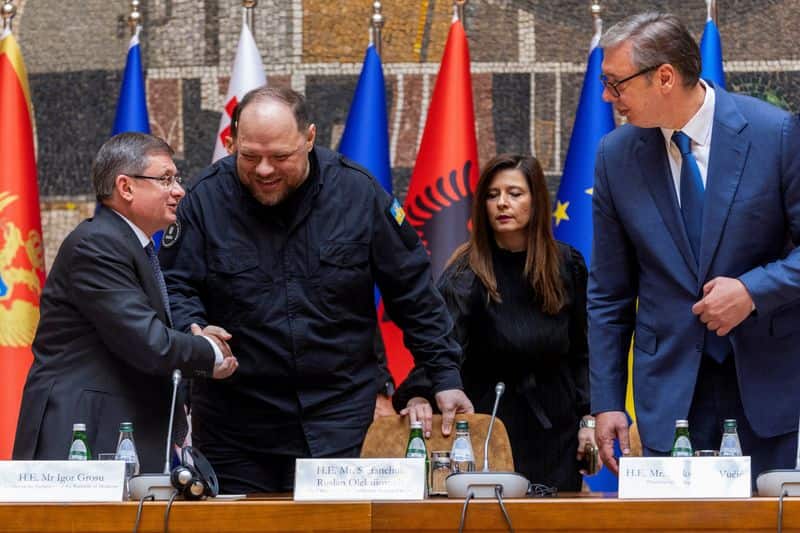
Serbian President Aleksandar Vucic expressed skepticism about a swift expansion of the European Union, stating he is not optimistic that aspiring new members, including Serbia, will join the bloc in the near future. He noted that while the European path remains the best option for the Western Balkans, Ukraine, Moldova, and Georgia, a major enlargement should not be expected soon. Ukraine’s parliament speaker, Ruslan Stefanchuk, co-hosting an event with his Serbian counterpart Ana Brnabic, urged the EU to accelerate accession to prevent Russia's aggressive policies, advocating for a wide and strong enlargement to complete a united and indivisible Europe.