Key facts
- Reuters interviewed 15 environmental, conservation and development organizations; all said they use AI and voiced concern about data center impacts.
- The IEA estimates global data centers will consume about 945 terawatt-hours of electricity annually by 2030, double current use.
- The IEA projects data center water consumption rising from about 560 billion liters in 2023 to about 1.2 trillion liters a year by 2030.
- Save the Elephants said human surveys missed about a third of elephants, roughly half of zebras and giraffes, and three-quarters of oryx populations.
- Amazon said its AI products were among the most sustainable because of low-carbon energy purchases and efficiency efforts; Microsoft and Google did not respond.
- Turkey, as COP31 host, will ask governments, businesses and institutions to sign a pledge on sustainable AI development.
Environmental, conservation and development organizations are using artificial intelligence to analyze climate data, track forest fires and count endangered wildlife, while warning that the data centers powering the technology drive up electricity demand, water use and greenhouse-gas emissions, Reuters reported on November 7, 2026.
Reuters said it interviewed 15 such organizations; all said they used AI in some form and expressed concern about the environmental impact of the data centers behind it. Ali Swanson, AI lead at the US nonprofit Conservation International, said the group recognizes AI can carry environmental costs but can help organizations move faster as climate and biodiversity pressures grow. The group recently began using AI to assess satellite-detected hotspots and send real-time alerts to community forest patrols about potential wildfires in remote parts of Cambodia.
The International Energy Agency estimates global data centers will consume about 945 terawatt-hours of electricity annually by 2030, producing the equivalent of more than 300 million metric tons of carbon dioxide, double current consumption and about equal to Japan's annual electricity use. The agency projects data center water consumption will rise from about 560 billion liters in 2023 to about 1.2 trillion liters a year by 2030. Researchers at the United Nations University Institute for Water, Environment and Health estimate the global data-center footprint could more than double by 2030, reaching about twice the size of Jakarta.
Microsoft, Amazon and Alphabet's Google have reported rising emissions linked in part to data center expansion. Amazon told Reuters its AI products were among the most sustainable because of its purchases of low-carbon energy and efforts to use power and water efficiently. Microsoft and Google did not respond to requests for comment.
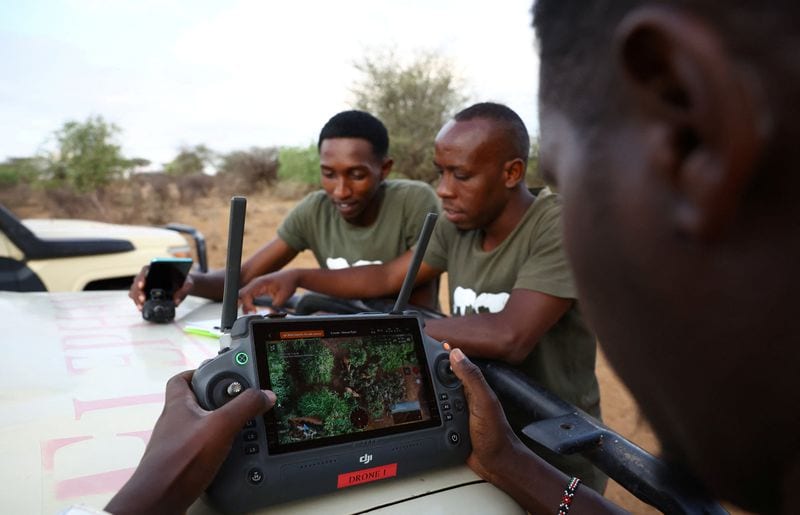
Several groups said AI's benefits currently outweigh its costs. Frank Pope, chief executive of Kenya's Save the Elephants, said an aerial survey of Kenya's largest protected area last year produced roughly 200,000 images that took nine people nine months to review manually, while AI models trained on Nvidia's GeForce graphics platforms can now complete similar analyses in hours. Pope said the results showed human surveys missed about a third of the elephants, roughly half of zebras and giraffes, and three-quarters of oryx populations, and that better data helps secure conservation financing.