Key facts
- Eisenkot and Netanyahu held two-hour talks in Tel Aviv on November 29, their second meeting in November.
- A joint statement said the discussion was businesslike and both sides sought to bridge substantial differences.
- Channel 12 reported no further meetings were planned, citing Eisenkot saying he was committed to his bloc partners.
- Eisenkot has until December 6 to form a government, with a possible 14-day extension.
- Eisenkot's bloc won 48 seats and Netanyahu's bloc 53 in the 120-seat Knesset.
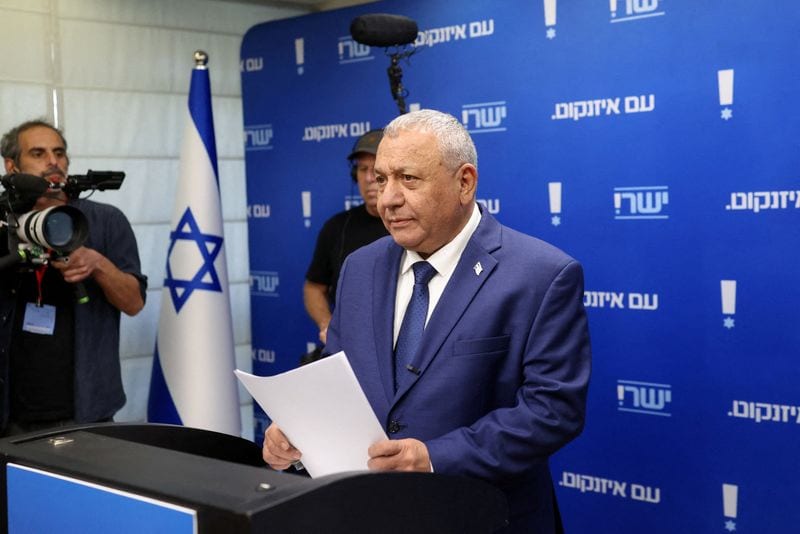
Gadi Eisenkot, leader of Israel's center-right Yashar party, appeared to play down the prospects of a unity government with Prime Minister Benjamin Netanyahu after the two held two-hour talks in Tel Aviv on November 29, Reuters reported. The meeting was their second in November, following an inconclusive October 27 election that left neither man with a clear path to power.
"The discussion was businesslike, with both sides seeking to bridge the substantial differences between them," Netanyahu and Eisenkot said in a joint statement, without elaborating. Israel's Channel 12 news later reported there were no plans for further meetings, citing Eisenkot telling Netanyahu: "I'm committed to my partners in the bloc. You're welcome to join after the government is formed." A spokesperson for Eisenkot confirmed that report.
Netanyahu said on November 28 he would be willing to temporarily relinquish power in a unity government led by Eisenkot, offering to go second in a rotation under any deal between his Likud party and Yashar. Political analysts said Eisenkot, a former military chief, seemed more likely to form a coalition with parties seeking to oust Netanyahu.
Israel's president tapped Eisenkot to form a government after the election, with a December 6 deadline and the possibility of a 14-day extension. Eisenkot has signed coalition deals with the left-wing Democrats and the right-wing Yisrael Beiteinu party. Eisenkot and his potential partners won 48 seats, short of a majority in the 120-seat Knesset, while Netanyahu's Likud and its far-right and ultra-Orthodox allies won 53.
If no unity deal is reached, Eisenkot could form a coalition with possible support from ultra-Orthodox Jewish and Arab parties. Yair Golan, head of the Democrats, said after the meeting that the Israeli public was behind Eisenkot, posting on X: "Now is the time to form a government that will bring real change..."