Key facts
- Confirmed Ebola cases in the Democratic Republic of Congo have surpassed 4,000.
- Health officials are concerned about potential virus mutations due to unprecedented severity.
- The outbreak is the second-largest on record and the fastest-spreading.
- Response efforts are shifting to door-to-door patient searches.
- Essential healthcare services, including measles vaccinations, have seen a significant drop.
Confirmed Ebola cases in the Democratic Republic of Congo have risen above 4,000 for the first time in the current outbreak, according to data from the country's public health institute. Health officials are concerned about the virus's unprecedented severity and potential mutation, with discussions underway with the World Health Organization to conduct studies.
The outbreak, caused by the Bundibugyo strain, has resulted in 4,053 confirmed cases and 1,850 deaths as of early August. This makes it the second-largest Ebola outbreak on record, showing significantly higher case and death rates compared to the West Africa outbreak at similar stages. A high proportion of deaths are occurring within communities, and contact tracing efforts are considered insufficient, with only about 10 contacts identified per patient.
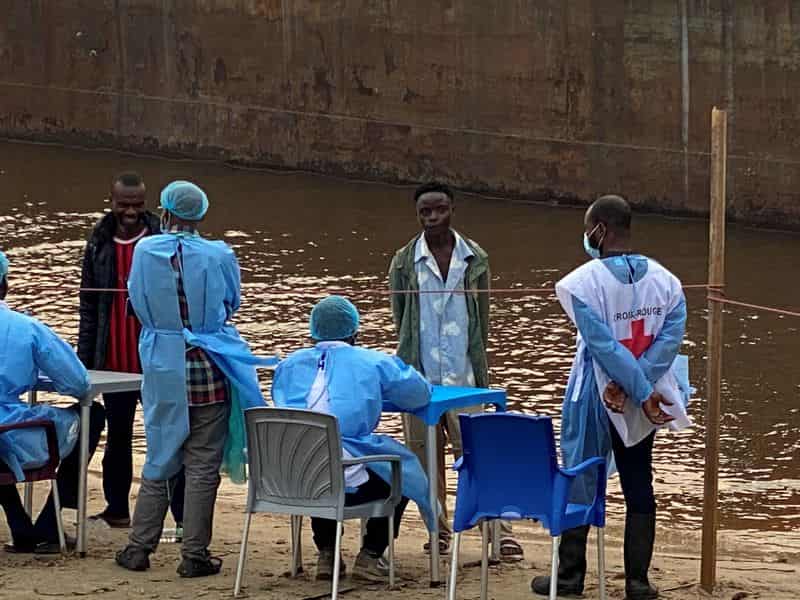
Response efforts are being scaled up, transitioning from contact tracing to an active case search involving door-to-door visits. The use of the antiviral remdesivir on a compassionate basis and investigation into the efficacy of the Ervebo vaccine against this strain are planned. The outbreak is disrupting essential healthcare services, with a 69% drop in measles vaccinations observed in the mining town of Mongbwalu, a central point of the outbreak.