Key facts
- The Connected Vehicle Security Act would ban US sales of cars made with components from adversaries including China and Russia.
- Sponsors Moreno and Slotkin aim to pass the bill by voice vote in December and are working with House colleagues to fast-track it.
- Senate leadership from both parties has signaled support, according to a person familiar with the conversations.
- The original bill banned cars from companies more than 15% Chinese-owned; Chinese investors own nearly 80% of Volvo and 20% of Mercedes.
- Lawmakers kept batteries out of covered components, leaving Ford's CATL licensing partnership unaffected, four people said.
- A sunset provision was added after some lawmakers warned an indefinite ban could slow decarbonization, three people said.
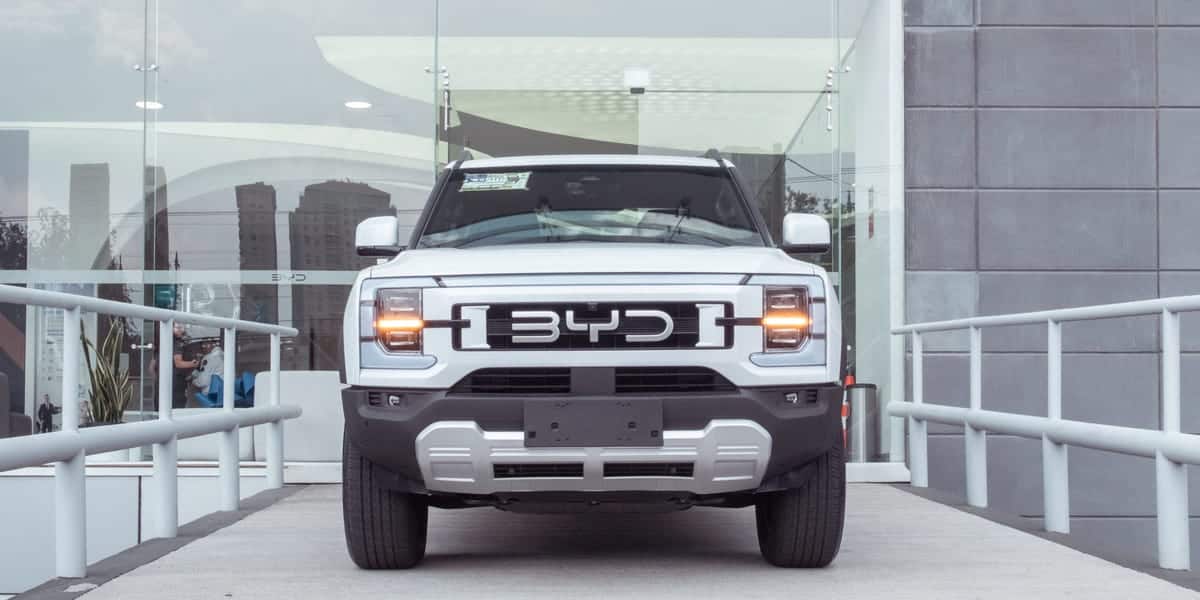
Congress is looking increasingly likely to pass bipartisan legislation in 2026 banning the import of Chinese autos, after the bill's Senate backers won over key parts of the auto industry. The Connected Vehicle Security Act, sponsored by Sens. Bernie Moreno (R-Ohio) and Elissa Slotkin (D-Mich.), would ban US sales of cars made with components from adversaries like China and Russia.
Moreno and Slotkin are aiming to pass the legislation by a voice vote in December and are working with House colleagues to fast-track the measure there. Senate leadership from both parties has signaled support for the bill, according to a person familiar with the conversations, and Majority Leader John Thune (R-S.D.) helped advance the measure out of the Senate Commerce Committee earlier in 2026.
Getting European and US car companies, which had concerns about parts of the legislation, to line up behind it greatly improves the odds of passage, according to the report. Lawmakers agreed to tweak language to address concerns from several European automakers and their defenders, including GOP Sen. Rand Paul, whose state of Kentucky is an auto manufacturing hub and has courted more than $10 billion in investment from international automakers, according to Autos Drive America.
Discussions are at the "one yard line," said one of the people, with the substance of the changes resolved and only wording and text left to iron out. A spokesperson for the Alliance for Automotive Innovation, which advocates for automakers including Mercedes, Volvo, GM, Ford and Stellantis, told POLITICO the organization is "very supportive" of the bill.
Winning over Paul, as well as others like Alabama Sen. Katie Britt, whose state is home to a Mercedes plant, is crucial to getting the unanimous consent needed to pass by voice vote, given the end-of-year floor time crunch. Passing the legislation would mark another sign of Capitol Hill's hardening position on China, in defiance of President Donald Trump, who has defended Nvidia CEO Jensen Huang amid a Chinese espionage scandal and mused about allowing Chinese car companies to build plants and sell vehicles in the US.
Chinese vehicles are already effectively blocked from the US market by steep 100% tariffs, first imposed by Trump and raised by former President Joe Biden, as well as Commerce Department restrictions on vehicle components. Some in the domestic auto industry have pushed Congress to codify the blockade to provide greater certainty for long-term sourcing decisions.
Moreno, Slotkin and other backers negotiated with Mercedes and advocacy groups on provisions defining what qualifies as a Chinese vehicle, said two people familiar and three others briefed on the talks. The original language banned sales of cars made by companies with more than 15% Chinese ownership; Chinese investors own nearly 80% of Volvo and 20% of Mercedes.
Paul told Reuters in September that he thought the bill unfairly singled out Mercedes. Paul and Britt's offices did not respond to a question on whether they would support the legislation. The White House did not immediately respond to a request for comment.
A GOP staff member who worked on the legislation and a second person familiar with the deal said that under the agreement, neither company would be blocked from selling cars in the US. The bill will include more flexibility for companies with silent shareholders, like Mercedes, according to the people. Volvo has already secured federal authorization to sell cars in the US despite its China ties.
A Mercedes-Benz spokesperson declined to comment on whether a deal has been reached but said the company "applauds the constructive discussions with key US lawmakers including Senator Moreno, Senator Slotkin and [Senate Commerce Committee] Chairman [Ted] Cruz (R-Texas)." A Volvo Cars spokesperson said the company has "specific authorization to continue to sell connected vehicles in the US" and is "actively engaged with policymakers on the potential business and consumer impacts of this US legislation."
Lawmakers kept batteries out of the list of components covered by the legislation and opted not to tighten restrictions on battery technologies, despite calls from parts of the domestic industry. Ford resisted tighter curbs that could have affected its partnership with Chinese battery manufacturer CATL to license its technology. Lawmakers will not include language on batteries in the final version, four of the people said; the bill instead focuses on battery management systems. Ford declined to comment.
Negotiators also agreed to include a sunset provision for the vehicle ban, after some environmentally minded lawmakers expressed concern that indefinitely banning Chinese cars, including affordable electric vehicles, could slow decarbonization efforts, according to three of the people.