Key facts
- The Detangle comb uses electronic teeth with height-differentiated electrodes and integrated drug-loading modules, per the researchers.
- The researchers said the alternating tooth lengths generate an electric field 2.63 times stronger than aligned teeth.
- Electroporation temporarily boosts cell membrane permeability, letting therapeutic molecules reach deeper skin, the researchers said.
- The study used VEGFA plasmid, which stimulates blood vessel growth around follicles, and SRD5A2 siRNA, which suppresses a hormone that shrinks follicles.
- The researchers said the approach surpassed outcomes achievable with conventional oral or external medications in the mouse model.
- No evidence yet shows the comb works in humans; more tests are required before clinical trials.
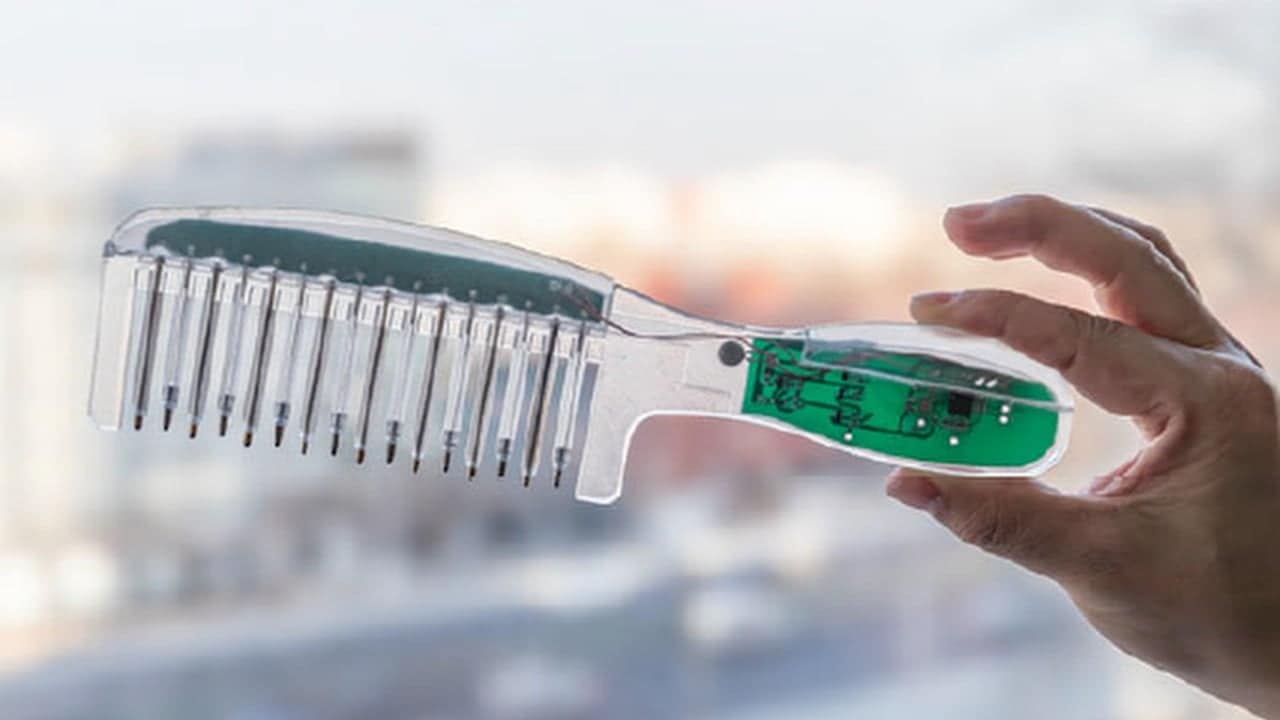
Researchers led by Beihang University in Beijing developed a comb-shaped bioelectronic device called Detangle that uses microelectronics to treat hair loss, according to a study published in Nature Communications. The device features electronic teeth with height-differentiated electrodes and integrated drug-loading modules, the researchers said.
The system generates pulsed electric fields from alternating teeth of different lengths. The researchers said the difference in tooth length produces an electric field 2.63 times stronger than if the teeth were aligned in a row. The shorter teeth are loaded with a drug-delivery system that uses electroporation, which temporarily boosts cell membrane permeability, to drive therapeutic molecules deep into the skin.
In experiments with male mice with testosterone-induced hair loss, untreated animals regrew only about 1% of the hair on a shaved portion of their backs during a 28-day experiment. Mice that received electrostimulation only saw about 40% regrowth, less than the approximately 50% and 70% seen with finasteride and minoxidil respectively. Combining electrostimulation with SRD5A2 siRNA produced about 85% regrowth, and with VEGFA plasmid about 90%. The full treatment, combining electrostimulation with both VEGFA plasmid and SRD5A2 siRNA, produced about 97.85% regrowth.
The researchers wrote that the approach accelerates hair growth nearly 100% within a month in the androgenetic alopecia mouse model, surpassing outcomes achievable with conventional oral or external medications. The device has only been tested in mice, and more tests will be required before clinical trials in humans can be conducted to establish whether it is safe and effective.