All NewsEducationTV
Equities & FundsCrypto & Digital AssetsAI & TechnologyBusiness & CorporateUS Politics & PolicyGeopolitics & Global RiskMacro, Rates & FXCommodities & EnergyEuropean Politics & MarketsAsia-PacificReal Estate & Property
All NewsHome
← Back to Asia-Pacific

China land bidding heats up in prime cities, but broader market remains weak

Created at 30 Aug · 2:27 AM1 source↑ Market-relevant
IN SHORT

Frenzied bidding for prime residential land parcels has returned to China's top-tier cities like Shanghai and Beijing, with state-backed developers paying record prices. However, this selective activity masks a broader contraction in the national land market, where sales remain subdued.

Key Numbers

200rounds of bidding for a Shanghai parcel
16.1 billion yuanprice for Shanghai Yangpu riverfront parcel
$2.4 billionprice for Shanghai Yangpu riverfront parcel
102,000 yuanper square meter record price in Shanghai
25%premium Poly Developments paid for a Xuhui site
50residential plots sold in five core cities in May-June
30%premium for 18 of 50 residential plots
22.7%year-on-year fall in residential land sales area (Jan-Jul)
6.7%year-on-year drop in average floor prices (Jan-Jul)
50key cities where sales decline narrowed
9%cumulative decline in new-home sales (Jan-Jul)
20key cities for existing-home sales data
16%
month-on-month fall in existing-home sales (July)
16.3 million square metersland supply in 50 key cities in Q1
26.6 million square metersland supply in 50 key cities in Q2
10.46 million square metersland supply in 50 key cities in June
17.87 billion yuancombined starting prices for Shanghai's latest three-parcel batch
11.87 billion yuanstarting price for Shanghai's Yangpu site
27.5%year-on-year cut in tier-two cities' residential land supply (Jan-Jul)
31.5%year-on-year fall in state land-sale revenue (H1)
237.2 billion yuanland spending by state-backed developers (H1)
64%share of tracked land spending by state-backed developers (H1)
30%share of tracked developers' purchases by state-backed firms in July
10top investors in land purchases that were state-backed
50 billion yuanspent by Poly and China Resources Land each
10-20 billion yuansales generated by premium core-city projects soon after launch
12premium land parcels in major cities with intense bidding (Apr-May)
1,126rounds of bidding for 12 premium land parcels (Apr-May)
26.9 billion yuancombined sale price for 12 premium land parcels (Apr-May)
$4 billioncombined sale price for 12 premium land parcels (Apr-May)
36%average premium for 12 premium land parcels (Apr-May)
43.9%year-on-year fall in overall developer land purchases

Who's Involved

Poly Developments and Holdings Group
State-backed developer, led consortium that won Shanghai land bid
China Resources Land
State-backed developer, part of consortium that won Shanghai land bid
China Overseas Land & Investment
State-backed developer, drove Beijing land prices to records
China Jinmao
State-backed developer, drove Beijing land prices to records
E-House China Research and Development Institution
Provided data on land bidding and developer purchases
Purui data
Showed narrowing decline in new-home sales
Xie Yangchun
Executive at Purui, warned on durability of high-end demand
Cao Jingjing
Analyst at China Index Academy, commented on land-sale revenue drop
China land bidding heats up in prime cities, but broader market remains weak

↳ Why This Matters

The intense bidding for prime land parcels in China's top cities suggests a potential stabilization in the high-end property market, but the broader weakness indicates that a full recovery remains distant. This trend has significant implications for local government finances, developer strategies, and the overall economic outlook.

Key facts

  • State-backed developers engaged in a 200-round bidding war for a prime Shanghai residential parcel on July 28, 2026.
  • Poly Developments and China Resources Land won the Shanghai bid for 16.1 billion yuan ($2.4 billion), setting a record price per square meter.
  • Record auction prices in Shanghai and Beijing are reviving hopes for property market stabilization, but the trend is confined to prime parcels.
  • Nationally, residential land sales by area fell 22.7% year-on-year in the first seven months of 2026.
  • State-backed developers accounted for 64% of tracked land spending in the first half of 2026.
  • Local governments are curtailing land supply to manage inventory and support prices.

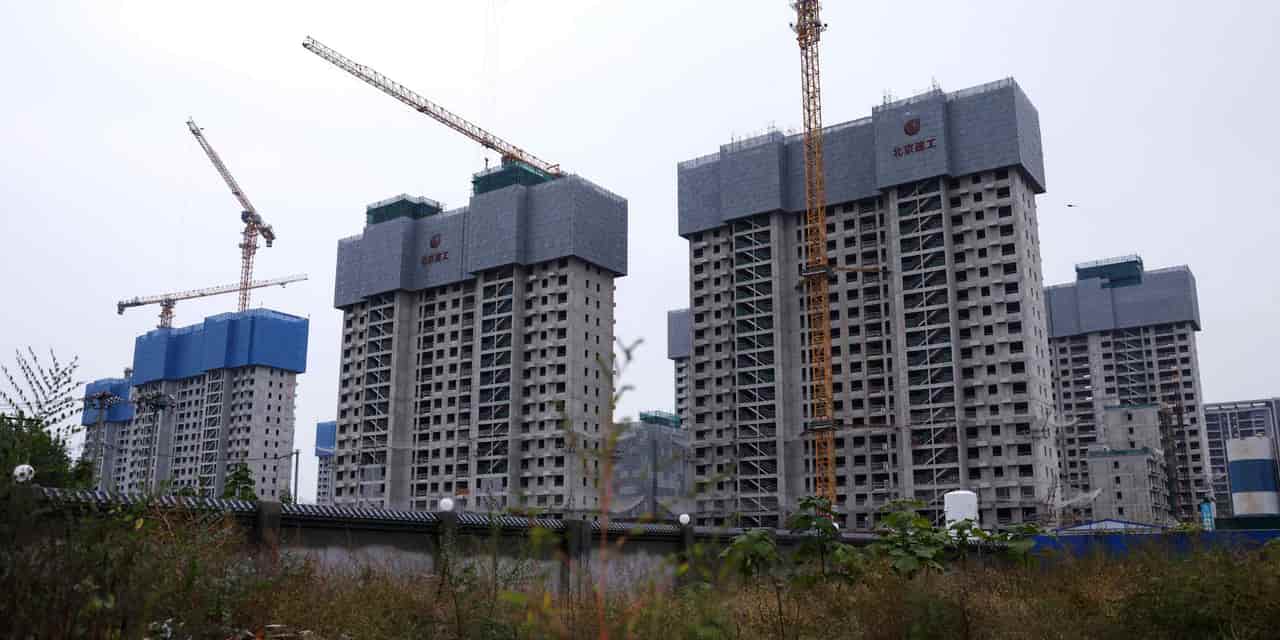
Frenzied bidding for prime residential land parcels has returned to China's top-tier cities, with state-backed developers paying record prices, sparking hopes of a property market bottom. On July 28, 2026, a consortium led by Poly Developments and Holdings Group and China Resources Land won a Shanghai Yangpu riverfront parcel for 16.1 billion yuan ($2.4 billion) after a 200-round contest, setting a local record of 102,000 yuan per square meter. Poly Developments also secured another Shanghai site at a 25% premium, while China Overseas Land & Investment and China Jinmao pushed Beijing land prices to new highs in August.

However, this selective activity masks a broader contraction in the national land market. Most of China's land market remains subdued, creating a 'K-shaped' split between strong top-tier core parcels and weak peripheral sites. Surviving developers are prioritizing profitability and focusing on core districts of major cities. Nationally, residential land sales by area in 300 cities fell 22.7% year-on-year in the first seven months of 2026, with average floor prices dropping 6.7%. Among 50 residential plots sold in five core cities in May-June, 18 drew premiums above 30%, while 16 sold at starting prices.

New-home sales show a pattern of improvement in high-end core-area projects and clear-value mass-market homes, with the cumulative decline across 50 key cities narrowing to 9% year-on-year in January-July 2026. The resale market is more complex, with sales in 20 key cities falling 16% month-on-month in July, though slightly above year-earlier levels due to deep price cuts. The Politburo elevated property-market stabilization to a national-security priority on July 30, leading Beijing and other cities to ease purchase thresholds and financing.

Local governments are actively curtailing land supply to avoid excess inventory and support prices. Tier-two cities cut residential land supply by 27.5% year-on-year in January-July. This has led to severe fiscal consequences, with state land-sale revenue falling 31.5% year-on-year in H1 2026. State-backed developers dominate the market, accounting for 64% of tracked land spending in H1. Executives describe an 'asset famine' for prime sites, with some expensive plots bought for cash generation and brand positioning rather than standalone profit. Private developers remain largely sidelined.

Frequently asked questions

It refers to a divergence where prime, core-city land parcels and high-end new homes are performing well, while peripheral and lower-tier properties remain subdued.

They have better access to funding and are strategically acquiring premium parcels to replenish reserves, as older holdings are concentrated in weaker lower-tier cities.

State land-sale revenue fell significantly in H1 2026, accelerating a shift away from land-dependent finances towards industrial investment and long-term tax bases.

What Happens Next

01Developers' broader land appetite depends on sustained core-market sales and better funding conditions.
02The durability of the current trend depends on sustained high-end demand, meaningful product differentiation, and avoiding oversupply.

How It Developed

Four state-backed developers engaged in a 200-round bidding contest for a Shanghai riverfront parcel on July 28, 2026.
Poly Developments and China Resources Land won the Shanghai bid for 16.1 billion yuan ($2.4 billion), setting a record price per square meter.
Poly Developments also won a Xuhui site at a 25% premium.
China Overseas Land & Investment and China Jinmao drove Beijing land prices to fresh records in August.
The intense bidding is confined to prime parcels in core districts of top-tier cities, creating a 'K-shaped' market split.
Residential land sales by area in 300 Chinese cities fell 22.7% year-on-year in the first seven months of 2026.
Average floor prices for residential land dropped 6.7% nationally in the same period.
New-home sales in 50 key cities narrowed their cumulative decline to 9% year-on-year in January-July 2026.

Sources

T1
Fierce land bidding returns to parts of China, but has market hit bottom?Nikkei Asia
T2
In Depth: Frenzied Land Bidding Returns to China's Prime Cities, but ...caixinglobal.com
T2
China Developers Chase Prime Land as Broader Market Slumpscaixinglobal.com
T2
In Depth: Frenzied Land Bidding Returns to China's Prime Cities, but ...en.caixin.com

Related Stories

China tells carmakers to prioritize quality over tech
29 Aug · 9:06 AM
Ride-hailing firms show interest in Hong Kong licenses
29 Aug · 6:36 AM
China's property sector woes continue to weigh on economic recovery
30 Aug · 3:06 AM
Hong Kong bookstores face threat amid sedition arrests
30 Aug · 2:51 AM
August retail trends: Australians favor weight-loss drugs, 'dupe' brands, and EVs
29 Aug · 8:11 PM