Key facts
- Trump told CNBC he convinced Nvidia's board to reinstate Huang, saying "I made the deal."
- Trump said he gave Nvidia's board assurances that Huang posed no national security threat.
- Rep. Michael McCaul called on the administration to brief Congress on why Huang is no longer a security risk.
- Sen. Tom Cotton said Congress "has much to investigate" and pledged bipartisan chip export-control bills.
- Huang is scheduled to testify before the Senate Banking Committee on Dec. 3 and House committees on Dec. 1.
- Huang resigned on Nov. 12 after revelations of extramarital affairs, including one with a Chinese tech executive suspected of spying.
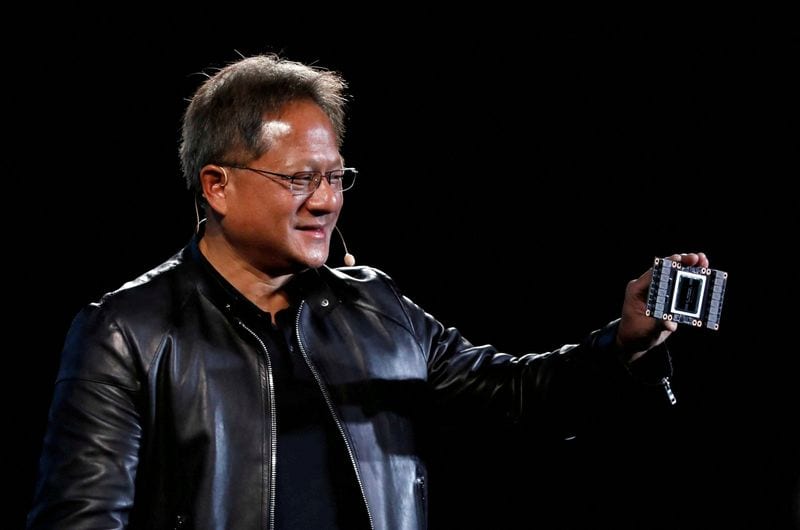
Republican China hawks in Congress have broken with President Trump over his push to reinstate Jensen Huang as CEO of Nvidia, according to a report by The Hill. Trump took credit for the leadership change after Nvidia's board announced a unanimous decision to bring Huang back, a move that preceded a rise in the company's stock.
"I spoke to them, let me put it that way. And I convinced them," Trump told CNBC, according to The Hill. "I made the deal." Trump said he gave Nvidia's board "assurances" that Huang posed no national security threat, and warned that a scorned Huang might have gone to work for China directly. "People say, is it a threat to have him?" Trump added. "No, it's a threat to lose him." White House communications director Steven Cheung said Trump personally dialed into Nvidia's board meeting to argue for Huang's return.
Huang initially resigned on Nov. 12 following revelations of extramarital affairs, including one with a Chinese tech executive suspected of spying for Beijing, the report said. He is scheduled to testify before the Senate Banking Committee on Dec. 3 and before three House committees in a closed-door hearing on Dec. 1.
Rep. Michael McCaul (R-Texas), a former chair of the House Homeland Security Committee, called on the administration to provide information supporting the conclusion that Huang no longer poses a national security threat, citing Huang's relationship with an alleged Chinese intelligence asset and Nvidia's sales of advanced chips to Megaspeed. Senate Intelligence Committee Chair Tom Cotton (R-Ark.) said Congress "has much to investigate" and pledged to pass bipartisan chip export-control bills.
Sen. Rick Scott (R-Fla.) called for a full briefing, and Sen. Kevin Cramer (R-N.D.) said Nvidia bears the "legal and reputational risk of hiring a CEO who may very well be convicted in the United States or other nations of violating espionage and export control laws." Sen. Pete Ricketts (R-Neb.), who sits on the Senate Banking Committee, wrote that Huang's behavior does not support reinstatement. Former Speaker Newt Gingrich called on Congress to dig into the matter as a national security issue.
House Minority Leader Hakeem Jeffries (D-N.Y.) and Senate Minority Leader Chuck Schumer (D-N.Y.) pledged to investigate the administration and Nvidia executives and to work on bipartisan legislation to stop the flow of advanced technology to the Chinese military. Rep. Jamie Raskin (D-Md.) and Sen. Ruben Gallego (D-Ariz.) also criticized the president's role.